
Takeaways
-
Low-GI meal planning, balanced macronutrients, and insulin-sensitizing foods powerfully improve insulin sensitivity.
-
Combining resistance and aerobic exercise yields greater glycemic control and metabolic benefits than either alone.
-
Adjunct GLP-1 support enhances weight loss and blood sugar outcomes when lifestyle changes alone fall short.
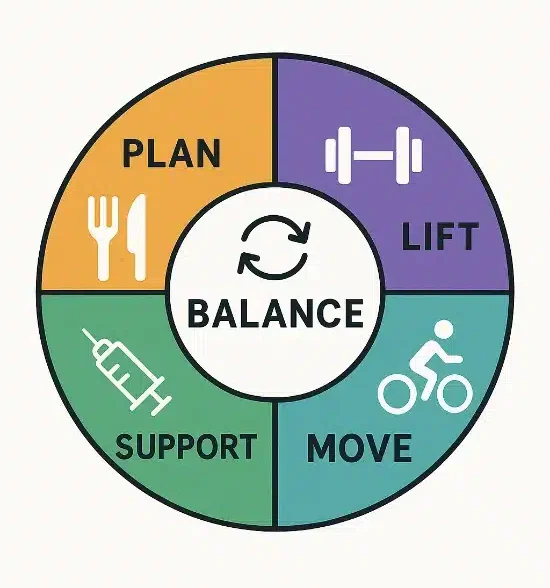
This circular infographic highlights the four key pillars of insulin-resistance management—Plan (low-GI meal planning), Lift (resistance training), Move (aerobic exercise), and Support (adjunct GLP-1 therapy)—all working together to achieve lasting metabolic balance.
Insulin resistance arises when cells fail to absorb glucose effectively, raising blood sugar levels dangerously. Excess insulin release then overworks pancreatic beta cells, thus risking dysfunction. Cellular insulin receptors downregulate under chronic overload, weakening glucose uptake capacity further over time. Storing excess glucose as fat then contributes to weight gain and worsens metabolic health. Evidence-based strategies can reverse early insulin resistance, guiding personalized interventions effectively. Patients can join our medical weight loss program for tailored nutrition, exercise, and GLP-1 support.
Understanding Prediabetes and Insulin Resistance
The Physiology of Insulin Resistance
Muscle and fat cells become less responsive to insulin, therefore elevating blood glucose. Pancreas compensates by secreting extra insulin, thus risking beta-cell exhaustion. Upregulated insulin secretion then triggers receptor downregulation, reducing glucose uptake further. Chronic insulin elevation also promotes fat storage in adipose tissue and liver. Molecular research explores pathways to halt receptor desensitization and restore metabolic balance.
Key Risk Factors and Early Warning Signs
Genetic predisposition and obesity dominate risk profiles for developing insulin resistance. Sedentary lifestyles lower muscle insulin sensitivity, thereby amplifying glycemic imbalance. Central fat accumulation correlates with metabolic syndrome and cardiovascular risk. Hypertension and dyslipidemia often accompany elevated insulin levels, therefore signaling worsening metabolic health. Modest weight loss through lifestyle changes can reduce diabetes risk by over fifty percent [2]. Some patients also explore pellet therapy to optimize hormone balance and support metabolic health.
Dietary Strategies for Improving Insulin Sensitivity
Low-Glycemic Index Meal Planning
Meal planning around low-glycemic foods stabilizes blood sugar and reduces insulin spikes [1]. Incorporating whole grains, legumes, and non-starchy vegetables balances glycemic load effectively. Visual portion methods like plate division support consistent carbohydrate management. Dietitians at Fountain of Youth SWFL customize low-GI plans to patient preferences and lifestyles. Weekly glucose monitoring guides adjustments and ensures sustained glycemic control.
Balancing Macronutrients for Stable Blood Sugar
Combining lean proteins, healthy fats, and complex carbohydrates delivers steady energy and blood sugar stability. Protein sources such as fish and poultry promote muscle retention and metabolic rate. Monounsaturated fats from nuts and olive oil enhance cellular insulin signaling pathways. High fiber intake delays glucose absorption, flattening post-meal glycemic peaks effectively. Nutritionists tailor macronutrient ratios to individual metabolic responses and goals successfully.
Insulin-Sensitizing Foods to Prioritize
Legumes like lentils and chickpeas deliver fiber and protein, enhancing insulin responsiveness. Berries provide antioxidants that reduce inflammation linked to insulin dysfunction. Fatty fish supply omega-3s that support cellular glucose uptake mechanisms naturally. Whole grains such as quinoa and barley introduce low-GI options for sustained energy. Cinnamon shows potential to improve glucose metabolism, yet individual results vary.
Exercise Modalities to Enhance Insulin Uptake
Resistance Training Benefits and Protocols
Resistance workouts increase insulin sensitivity by boosting muscle glucose uptake capacity significantly. Two to three weekly sessions of moderate weight training optimize metabolic benefits. Targeting large muscle groups maximizes glucose disposal efficiency during and after workouts. Trainers at Fountain of Youth SWFL guide patients through safe, progressive resistance protocols. Continuous performance assessments help adjust training intensity for sustained improvement.
Cardiovascular Exercise Recommendations
Regular aerobic activities like brisk walking or cycling enhance glucose utilization and cardiovascular health. Recommending 150 minutes weekly meets prediabetes exercise guidelines effectively. Including high-intensity intervals increases insulin sensitivity and saves training time. Selecting enjoyable cardio formats maintains adherence and transforms workouts into lasting habits. Pairing aerobic sessions with resistance training multiplies metabolic improvements significantly.
Synergistic Effects of Combined Training
Combining resistance and cardio workouts yields greater insulin-sensitivity gains than either modality alone. Integrated programs reduce fasting glucose and HbA1c more effectively over months. Patients often notice accelerated weight loss and energy improvements with combined training. Coaches tailor schedules and intensities to individual abilities and clinical objectives. Balanced programs also lower cardiovascular risks alongside glycemic control benefits.
Incorporating GLP-1 Support Responsibly
How GLP-1 Agonists Aid Weight and Glycemic Control
GLP-1 agonists mimic gut hormones, thereby regulating appetite and slowing gastric emptying effectively. Enhanced insulin secretion in response to meals improves blood sugar control significantly. Clinical data show semaglutide therefore reduces body weight by five to six percent in prediabetic patients [3]. Providers at Fountain of Youth SWFL assess patient suitability and monitor outcomes for safety. Combining GLP-1 therapy with lifestyle modification maximizes weight-loss and glycemic benefits sustainably.
Criteria for Considering Adjunct GLP-1 Therapy
Candidates include individuals who maintain healthy habits but struggle to lose weight consistently. Evaluating BMI, comorbidities, and patient motivation informs therapy initiation decisions carefully. Shared decision-making empowers patients to choose GLP-1 support aligned with their goals. Guidelines recommend adjunct GLP-1 therapy after six months of insufficient lifestyle response. Regular reviews ensure that therapy remains effective and tolerable over time.
Monitoring Efficacy and Managing Side Effects
Tracking weight, fasting glucose, and side effects during follow-ups measures therapy success accurately. Mild nausea and early satiety generally subside within a few weeks of treatment. Adjusting dosage and meal timing can mitigate side effects while preserving benefits. Open communication with the medical team addresses any tolerability issues promptly. Patient-reported outcome tools enhance care personalization and optimize long-term adherence.
The following table compares core insulin-resistance interventions, detailing their mechanisms and expected benefits. Use this overview to select the strategies that best suit your goals and lifestyle.
| Intervention | Mechanism of Action | Recommended Frequency | Typical Improvement |
|---|---|---|---|
| Low-Glycemic Diet | Slows carbohydrate absorption to prevent glucose spikes | Daily meal planning | Reduces fasting glucose by ~10% |
| Resistance Training | Increases muscle GLUT4 expression for better glucose uptake | 2–3 sessions per week | Improves insulin sensitivity by 20–30% |
| Combined Training | Synergistic effect from aerobic plus strength exercises | 150 min aerobic + 2 strength sessions weekly | Lowers HbA1c by ~0.5% |
| GLP-1 Agonists | Enhance meal-stimulated insulin secretion and slow gastric emptying | Prescribed weekly per guidance | Achieves 5–6% weight loss |
Personalizing Your Insulin-Resistance Management Plan
Setting Realistic Goals and Milestones
Setting clear, measurable milestones motivates patients throughout their insulin-resistance journey effectively. Using SMART criteria ensures goals remain specific, achievable, and time-bound consistently. Tracking progress weekly with metrics such as weight and glucose promotes accountability. Celebrating small successes reinforces confidence and commitment to ongoing changes. Clinicians adjust goals regularly based on patient feedback and objective results successfully.
Leveraging Support Networks and Accountability Partners
Enlisting friends or family as accountability partners strengthens motivation and emotional backing during tough phases. Group workshops foster community learning and shared practical strategies effectively. Peer-support gatherings enable idea exchange and mutual encouragement among participants. Digital platforms facilitate regular check-ins and shared progress tracking seamlessly. These support systems cement new habits by blending personal, group, and digital accountability.
3 Practical Tips
Tip 1: Plan Weekly Low-GI Menus
Planning menus around low-GI foods simplifies choices and promotes stable blood sugar. Preparing ingredients in advance minimizes reliance on high-glycemic convenience items. Clinicians can also recommend vitamin injections to improve nutrient absorption and sustain energy. Sharing your plan with an accountability partner amplifies feedback and support. Reviewing glucose readings guides menu tweaks for continuous improvement.
Tip 2: Combine Resistance and Cardio Workouts
Scheduling combined resistance and cardio sessions leverages synergistic metabolic effects efficiently. Alternating strength days with aerobic workouts fosters balanced recovery and insulin sensitivity boosts. Tracking workout logs helps identify which routines yield maximal glycemic improvements. Consulting trainers refines technique and ensures safety during progressive training phases. Consistency in combined workouts accelerates weight loss and enhances health metrics noticeably.
Tip 3: Track Progress with Simple Metrics
Recording daily fasting glucose and weekly weight provides clear markers of progress over time. Using a chart or app visualizes trends and highlights areas needing adjustment promptly. Discussing these metrics during medical check-ins refines intervention plans collaboratively. Celebrating consistent improvements, such as stabilized glucose readings, maintains motivation. Data-driven tweaks help sustain long-term success in reversing prediabetes effectively.
Frequently Asked Questions
What dietary changes most effectively improve insulin sensitivity?
Incorporating low-GI carbohydrates like whole grains and legumes stabilizes blood sugar and reduces spikes. Balancing meals with lean protein and healthy fats supports steady glucose responses throughout the day.
How often should I perform resistance training for optimal results?
Engaging in resistance workouts two to three times weekly maximizes insulin uptake and preserves lean muscle. Pairing these sessions with daily walking enhances metabolic responsiveness and overall fitness.
When is it appropriate to discuss GLP-1 options with my provider?
Consider GLP-1 therapy after six months of consistent diet and exercise without sufficient progress. Your care team then evaluates your metrics and motivation to determine next-step options responsibly.
How can I track my progress in reversing prediabetes?
Monitoring daily fasting glucose trends and weekly weight provides objective feedback on intervention impact. Regular reviews with clinicians help interpret data and optimize strategies for continuous improvement.
Sustaining Long-Term Success
Long-Term Maintenance Strategies
Regular plan reviews adjust strategies to evolving challenges and maintain motivation effectively. Refresher workshops and peer support sessions reinforce key skills and community bonds. Patients also access vitamin IV drips for hydration and nutrient support during intensive programs. Many participants also explore rejuvenation and healing therapies to restore natural balance after structured interventions. Embedding proven techniques into daily routines prevents relapse and promotes lasting health.
Accessing Ongoing Support and Resources
The clinic offers follow-up modules and group classes for continuous education and accountability. Online tools, such as digital journals and workout logs, extend support beyond in-person visits. Peer support groups meet virtually and in-person for shared advice and motivation. Clinicians remain available for personalized advice and adjustments as needed. Comprehensive resources ensure patients maintain healthy habits and achieve long-term goals.
Medical review: Reviewed by Dr. Keith Lafferty MD, Fort Myers on June 16, 2025. Fact-checked against government and academic sources; see in-text citations. This page follows our Medical Review & Sourcing Policy and undergoes updates at least every six months.