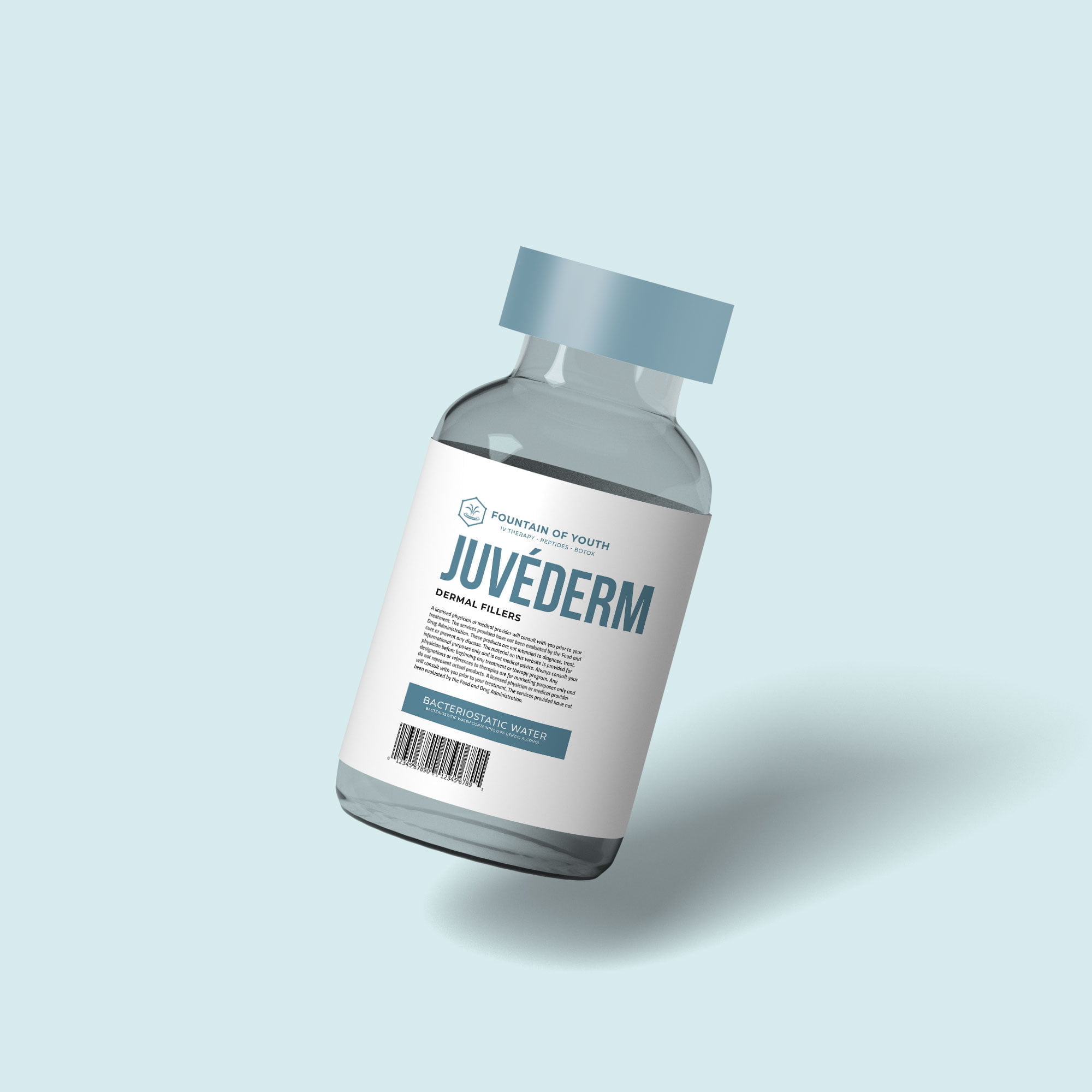
Start With What You Want to Change, Not a Syringe Name
Juvéderm is a family of hyaluronic-acid fillers designed for different facial areas, depths, and treatment goals. That distinction matters when one patient wants subtle lip definition and another wants stronger cheek support. Your provider evaluates facial proportions, existing volume, skin quality, previous filler, and the result you want. A conservative plan can restore balance without making every treated area look obviously fuller. Some patients need one focused area, while others benefit from staged facial-balancing decisions over several visits. Fountain of Youth builds treatment around anatomy rather than forcing one filler into every concern.
Filler cost depends on the selected formulation and amount needed for your treatment goal. Your provider can review the planned product, syringe amount, and expected total before treatment.
Appointment Length About 30 minutes
Visit length depends on consultation needs, treatment areas, and the amount of filler planned. More detailed facial-balancing appointments can require additional discussion before injections begin.
What You See First Immediate volume + swelling
Added volume is visible immediately, but early swelling can temporarily distort shape and symmetry. The settled result deserves more time before you judge whether refinement is needed.
Treatment Providers PA-C injectors
Lindsey Eisenberg and Jeffrey St. Firmin are Certified Physician Assistants licensed in Florida. Both provide individualized injectable care for Fountain of Youth patients in Fort Myers.
One Brand, Several Different Fillers
The Exact Juvéderm Product Matters
Juvéderm does not refer to one universal filler that belongs in every facial area. The American collection includes formulations designed for different tissue depths and FDA-approved treatment zones. Some products provide deeper structural support, while others address lips, folds, or thinner facial regions. Product thickness and placement depth influence how the filler behaves after injection. Your provider should identify the exact formulation selected for your treatment before injections begin. Current product availability and suitability are confirmed during your Fountain of Youth consultation.
Structural Volume
Cheeks, Chin, Temples, and Jawline
Current Juvéderm formulations include FDA-approved options for cheek volume, chin augmentation, temple hollowing, and jawline definition. Those areas require deeper structural planning rather than superficial smoothing. Product selection depends on the specific region and degree of correction. Fountain of Youth confirms the exact formulation appropriate for your proposed treatment.
Lips and Perioral Area
Shape, Volume, and Lines Around the Mouth
The collection includes FDA-approved formulations for lip augmentation and selected lines around the mouth. Lip treatment can focus on shape, border definition, proportion, or additional volume. More filler does not automatically create a more balanced result. Your provider should match product choice and amount to your existing anatomy.
Facial Folds
Nasolabial Folds and Related Contour Concerns
Several Juvéderm formulations are approved for moderate to severe facial wrinkles and folds. Treating a fold directly is not always the only possible strategy. Supporting nearby facial structure can sometimes change the overall balance more effectively. Your provider evaluates the entire surrounding area before recommending filler placement or treatment depth.
Natural-Looking Filler Planning
The Goal Is Better Proportion, Not Simply More Volume
Many filler patients are less worried about needles than they are about looking overfilled afterward. That concern deserves a direct, unhurried conversation with your injector before treatment begins. Facial balancing should consider the relationship between lips, cheeks, chin, jawline, and surrounding features. Treating one area aggressively can create a result that looks less natural from another viewing angle. A staged plan allows swelling to settle before additional volume is added. Fountain of Youth can build the treatment around subtle correction rather than chasing maximum syringe volume.
Lip Filler
Shape Comes Before Size
Lip enhancement can emphasize border definition, proportion, symmetry, projection, or overall volume. Those goals require different placement decisions even when the same general area is treated. Early swelling can make lips look larger than their final size. Waiting for settling helps prevent unnecessary correction during the first several days.
Cheek Filler
Support Without an Overfilled Midface
Cheek treatment can restore selected age-related volume or improve facial contour when appropriate. Placement should reflect bone structure, soft-tissue changes, and the balance between both sides. Excessive superficial volume can create visible heaviness instead of the intended structural lift. Conservative structural planning usually gives the provider more control over proportion.
Facial Balancing
Look at the Face From More Than One Angle
A balanced result should make sense from the front, profile, and three-quarter view. Chin or jawline support can change how other features appear without treating them directly. The best plan may involve less filler than a single-area request suggests. Your injector should explain the reasoning behind that recommendation before your treatment begins.
Your Appointment at Fountain of Youth
What a Juvéderm Visit Actually Looks Like
The appointment begins with a conversation about what looks different or feels out of balance to you. Your provider reviews medical history, allergy history, previous filler, medications, recent illness, and relevant dental procedures. Facial anatomy is evaluated before the treatment area, formulation, placement depth, and amount are selected. The injector explains the proposed plan and gives you an opportunity to ask questions before treatment. Juvéderm injections are performed after the plan and treatment area have been confirmed. You receive individualized aftercare and instructions for symptoms that should prompt faster contact.
1
Describe the Change
Explain what bothers you without feeling pressured to choose a specific Juvéderm formulation yourself. “My cheeks look flatter” provides more useful information than simply requesting one syringe.
2
Medical Screening
Your provider reviews allergies, previous filler reactions, medications, infections, inflammatory conditions, and relevant medical history. Mention previous facial filler even when another clinic performed the treatment.
3
Facial Assessment
The injector evaluates proportions, tissue support, asymmetry, and the relationship between nearby facial regions. This step helps separate true volume loss from concerns requiring another treatment mechanism.
4
Product and Amount
Your provider selects the Juvéderm formulation and amount that fit the proposed treatment area. Ask for the exact product name and expected syringe plan before injections begin.
5
Injection Treatment
Filler is placed according to the planned depth, anatomy, and cosmetic goal. Temporary pressure, tenderness, swelling, redness, or bruising can occur around treated areas.
6
Aftercare and Safety
Your provider explains expected swelling, activity guidance, and symptoms requiring urgent contact. Follow those instructions rather than aggressively massaging or manipulating the treated area yourself.
Recovery and Settling
Do Not Judge Fresh Filler Like a Finished Result
Hyaluronic-acid filler creates visible volume immediately, but early swelling can exaggerate the first impression. One side may temporarily look fuller when swelling or bruising develops unevenly. Lips can appear particularly large during the first several days after treatment. Tenderness and bruising usually improve as the treated tissue settles. A more useful cosmetic assessment often occurs around two weeks, although some areas need longer. Your provider can tell you when a follow-up makes sense for the specific treatment performed.
First Few Days
Swelling Can Distort Shape
Immediate fullness includes both the filler itself and the tissue response around treatment. Bruising can temporarily darken before it begins fading during the normal recovery period. Small differences between treated sides can change noticeably as early swelling gradually resolves. Contact Fountain of Youth sooner when pain or skin changes feel unusual.
Around Two Weeks
A Better Time to Judge Balance
The treated area usually looks more settled after early swelling has decreased substantially. This timing allows a more useful discussion about symmetry, proportion, and whether refinement is appropriate. Waiting helps prevent unnecessary correction when temporary swelling still affects visible facial balance. Your provider may recommend a different follow-up window for certain areas.
Longevity
Product and Area Change the Timeline
Juvéderm duration varies substantially across formulations, facial areas, and individual patients. Current product data describe results lasting from several months to two years in selected indications. Those timelines depend on the exact product and treatment conditions. Your provider can discuss realistic expectations for the formulation selected.
Both Are HA Filler Families, but They Are Not One Product
Fountain of Youth offers Juvéderm and Restylane as hyaluronic-acid filler options within its injectables program. Both brands include multiple formulations designed for different areas and treatment goals. The better question is not which brand wins in every situation. Product texture, approved use, tissue depth, anatomy, previous response, and injector preference all matter. A patient who did well with one filler may still need another formulation elsewhere. Your provider can explain why a specific product fits the proposed area before treatment.
Juvéderm
A Multi-Product HA Filler Collection
The Juvéderm family includes formulations for structural support, lips, facial folds, and other approved regions. Different products vary in intended injection depth, treatment characteristics, and approved anatomical uses. Fountain of Youth confirms the exact formulation selected for your individual plan. This treatment page focuses on Juvéderm-specific planning, realistic expectations, and patient safety.
Restylane
Another Broad HA Filler Family
Restylane offers a separate family of hyaluronic-acid fillers for multiple facial and hand indications. Product selection depends on the region, tissue characteristics, and desired result. The two brands should not be compared as single interchangeable syringes. Explore Restylane for more product-specific treatment details and current Fountain of Youth information.
Wrinkle Relaxers
Different Mechanism, Different Problem
Xeomin, Dysport, and Jeuveau reduce selected muscle activity rather than restoring facial volume. They usually fit expression-driven lines better than hollowing or structural volume loss. Filler cannot replace neuromodulator treatment when muscle contraction causes the concern. The injectables overview explains both treatment categories and Fountain of Youth’s current injectable options.
Pricing and Treatment Planning
Why Filler Cost Depends on More Than One Syringe
Fountain of Youth determines Juvéderm pricing from the formulation and amount included in your individualized treatment plan. A small lip refinement and broader facial-balancing plan can require very different amounts of product. The most useful cost discussion identifies the area, exact formulation, expected syringe amount, and total estimate. Ask whether treatment is intended as one visit or part of a staged plan. A staged approach can reduce pressure to add volume before early swelling has settled. Your provider can explain expected cost before you decide whether to proceed.
Comparing filler clinics only by advertised syringe price can miss important differences in what the quote includes. The exact product matters because Juvéderm formulations are designed for different anatomical goals. Injector experience, consultation quality, complication readiness, and follow-up planning matter alongside the price. A lower price does not make an unsuitable filler placement better. A higher price does not guarantee a more natural result. The treatment plan should make sense before the financial decision does.
Ask Before Treatment
Know the Exact Product and Planned Amount
Ask which Juvéderm formulation your provider recommends and how many syringes are expected. That information makes the treatment plan easier to understand and compare. Your provider should explain why the selected product fits the proposed area.
Think in Stages
You Do Not Need to Correct Everything Today
A conservative first treatment can reveal how your face responds after swelling resolves. Staging can be especially useful when several facial areas appear under-supported. Additional filler should answer a remaining concern rather than chase temporary swelling.
Reversibility and Problem-Solving
HA Filler Can Often Be Dissolved, but It Is Not an Undo Button
Juvéderm is made from hyaluronic acid, which clinicians can break down with hyaluronidase when medically appropriate. Dissolving may be considered for persistent overcorrection, selected irregularities, or certain filler complications. Early swelling can imitate overfilling, which means immediate dissolution is not always the best cosmetic response. A provider should examine the treated area before deciding whether observation, follow-up, or intervention makes sense. Suspected vascular compromise is different and requires urgent clinical action rather than routine cosmetic reassessment. Never attempt to diagnose or treat a filler complication at home.
Early fullness: Swelling can make a correctly treated area look larger during the first several days.
Persistent irregularity: A firm lump or uneven contour deserves provider evaluation when it does not improve normally.
Cosmetic reversal: Hyaluronidase may reduce HA filler when clinical assessment supports that decision.
Urgent complication: Severe pain, unusual skin color, or vision symptoms require immediate medical attention.
Do not self-correct: Aggressive massage or home treatment can complicate an issue needing professional evaluation.
Safety Before Aesthetic Convenience
What You Should Tell Your Injector Before Juvéderm
Dermal fillers have common temporary reactions and rare complications that can become medically serious. Tell your provider about severe allergies, previous filler reactions, lidocaine sensitivity, medications, infections, and inflammatory skin conditions. Recent dental procedures or illness may influence timing when your clinician believes postponement is appropriate. Product labeling advises delaying injection through active inflammation or infection at the planned treatment site. Pregnancy and breastfeeding safety has not been established for Juvéderm products. A complete history gives your injector better information for deciding whether elective treatment should proceed.
Expected Temporary Effects
Swelling, Redness, Tenderness, and Bruising
Common reactions can include swelling, bruising, redness, pain, tenderness, firmness, itching, or temporary lumps. The pattern varies by product, treatment area, and individual response. Many common reactions improve gradually during the normal filler settling and recovery period. Contact the clinic when symptoms worsen unexpectedly instead of improving.
Rare Emergency
Know the Signs of Vascular Compromise
Accidental injection into a blood vessel can cause tissue injury, vision problems, blindness, or stroke. Severe pain, pale or dusky skin, and sudden vision changes require immediate attention. Do not wait for a routine follow-up appointment when those symptoms occur. Prompt recognition and escalation are critical when vascular compromise is suspected.
Bring the Concern, Not a Preselected Syringe Count
Tell your provider what looks flatter, less defined, asymmetric, or out of proportion to you. The consultation can separate volume loss from muscle movement, skin texture, or another aesthetic concern. Previous filler history can change which treatment makes sense now. The plan should follow your face rather than a social-media trend.
Meet the Certified Physician Assistants Behind Your Care
Filler outcomes depend on anatomy, product selection, placement depth, amount, and the judgment of the treating clinician. Fountain of Youth identifies the clinicians responsible for injectable care instead of relying on anonymous provider language. Lindsey Eisenberg and Jeffrey St. Firmin are Certified Physician Assistants licensed in Florida. Their clinical backgrounds include emergency medicine, surgery, acute care, and aesthetic medicine. Both emphasize individualized planning and clear conversations about patient goals. That clinical context matters when treatment adds volume near important facial blood vessels.
Certified Physician Assistant
Lindsey Eisenberg
Lindsey is licensed in Florida and has more than 15 years of experience across multiple clinical specialties. Her background includes emergency medicine, surgery, ENT, urology, physical medicine, and aesthetics. At Fountain of Youth, she emphasizes natural, balanced aesthetic results and patient-centered treatment planning. She takes time to understand individual goals before recommending an approach.
Certified Physician Assistant
Jeffrey St. Firmin
Jeffrey is licensed in Florida and has experience in orthopedic surgery, emergency medicine, and acute care. He brings that broader clinical foundation into personalized aesthetic and wellness care at Fountain of Youth. His approach emphasizes clear communication, individualized planning, and an appointment that does not feel rushed. Patients can discuss facial goals without assuming a particular filler before evaluation.
Patient Experience at Fountain of Youth
A Google Review About the Clinic’s Injection Care
★★★★★
“I highly recommend them for anything from iv therapy to injections to facials!!”
Nancy C. · Google Review
Fort Myers Location
Easy Arrival for Your Juvéderm Consultation
Fountain of Youth is located in South Fort Myers near the US 41 corridor. The office sits near the Bell Tower area, Daniels Parkway, and Cypress Lake Drive. Patients also visit from Cape Coral, Estero, and other nearby Lee County communities. Free parking removes the need for downtown garages or complicated arrival planning. Ground-floor access keeps the visit straightforward once you reach the property. The location supports scheduled filler consultations and injectable care across South Fort Myers.
Clinic Address
South Fort Myers
Fountain of Youth is at 13720 Cypress Terrace Circle, Suite 303. The office is in Fort Myers, Florida 33907, just off the US 41 corridor. Bell Tower and Daniels Parkway provide convenient nearby reference points for patients approaching from surrounding neighborhoods.
Appointment Planning
Allow Time for the Consultation
Injectable visits are commonly planned for about 30 minutes, depending on the treatment and consultation needs. Filler planning can require careful discussion about proportions, previous treatment, and expected syringe amount. Arrive prepared to discuss goals rather than rushing directly into injections.
Parking and Access
A Straightforward Visit
The clinic offers free, ample parking and convenient ground-floor access. Patients do not need to navigate downtown garages or a complicated medical campus. The South Fort Myers location is convenient from several major local roads and nearby communities.
Fountain of Youth Wellness & Aesthetics 13720 Cypress Terrace Circle, Suite 303 Fort Myers, FL 33907
Different Juvéderm formulations have FDA-approved uses involving cheeks, chin, temples, jawline, facial folds, lips, perioral lines, and under-eye hollows. The exact formulation matters because products are designed for different tissue depths and goals. Your provider confirms which available product fits the proposed area.
How much does Juvéderm cost at Fountain of Youth?
Juvéderm pricing depends on the formulation and amount included in your individualized treatment plan. Fountain of Youth discusses filler pricing during consultation after the proposed product and syringe amount are determined. Ask for the expected total before treatment if cost predictability matters.
How long does Juvéderm swelling take to settle?
Swelling often appears immediately and can remain noticeable during the first several days. Many results are easier to evaluate around two weeks after treatment. Certain areas or individual reactions can need longer, so follow the timeline your provider gives you.
How long do Juvéderm results last?
Duration varies by formulation, treatment area, amount, and individual metabolism. Current product data describe results lasting from several months to two years in selected approved indications. Your provider can give a more useful estimate after identifying the exact product and area.
Can Juvéderm be dissolved if I dislike the result?
Clinicians can use hyaluronidase to break down hyaluronic-acid filler when medically appropriate. Early swelling does not always mean the filler should be dissolved immediately. Your provider should examine the area before recommending observation, refinement, or reversal.
What is the difference between Juvéderm and Restylane?
Juvéderm and Restylane are separate families of hyaluronic-acid fillers with multiple product formulations. Different products have different approved uses, physical characteristics, and treatment roles. Your provider can compare the actual formulations relevant to your anatomy rather than comparing only brand names.
What filler symptoms require urgent attention?
Severe or escalating pain, pale or dusky skin changes, and sudden visual symptoms require urgent evaluation. Accidental intravascular filler injection can cause serious tissue or vision complications. Contact your treating clinic immediately and seek emergency medical care when advised.
Ready to Discuss Facial Balance?
Book a Juvéderm Consultation in Fort Myers
Bring your previous filler history and a clear idea of what looks different or out of proportion. Your provider can assess lips, cheeks, facial contours, folds, and whether filler matches the underlying concern. The exact product and amount are selected after that assessment. The goal is thoughtful correction rather than filling every area that can be treated.