



EXCELLENTTrustindex verifies that the original source of the review is Google. I had a really great experience with Fountain of Youth in Fort Myers. The team was professional, knowledgeable, and took the time to understand what I needed. The medications they recommended truly helped me get back on track and feeling like myself again. Everything was handled smoothly and I felt well taken care of throughout the process. I highly recommend them to anyone looking for supportive, personalized care.Posted onTrustindex verifies that the original source of the review is Google. Very friendly & knowledgeable staff definitely will come back. Lindsey was straight to the point & knew what I neededPosted onTrustindex verifies that the original source of the review is Google. Wonderful experience! Everything explained before procedure!Posted onTrustindex verifies that the original source of the review is Google. I got to FOY for several different services. All of the practitioners are knowledgeable and listen to all of my Healthcare concerns. They also get back to you right away with any questions. They are all wonderful!Posted onTrustindex verifies that the original source of the review is Google. Highly recommend. Jeffery is amazing and will be going backPosted onTrustindex verifies that the original source of the review is Google. Jeffrey was absolutely amazing and staff was incredible. Clean office, great location! Highly recommend!Posted onTrustindex verifies that the original source of the review is Google. Amazing facial by Maria. So relaxing! My face is glowing.Posted onTrustindex verifies that the original source of the review is Google. Fountain of Youth is an absolutely amazing facility with incredibly caring people. I came about 20 minutes early to my appointment and they were already prepared and set up with a room ready for me. Their direct primary care program is so convenient and has COUNTLESS perks that regular healthcare is missing. My blood draw for hormone replacement therapy was one of the absolute BEST experiences I have ever had as Jessica was able to draw blood on my hand on the first try. That is wildly different than anywhere I have ever gotten my blood drawn as my veins simply do not cooperate. Sarah was bright and cheerful while preparing for my blood draw and secured items to help it go as smoothly as possible while being highly informative making me feel greatly comfortable the entire visit. When I stated that I wanted to sign up for direct primary care, the doctor popped in our room to say hello. Thank you for a wonderful first visit and I am excited to work with such a fabulous team for my health.
Takeaways
-
Signal peptides stimulate collagen and elastin expression, improving firmness and wrinkle metrics over time.
-
Carrier and anti-inflammatory peptides support repair, soothe reactivity, and improve protocol tolerance.
-
Peptide serums or masks, layered after gentle resurfacing, elevate outcomes and maintain comfortable recovery.
Why Peptides Belong in Modern Facials
Peptide boosters elevate luxury facials by signaling renewal rather than stripping skin for quick glow. Clients deserve results that endure beyond a weekend, and peptides support that promise. Estheticians gain flexibility because signal strength can rise without provoking unnecessary irritation. Facial menus read more intelligently when peptide add-ons align with distinct goals. Fountain of Youth SWFL tracks peer-reviewed advances each month, and our team refines protocols accordingly. Questions? We are here to help—call us at 239-355-3294 for tailored guidance today.
Peptide Primer: What They Are and How They’re Classified
Signaling “Matrikine” Peptides
Matrikine peptides form from extracellular matrix fragments and instruct fibroblasts to rebuild structure. Academic overviews of matrikine signaling describe up-regulated collagen and elastin during structured programs. Texture looks smoother because organized fibers resist creasing under everyday facial motion. Wrinkle depth measurements improve gradually across eight to twelve weeks with steady use. Clients who value subtle, durable change usually respond well to matrikine-centered regimens.
Carrier Peptides
Carrier peptides deliver trace minerals to the skin, and copper remains the classic example. Fibroblasts use that mineral during crosslinking, while antioxidant responses also gain support. Providers often deploy carrier formats after procedures because clients want faster comfort. Barrier friendliness matters during recovery, and gentle carriers respect that priority. Clinical reviews on GHK-Cu connect copper delivery with wound repair and matrix turnover.
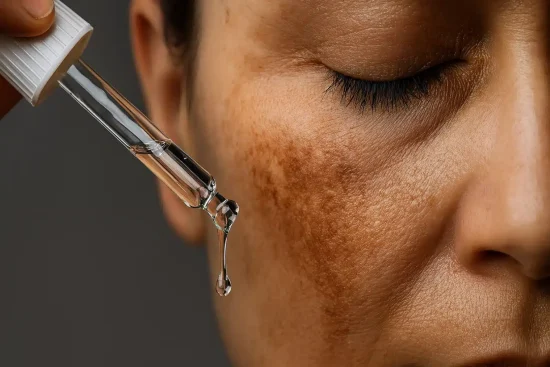
Neurotransmitter-Modulating Peptides
Neurotransmitter-Modulating Peptides
Neurotransmitter-modulating peptides temper vesicle fusion near neuromuscular junctions in expressive zones. Periorbital lines soften when repetitive contractions ease without freezing natural expression. A registered clinical trial evaluated topical acetyl hexapeptide-8 for periorbital wrinkles. Clients appreciate smoother makeup laydown under the eyes, and wear time improves. Eye-safe masks add residence time, while gentle occlusion helps ingredients stay put.
Barrier-Support and Antimicrobial Peptides
Barrier-support peptides encourage calmer signaling while reinforcing innate defense across stressed skin. Academic work on neuropeptides reports patterns of IL-6 inhibition that align with comfort goals in sensitive contexts. Redness-prone complexions benefit because inflammatory cascades lose momentum under balanced cues. Antimicrobial sequences help normalize surface ecosystems while preserving comfort across reactive phases. Estheticians reach for these formats when sensitivity undermines active tolerance and consistency.
Mechanisms That Drive Visible Renewal
ECM Stimulation and Remodeling
Peptides up-regulate genes encoding collagen, elastin, fibronectin, and glycosaminoglycans during home routines. Matrix quality improves because fibers organize more coherently and resist deformation. Skin appears firmer under oblique lighting, and pores look visually tighter. Balanced remodeling avoids over-thinning, while texture gains accumulate without stinging drama. Clients often describe “bounce” returning as springiness improves across measurement sessions.
Inflammation Modulation
Several peptide families reduce pro-inflammatory signals that otherwise prolong redness and discomfort in laboratory reviews. Post-procedure clients feel calmer when cytokine activity drops inside the treatment window. Recovery timelines shorten when inflammation retreats, and hydration rebounds more predictably. Estheticians then resume progression plans without pausing for unnecessary sensitivity setbacks. Programs stay on schedule because skin cooperates under measured, signal-based guidance.
Hydration and Barrier Compatibility
Some peptide systems encourage hyaluronic acid synthesis while indirectly boosting water retention. Stratum corneum hydration rises when humectants meet healthier matrix organization. Plumper appearance follows as corneocytes hold water against daily evaporation stresses. Makeup sits evenly across cheeks and temples, and pilling issues decline. Home regimens feel simpler because hydration persists with fewer midday touchups.
Where Peptides Fit in a Professional Facial Workflow
Timing and Layering
Application timing shapes success because permeability peaks after gentle resurfacing or thorough cleansing. Estheticians apply humectants first for water binding, then introduce peptide concentrates. Finishers seal gains with balanced lipids to protect comfort through the evening. Clients experience immediate ease while signal molecules continue working beneath those layers. Menus read clearly when this order remains consistent across service types.
Texture and Delivery Considerations
Serums and ampoules provide fast penetration, while masks offer beneficial residence time. Palmitoylated forms grip the stratum corneum better because lipid tails enhance affinity. Estheticians choose lighter textures for daytime finishes and richer textures at night. Massage pressure remains purposeful without excessive friction that could disrupt cohesion. Slip quality matters because elegant glide prevents unnecessary barrier stress during application.
Patch Testing and Suitability
Clinicians screen for copper intolerance, pregnancy considerations, and active dermatitis before use. Sensitive clients start with alternating schedules while tolerance signals rise steadily. Records capture ingredient lists, exposure time, and client sensations during reviews. Adjustments follow patterns rather than guesses, and outcomes improve across months. Skincare remains personal when decisions track history rather than trends alone.
Synergy with Popular Modalities
Light Peels, Microdermabrasion, and Extractions
A chemical peel or light resurfacing primes skin for signals, and peptides capitalize on that window. Uptake improves when microchannels remain open yet comfortable after careful work. Redness subsides faster when inflammation-modulating sequences enter the plan early. Clients leave calmer and return confidently for follow-up sessions on schedule. Extractions also benefit because soothing peptides stabilize reactive zones around treated pores.
LED, Microcurrent, and Ultrasound
LED protocols complement peptide signaling because circulation and ATP production gain support. Microcurrent refines tone subtly while peptides train the matrix from within. Ultrasound enhances deposition by pushing molecules deeper without harsh disruption. Teams sequence energy first or second based on device intensity and goals. Calendars reflect cadence rather than hype, and retention rises with predictable progress.
Protocol Blueprints: Menu-Ready Add-Ons
Matrix Renewal (Firming/Fine Lines)
A gentle polish sets the stage without stripping comfort or pushing inflammation. A concentrated matrikine serum follows immediately while permeability remains elevated. A hydrating mask reinforces water balance while clients relax under quiet lighting. Balanced lipids finish the service and keep signals working overnight. Ideal candidates include photo-aged skin that resists more aggressive resurfacing approaches.
Expression Zones (Eyes/Forehead)
Precision cleansing removes residue from delicate periorbital and forehead areas. A neurotransmitter-modulating gel or serum targets dynamic creasing without heavy occlusion. Cooling eye masks add dwell time while estheticians manage massage thoughtfully. Lightweight emulsions finish the zone so concealer applies smoothly the next morning. Clients pursuing injectables appreciate peptide support that maintains tone and texture between visits.
Post-Treatment Calming (Recovery Support)
A no-sting cleanser preserves cohesion while hands move with minimal pressure. Peptide sheet masks deliver anti-inflammatory cues during the critical comfort window. A restorative emollient locks hydration without suffocating heat-sensitive skin. Providers document timelines carefully because recovery milestones guide the next appointment. Ideal candidates include peel or microneedling clients who value steady, reliable comfort.
Sensitive/Reactive Resilience
Minimal manipulation protects fragile barriers while confidence rebuilds across sessions. A low-fragrance peptide gel lands cleanly and avoids heavy occlusion. Breathable sealants maintain hydration while allowing comfortable heat exchange. Estheticians space actives strategically and review logs for pattern-based refinements. Ideal candidates include redness-prone complexions that flare under typical multi-acid plans.
Use this quick matrix to match client goals with the most suitable peptide class, delivery format, and timing. Follow the pairing and avoidance notes to protect comfort while keeping results measurable and consistent.
| Client Goal | Best Peptide Class | Preferred Delivery Format | When to Apply in Facial | Pair With | Avoid During | Expected Timeline |
|---|---|---|---|---|---|---|
| Firmness and fine-line support | Signaling matrikines (collagen I/III focus) | Concentrated serum or ampoule; optional sheet mask for dwell time | After gentle polish or enzyme step; before emollient finisher | Humectants for hydration; balanced lipids to seal gains | Stacked strong acids on the same day; heavy occlusion in heat | Noticeable changes by 8–12 weeks with steady cadence |
| Expression lines around eyes or forehead | Neurotransmitter-modulating peptides (periorbital focus) | Thin gel serum; targeted eye mask for extra residence time | After precise cleanse; before lightweight emulsion or sunscreen finish | Cooling massage and low-fragrance emollients for comfort | Heavy creams that pill under concealer; vigorous friction massage | Softer look within weeks; refine across 8–10 weeks |
| Post-procedure comfort and visible calm | Carrier peptides (copper-based) and anti-inflammatory sequences | Sheet mask or serum with breathable finisher on top | After no-sting cleanse; within the early recovery window | Humectant gel layers; gentle emollients to reduce tightness | Retinoids within 48 hours; saunas or long steam exposure | Comfort lift quickly; structural gains accrue with series use |
| Redness-prone or easily irritated skin states | Barrier-support peptides; antimicrobial sequences for balance | Low-fragrance gel or light serum; minimal occlusion finish | After gentle cleanse; no aggressive manipulation or long steam | pH-smart toner; simple emollients that avoid fragrance load | Multi-acid stacks; high-friction techniques on reactive zones | Comfort improves quickly; resilience builds across 6–8 weeks |
| Dehydrated, mature, or climate-challenged skin | Matrikines with hydration-support emphasis | Serum under hydrating mask; balanced lipid finisher at end | After humectant layer; before medium-weight occlusive edge | Multi-weight hyaluronic acid; ceramide-forward moisturizers at night | Over-cleansing; very hot showers that strip surface lipids | Hydration lift immediately; firmness trends by 8–12 weeks |
| Congestion-prone or humidity-exposed clients | Lightweight signaling peptides with non-occlusive finishes | Fast-absorbing serum; skip heavy balms during daytime heat | After cleanse and toner; keep finish breathable for comfort | Niacinamide and zinc PCA in supporting roles for balance | Thick occlusives that trap sweat; prolonged mask wear without breaks | Clarity trends by 4–6 weeks; texture refines with steady cadence |
Evidence, Outcomes, and Client Communication
What to Measure
Standardized photography removes ambiguity and captures directional change across months. Elasticity meters, hydration indices, and wrinkle scoring add objective anchors. Clients share daily comfort notes because subjective experience also matters greatly. Estheticians translate numbers into plain language during progress reviews. Programs stay credible when evidence and experience converge around the same improvements.
Timelines and Cadence
Signal-driven change accelerates slowly because biology favors steady remodeling over shock. Eight to twelve weeks commonly reveal firmer texture and calmer tone. Maintenance plans lock progress without chasing novelty every single visit. Home care supports clinic work when cadence and products align intelligently. Fountain of Youth SWFL reassesses protocols quarterly, and our staff updates education continually.
Claim Discipline
Writers and providers connect benefits to measurable endpoints rather than sweeping promises. Language emphasizes support, help, and association when human biology varies widely. Protocol notes document ordering, dwell times, and aftercare in readable terms. Clients appreciate honesty because grounded expectations protect trust long term. Marketing stays ethical when every sentence can withstand clinical scrutiny.
Safety, Contraindications, and Troubleshooting
Over-layering causes pilling and frustration, and spacing usually solves that quickly. Congestion appears when heavy occlusion meets humid weather during prolonged wear. Dilution calms edge stinging while buffers restore comfort around sensitive zones. Break strategies help irritated clients while logs reveal preventable triggers. Teams treat anomalies as data points, then refine playbooks for future sessions.
5 Practical Tips
- Place peptide boosters after gentle resurfacing to leverage peak permeability without sting.
- Combine humectants with peptide concentrates, then seal everything with balanced lipids.
- Schedule a photo check-in at week six and adjust cadence using evidence.
- Clients who travel frequently should pack textures that match cabin dryness.
- Home routines work better when steps remain minimal, clear, and repeatable.
FAQ
Do peptide boosters replace retinoids or just complement them?
Peptide systems complement retinoids by addressing remodeling with calmer signaling. Many clients rotate nights or split zones to protect tolerance without losing momentum.
How soon should clients expect to see visible improvements from peptide add-ons?
Most clients notice subtle softness within weeks, and measurable changes emerge by months. Photo reviews and hydration readings usually confirm steady, dependable progress.
Which peptide formats work best around the eyes without causing puffiness?
Thin serums or gel masks minimize weight while still delivering targeted signals. Estheticians choose breathable finishes and limit occlusion to preserve delicate tissue comfort.
Can sensitive or acne-prone skin tolerate peptide serums during regular facials?
Sensitive types often tolerate barrier-friendly peptides when schedules remain conservative. Acne-prone clients do best with breathable finishes and careful congestion monitoring.
Targeted Signals, Visible Renewal
Peptide boosters shift facials from surface polish to biological coaching for renewal. Clients enjoy calm skin today and stronger structure across predictable timelines. Estheticians gain reliable tools that enhance modalities without inflaming delicate barriers. Evidence-driven playbooks keep claims honest and outcomes measurable in real life. Questions about this topic deserve personal guidance—call 239-355-3294 and speak with our team.
Medical review: Reviewed by Dr. Keith Lafferty MD, Fort Myers on August 9, 2025. Fact-checked against government and academic sources; see in-text citations. This page follows our Medical Review & Sourcing Policy and undergoes updates at least every six months.