
Takeaways
-
Combining cognitive-behavioral strategies with mindful eating practices empowers sustainable interruption of emotional eating cycles.
-
Personalized support—including journaling, ACT, group programs and digital tools—enhances adherence and long-term behavior change.
-
Implement daily practices like food-and-mood journaling, mindful pauses, and environment adjustments to reduce impulsive eating.
Emotional eating often arises from complex interactions between physiology and mood, thereby disrupting healthy eating patterns. Cognitive-behavioral techniques and mindfulness practices offer structured methods to tackle emotional triggers effectively, therefore empowering sustainable change. Food journaling, thought records, and meditation create self-awareness, consequently reducing compulsive eating urges reliably. Medical teams at Fountain of Youth SWFL personalize interventions using data and compassionate support consistently, also enhancing patient engagement. Readers can apply these evidence-based approaches today to gain control over emotional eating cycles naturally, thereby improving overall well-being.
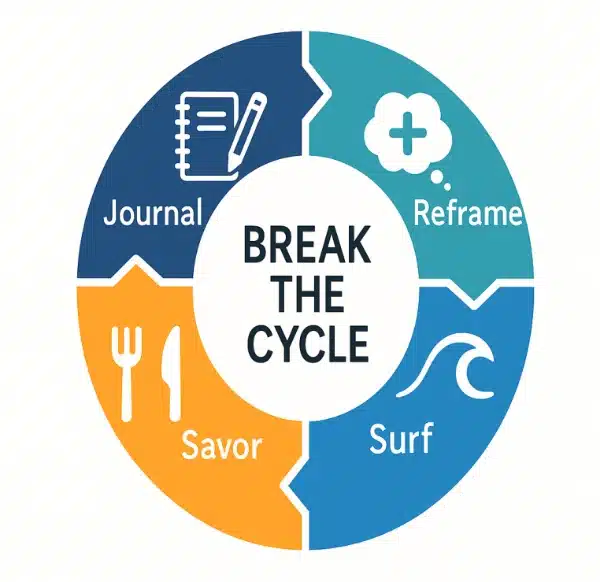
Understanding Emotional Eating Triggers
Understanding Emotional Eating Triggers
Biological Foundations of Emotional Eating
Stress activates the hypothalamic-pituitary-adrenal axis and thus releases cortisol rapidly, consequently heightening emotional hunger. Cortisol spikes also alter insulin sensitivity and thus influence hunger signals directly [1]. Neuroscience research links amygdala activation with stronger cravings for high-calorie foods during stress, thereby preserving survival instincts. Blood sugar fluctuations often mimic hunger pangs and therefore drive unnecessary food consumption unawares. Patients also benefit from our physician-guided medical weight loss programs addressing metabolic and behavioral factors holistically.
Psychological Drivers of Food Cues
Emotional memories often pair specific moods with favorite comfort foods over time, consequently reinforcing unhealthy eating habits. Social settings, boredom, and sensory cues frequently trigger unconscious eating decisions without awareness, thereby undermining dietary goals. Tracking situational factors helps readers identify patterns behind emotional eating episodes effectively, thus enabling targeted interventions. Fountain of Youth SWFL also offers pellet therapy to optimize hormone balance and reduce mood-driven cravings. Understanding these psychological drivers empowers readers to replace eating impulses with healthier coping strategies consciously.
Evidence-Based CBT Techniques
Self-Monitoring and Stimulus Control
Maintaining a food and mood journal reveals hidden patterns behind emotional eating urges daily, thereby guiding personalized interventions. Journals capture meal times, feelings, and contexts to inform effective behavior adjustments reliably, thus improving self-awareness. Removing trigger foods and redesigning home environments reduces exposure to temptation significantly, according to CDC guidelines [3]. Clinic coaches guide patients personally through effective stimulus control techniques and environment redesign, thereby ensuring adherence. Using smaller plates and designated eating areas helps limit portion sizes and curb impulsive bites consciously.
Cognitive Restructuring and Thought Records
CBT practitioners teach capturing automatic food-related thoughts immediately in momentary logs, thus increasing awareness of cognitive distortions. Thought records link emotions, thoughts, and behaviors to pinpoint irrational beliefs accurately, thereby facilitating targeted cognitive shifts. Structured worksheets help patients dispute irrational beliefs and test balanced alternative responses effectively, consequently reducing emotional eating triggers. Research shows cognitive restructuring lowers binge frequency and improves emotional regulation significantly, thereby enhancing treatment outcomes. Staff also embed these techniques into personalized plans during regular individual counseling sessions, thus reinforcing skill application.
Acceptance-Based Cognitive-Emotional Therapy
Acceptance and Commitment Therapy teaches patients to observe cravings without avoidance or judgment, thereby increasing emotional tolerance. ACT exercises develop skills that help patients ride craving waves without acting impulsively, consequently weakening impulse-action links. Clinical trials show ACT integration reduces emotional eating episodes more than CBT alone, thus supporting integrated models. Therapists at Fountain of Youth SWFL incorporate ACT through experiential exercises during group workshops regularly, thereby reinforcing community support. Patients develop acceptance skills that weaken craving power over time and sustain progress, hence reducing relapse risk.
Evidence-Based Mindfulness Interventions
Urge Surfing and Craving Waves
Urge surfing teaches individuals to view cravings as passing sensations rather than commands to eat. The clinic offers vitamin IV drips that support hydration and recovery, complementing mindfulness practices. Trainers guide patients to monitor craving intensity peaks and notice their natural declines effectively, thereby weakening urges. Research demonstrates that urge-surfing practice reduces binge episodes significantly within eight weeks. Clinicians at Fountain of Youth SWFL teach urge surfing within personalized treatment plans for sustainability.
Mindful Eating Awareness Training
Mindful eating exercises encourage focus on taste, texture, and internal fullness signals consciously, thus enhancing body awareness [2]. Participants pause before each bite, assess genuine hunger levels accurately every time, thereby reducing mindless eating. Evidence shows mindful programs significantly lower emotional-eating scores in overweight populations, thus improving long-term success. Clinic staff lead guided meals to model slow, attentive eating habits for participants effectively, consequently strengthening coping skills. Practicing aware eating habits also helps recalibrate natural appetite cues and reduce overconsumption, hence promoting balance.
Integrating Meditation and Breathwork
Short mindfulness meditations before meals calm stress responses and improve eating awareness markedly, thereby facilitating mindful choices. Diaphragmatic breathing exercises activate the parasympathetic system and lower cortisol production effectively, thus easing anxiety. Combining breathwork with CBT exercises reinforces self-regulation skills during craving episodes seamlessly, consequently strengthening resilience. Guided breathing sessions at our facility teach patients to use techniques correctly and confidently, thus boosting skill mastery. Regular practice of meditation and breathwork reduces stress-related eating urges over time effectively, thereby supporting sustained control.
| Technique | Description | Practice Frequency | Key Benefit |
|---|---|---|---|
| Self-Monitoring & Stimulus Control | Log meals and moods, then remove trigger foods from your environment. | Daily journaling; weekly environment review | Identify triggers; reduce temptation |
| Cognitive Restructuring | Capture and dispute irrational food-related thoughts using thought records. | As needed during craving episodes | Improve thought patterns; reduce binge urges |
| Urge Surfing | Notice cravings as passing sensations instead of acting on them immediately. | Each craving instance | Enhance distress tolerance; prevent impulsive eating |
| Mindful Eating | Focus attention on taste, texture, and fullness signals at each meal. | Every meal | Increase awareness; reduce overeating |
Combining CBT and Mindfulness: Integrated Strategies
Structured Mindfulness-CBT Group Programs
Multi-week group programs merge CBT and mindfulness into cohesive weekly sessions collaboratively, thereby fostering skill development. Session components include psychoeducation, guided practice, and interactive feedback loops effectively, thus enhancing learning outcomes. Role-play exercises help participants apply coping strategies in realistic emotional-eating scenarios practically, consequently building confidence. Peer support during sessions creates a safe environment for sharing challenges and successes openly, thus deepening community bonds. Facilitators tailor group content based on collective progress metrics and feedback weekly, thereby maximizing relevance.
Online and Digital Support Tools
Mobile apps offer digital journaling features and CBT modules accessible 24/7 conveniently, thereby supporting continuous practice. Virtual coaches deliver personalized feedback on thought records and mindfulness exercises digitally, thus enhancing accountability. Digital habit trackers remind users to complete practice exercises and record emotional states promptly, consequently reinforcing routines. The clinic offers online resources that complement in-person therapy sessions seamlessly and effectively, hence extending support. These digital tools promote engagement and help maintain skills between clinical visits consistently, thereby boosting long-term success.

Personalizing Your Behavior Change Plan
Personalizing Your Behavior Change Plan
Setting Measurable Goals and Milestones
Clinicians collaborate with patients to set specific, time-bound objectives that track progress clearly, thereby promoting accountability. Applying SMART criteria ensures goals remain realistic, motivating, and aligned with personal values continuously, thus sustaining engagement. Clinics review milestones weekly and adjust strategies proactively to address emerging challenges swiftly, consequently maintaining momentum. Setting incremental milestones helps celebrate small successes and build lasting motivation effectively, thereby reducing burnout. Patients gain confidence by witnessing measurable improvements in their emotional eating control consistently, thus reinforcing behavior change.
Leveraging Social Support and Accountability
Enlisting friends or family as accountability partners provides encouragement during challenging moments, thereby reducing isolation. Group workshops foster community support and share advanced coping strategies collaboratively among participants, thus strengthening bonds. Many patients explore our rejuvenation and healing therapies to restore natural balance and support emotional wellness. Regular check-ins with partners ensure consistent practice and reinforce new coping techniques effectively, consequently promoting adherence. Accountability structures anchor new habits until they integrate into daily routines naturally over time, hence supporting permanence.
3 Practical Tips
Tip 1: Daily Food and Mood Journal
Write meal details and accompanying emotions immediately after each eating session daily, thus capturing real-time data. Use simple categories like stress, boredom, or celebration to label emotional eating triggers accurately, thereby facilitating pattern identification. Review journal entries weekly to spot recurring patterns and adjust coping strategies proactively, thus improving intervention focus. Clinicians can also recommend vitamin injections to improve nutrient absorption and sustain energy levels during behavior change. Sharing summaries with clinicians also provides targeted feedback and enhances personalized support easily, thereby maximizing benefits.
Tip 2: Scheduled Mindful Pauses
Set alarms five minutes before typical snack times to practice mindful breathing exercises, thus interrupting automatic eating. Focus attention on inhalation and exhalation sensations until the mind feels calm and present, thereby reducing stress. Combine brief walking meditations with pauses to reinforce awareness and reduce tension quickly, consequently boosting mindfulness. Practice mindful pauses before meals to check physical hunger instead of reacting to food cues, thus preventing overeating. Embedding these pauses daily creates a habit that strengthens self-control over time effectively, thereby enhancing resilience.
Tip 3: Preparation of Trigger-Free Environments
Remove highly processed snacks from home and replace them with balanced, nutrient-dense options thoughtfully, thus reducing temptation. Designate eating areas free from screens or work materials to focus on each meal fully, thereby encouraging mindful consumption. Prep snacks like fruit and nuts in advance to avoid impulsively reaching for unhealthy treats, thus supporting consistency. Organize kitchen layouts to make healthy foods easily accessible during emotional vulnerability moments, consequently reducing reliance on processed options. Implement these environmental changes gradually to ensure sustainable adaptation and long-term success naturally, hence fostering healthy habits.
Frequently Asked Questions
What distinguishes emotional hunger from physical hunger?
Emotional hunger arises suddenly and drives cravings for comfort foods regardless of bodily needs, thus signaling emotional distress. Physical hunger develops gradually with stomach pangs and low energy until nutritious food intake follows, thereby reflecting physiological necessity.
How quickly can these techniques reduce emotional eating episodes?
Many participants experience noticeable reductions in emotional eating within two to four weeks of daily practice, thus confirming effectiveness. Sustained progress requires consistent application of both CBT and mindfulness strategies over extended periods, thereby ensuring lasting benefits.
Do I need professional guidance to practice mindfulness for eating?
Self-guided resources and apps can introduce basic mindfulness techniques safely for beginners today, thus offering convenience. Working with our clinicians ensures personalized feedback and correct adjustments for more effective outcomes, thereby optimizing success.
How can I measure progress in breaking emotional eating cycles?
Track episode frequency, intensity, and emotional context in a journal to quantify behavior change accurately, thus guiding interventions. Review progress with support staff regularly to interpret data and refine strategies for continuous improvement, thereby maximizing growth.
Sustaining Healthy Eating Behaviors
Long-Term Maintenance Strategies
Periodic goal reviews help adjust techniques to evolving challenges and maintain motivation effectively, thereby preventing stagnation. Refreshing CBT and mindfulness exercises regularly prevents skill erosion and supports continuous growth, thus sustaining progress. Scheduled check-ins with clinicians reinforce accountability and address emerging emotional-eating challenges promptly, thereby reducing relapse risk. Group booster sessions foster community support and share advanced coping strategies collaboratively again, thus strengthening resilience. Embedding practiced skills into daily routines mindfully reduces the likelihood of unhealthy relapse significantly, thereby enhancing well-being.
Accessing Ongoing Support and Resources
The clinic offers follow-up workshops and online modules to sustain behavior change over time consistently, thus extending care. Patients can also join peer support groups that meet virtually or in person regularly for camaraderie, thereby enhancing motivation. Digital libraries of guided exercises remain available for convenient practice between clinical visits anytime, thus reinforcing consistency. Contact support staff any time for personalized advice and adjustments tailored to individual progress, thereby ensuring relevance. Engaging with these resources maximizes chances of lasting healthy eating habits formation sustainably, thus supporting long-term health.
Medical review: Reviewed by Dr. Keith Lafferty MD, Fort Myers on June 11, 2025. Fact-checked against government and academic sources; see in-text citations. This page follows our Medical Review & Sourcing Policy and undergoes updates at least every six months.