
Takeaways
-
Sound and vibration therapies use low-frequency stimulation to activate the parasympathetic nervous system and reduce stress.
-
Clinical studies support their effectiveness for improving heart-rate variability, mood, sleep, and trauma recovery.
-
Pairing acoustic therapies with IV drips or hormone support can enhance resilience and emotional regulation.
Americans searching for gentle stress relief increasingly turn to sound and vibration therapy. Low-frequency waves entrain heart rhythms, soothe neural circuits, and quiet anxious thought patterns within minutes. Ancient instruments and modern transducer beds both harness these waves to deliver consistent, drug-free calm. Peer-reviewed trials document drops in cortisol, improved heart-rate variability, and sharper mood scores after sessions. Vitamin IV drips and acoustic tools often pair well for clients, where clinicians guide each guest with care and track measurable improvements.
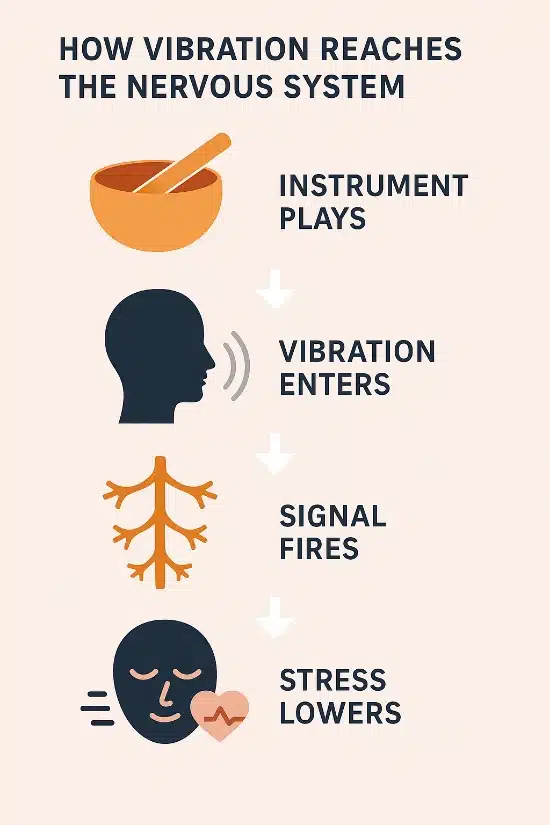
Visualizing the pathway from sound to stress relief—how vibration signals calm the nervous system.
The Science of Resonance: How Sound Influences the Human Body
The Biology of Vibration
Vibration travels swiftly through fluid and fascia, stimulating deep mechanoreceptors along connective pathways. Those receptors open ion channels that downshift sympathetic activity and elevate parasympathetic tone. Auditory inputs simultaneously send rhythmic cues to limbic centers governing emotion and attention.
Researchers tracking combined somatic and auditory stimulation report superior relaxation versus either input alone. A randomized trial on vibroacoustic therapy demonstrated significantly elevated parasympathetic heart-rate variability following just one session.
Sound vs. Noise: Therapeutic Frequencies That Matter
Beneficial frequencies cluster between thirty and one-hundred-twenty hertz, producing orderly harmonic overtones. Chaotic urban noise spans wide spectra that keep the amygdala in perpetual vigilance.
Practitioners therefore monitor decibel output and cap volumes below eighty decibels for comfort and safety. Safe resonance guidelines also avoid two-kilohertz peaks capable of bone-conduction discomfort. Calibrated instruments ensure predictable vibrational envelopes that nurture calm instead of triggering startle responses.
Sound-based therapies often rely on specific frequency ranges to achieve targeted physiological and emotional effects. The table below outlines commonly used frequency ranges and their associated benefits.
| Frequency Range | Typical Source | Primary Effect | Best Use Scenario |
|---|---|---|---|
| 30–50 Hz | Vibroacoustic beds, transducer chairs | Deep muscle relaxation, parasympathetic activation | Burnout recovery, physical stress relief |
| 60–80 Hz | Low-frequency soundtracks, tuned mats | Nervous system balancing, emotional decompression | Anxiety support, sleep induction |
| 100–200 Hz | Body monochords, some singing bowls | Mental clarity, light focus enhancement | Meditation, post-session grounding |
| 300+ Hz | Crystal bowls, tuning forks | Energy uplift, subtle stimulation | Mood support, afternoon revitalization |
Modalities in Practice: Tools, Techniques, and Delivery Methods
Vibroacoustic Therapy Devices (VAT)
Vibroacoustic beds embed transducers that broadcast synchronized tones through the spine and large muscle groups, accelerating muscle recovery. Clinicians select forty-to-seventy-hertz programs shown to favor parasympathetic dominance. The FDA classifies these systems as therapeutic vibrators intended for relaxation and minor pain relief. Staff disinfects equipment meticulously and adjust intensity settings to match individual comfort. Clients frequently describe lighter limbs and clearer focus minutes after stepping off the table.
Singing Bowls, Body Monochords & Sound Baths
Singing bowls spun from alloy or quartz emit shimmering overtones that linger gracefully around listeners. Body monochords rest directly on the torso, channeling vibration through bone and viscera. Group sound baths position gongs and chimes strategically to envelop participants in layered harmonics. Deeper instruments foster contemplative introspection, while brighter tones elevate mood and sharpen alertness. A study on singing bowl meditation showed significant drops in tension, anger, and fatigue in just one session.
Pairing Vibration with Breathwork and Meditation
Paced breathing synchronizes exhalations with vibration troughs, strengthening vagus-nerve signaling. Guided meditations overlay harmonic drones, giving wandering minds a stable auditory reference. Yoga nidra teachers incorporate low drums that align body scans with resonant waves. Home users often combine lightweight headphones and weighted blankets to craft multisensory bedtime rituals. Consistent pairing of breath and vibration gradually retrains stress responses toward calmer baselines.
What the Research Shows: Clinical and Experimental Insights
Stress Hormones, Anxiety Scores & Physiological Response
A randomized monochord study recorded thirty-percent cortisol reduction among psychosomatic inpatients. Vibroacoustic massage increased parasympathetic HRV among university students in a controlled study on stress. Singing-bowl meditation also lowered fatigue and improved mental well-being in community settings. Functional MRI scans reveal reduced amygdala activity after harmonic exposure, underscoring neurobiological credibility. Cumulative evidence positions acoustic therapy as a strong complement to talk therapy and pharmacological stress management.
Cognitive and Emotional Outcomes
University students displayed sharper focus on reading tasks after ten minutes of vibroacoustic stimulation. Profile of Mood States surveys revealed decreased anger and heightened vigor post-session. EEG recordings showed elevated alpha waves that correlate with relaxed yet alert cognition. In one randomized trial comparing Tibetan singing bowls to muscle relaxation, bowls outperformed on anxiety reduction and HRV improvement. Participants also noted better sleep and overall calm in follow-up surveys.
Who Benefits Most? Target Use Cases for Stress Relief
Burnout, High-Stress Professionals & Mental Load
Executives juggling nonstop deadlines schedule lunchtime vibration sessions to reset cognitive bandwidth quickly. Healthcare providers decompress because resonant waves bypass analytical fatigue and moderate adrenaline spikes. Fifteen-minute treatments restore creativity before demanding afternoon meetings—often paired with a quick Myers Cocktail for sustained energy. Employers observing wellness metrics notice fewer stress-related absences when sound lounges become available. Acoustic therapy therefore proves cost-effective for burnout prevention inside corporate wellbeing programs.
Trauma Recovery & Nervous System Regulation
Trauma survivors often prefer non-verbal methods that regulate physiology without revisiting painful memories. Low-frequency pulses stabilize heart rhythms and widen windows of emotional tolerance. Therapists blend monochord work with somatic experiencing to reinforce safe body awareness. Private rooms and trauma-informed consent protect sensitive clients from sensory overwhelm. Regular sessions support gradual desensitization, reducing flashbacks and hypervigilant startle patterns.
Insomnia, Anxiety & Mood Support
Evening sound baths assist insomniacs in shifting from hyperarousal to sleep-friendly theta rhythms. Anxious teens practice headset vibrations during study breaks to quiet intrusive thoughts. Older adults enjoy gentle chair transducers that ease agitation without pharmacological aid. Nightly routines entrain circadian cues, producing deeper restorative sleep cycles. Lower stress also promotes a lasting glowing complexion, thanks to improved circulation.
3 Practical Tips
Choose the Right Modality
Identifying personal stress triggers helps narrow equipment and session style efficiently. Athletes may prefer transducer beds targeting specific muscle zones for rapid recovery. Meditative personalities often gravitate toward crystal bowls that sustain long, soothing overtones. Frequent travelers find compact headsets convenient for on-the-go relaxation. Consulting providers remains essential when tinnitus or sensory hypersensitivity requires tailored frequency ranges.
Evaluate Tool Quality
Craftsmanship matters because higher metal purity yields cleaner harmonic profiles. Consumers should verify frequency outputs on electronic devices with calibration apps. Decibel readings confirm safe listening thresholds and prevent auditory fatigue. Reviewing warranty coverage ensures support if transducers or amplifiers fail. Premium build quality prevents distortion that might otherwise trigger headaches or anxiety.
Build Consistency
Scheduling sessions at predictable times reinforces neural entrainment patterns. Starting with ten-minute practices allows gradual adaptation without overwhelming the senses. Mood journals or HRV trackers provide tangible progress markers over several weeks. Ambient lighting cues signal the body to unwind quickly before practice. Celebrating small milestones sustains motivation and long-term adherence.
FAQ: Sound & Vibration Therapy
Is there a difference between sound baths and vibroacoustic therapy?
Sound baths immerse listeners in live instruments without direct bodily vibration contact. Vibroacoustic therapy delivers tactile pulses through transducers that resonate inside the body.
How soon do people typically feel the effects of sound-based stress relief?
Calmer breathing and softer muscle tone often emerge within five minutes. Continued sessions deepen benefits as neural pathways strengthen rhythmic familiarity.
Are there contraindications for people with sensory disorders or epilepsy?
Individuals with sound hypersensitivity or photosensitive epilepsy should consult physicians first. Practitioners adjust volume and lighting to minimize potential triggers safely.
Can vibration therapy be used with other forms of stress or trauma support?
Therapists frequently pair acoustic sessions with cognitive behavioral coaching for holistic regulation. Gentle vibration complements medication, breathwork, and movement therapies without drug interactions.
Nurturing Resilience Through Personalized Acoustic Care
Wellness seekers weave acoustic sessions between IV drips or hormone support to maintain balanced nervous systems. Clinicians often open appointments with five minutes of resonance to heighten receptivity. Multi-modal programs at Fountain of Youth SWFL track biometrics and fine-tune frequencies weekly for each participant. Clients receive take-home practice guides and follow-up calls to reinforce consistency beyond the clinic. Over time, personalized sound therapy transforms routine stress management into an uplifting, restorative ritual.
Medical review: Reviewed by Dr. Keith Lafferty MD, Fort Myers on July 7, 2025. Fact-checked against government and academic sources; see in-text citations. This page follows our Medical Review & Sourcing Policy and undergoes updates at least every six months.