
Here’s what you’ll learn when you read this article:
- Why the FDA removed prior heart attack and stroke warning language while adding class-wide blood pressure warnings.
- What the TRAVERSE trial showed about cardiovascular outcomes for men treated for hypogonadism.
- How updated labeling changes patient conversations, monitoring expectations, and treatment decisions in real life.
Blood Pressure Warnings and What TRAVERSE Really Means for Patients
Testosterone therapy sits at the center of a long-running safety debate. Men who need treatment for clinically low testosterone often hear conflicting messages about heart risks, blood pressure, and whether benefits outweigh downsides. In 2025, regulators reset that conversation. The U.S. Food and Drug Administration required class-wide labeling changes for testosterone products, reflecting newer evidence and clearer expectations for monitoring.
These updates carry into 2026 and directly affect how patients and clinicians talk about safety. Blood pressure monitoring now appears more prominently in labeling, and cardiovascular outcomes language reflects evidence from the JAMA summary of the FDA update and TRAVERSE context. This article explains what changed, why it changed, and how the new labels should guide real-world decisions.
What Changed in Testosterone Labels
A class-wide update, not a product tweak
The FDA instructed sponsors of all prescription testosterone products to update their labels together, based on the agency’s review of the TRAVERSE clinical trial findings and required postmarket ambulatory blood pressure (ABPM) studies, as described in the FDA announcement. This approach matters because it standardizes key safety language across products.
Two changes stand out. The FDA recommended removing language from the Boxed Warning related to an increased risk of adverse cardiovascular outcomes for all testosterone products, and it required blood pressure-related labeling changes informed by ABPM study results, as stated in the FDA class-wide labeling update.

What Changed in Testosterone Labels
Why the timing matters for patients
Many men started testosterone under older boxed-warning framing, while others avoided therapy entirely because the message felt unresolved. The revised labels change the shape of the conversation, but they do not eliminate the need for individualized risk review. The key patient takeaway is that two separate questions now sit side by side in labeling: adverse cardiovascular outcomes in the trial evidence the FDA reviewed, and blood pressure increases confirmed in ABPM studies. That distinction helps patients avoid false reassurance while also avoiding outdated fear. The FDA update supports that split by pairing TRAVERSE-based outcomes language changes with class-wide blood pressure warning additions.
Why the FDA Revisited Testosterone Safety
Earlier concerns and mixed signals
The FDA described prior safety actions related to testosterone products, including increased reports of stroke, heart attack, and death in men taking FDA-approved testosterone products that contributed to convening advisory committees in 2014 and subsequent safety communications, as summarized in the FDA class-wide labeling changes notice. Patients often encountered uncertainty during that period, with clinicians weighing incomplete evidence and evolving guidance.
Newer evidence drove clearer labeling
The FDA linked the 2025 labeling changes to two streams of evidence: results from required postmarket ABPM studies and findings from TRAVERSE, according to the FDA announcement. The FDA stated that ABPM evidence supported blood pressure warnings and TRAVERSE supported changes to cardiovascular outcomes language.
The TRAVERSE Trial Explained
What TRAVERSE was used to assess
The FDA identified TRAVERSE as the Testosterone Replacement Therapy for Assessment of Long-term Vascular Events and Efficacy Response in Hypogonadal Men clinical trial and described it as central to the labeling update, as stated in the FDA communication. The agency reported that results were submitted in 2023 and concluded no increase in the risk of adverse cardiovascular outcomes in men using testosterone for hypogonadism.
What the trial results mean in label language
TRAVERSE results prompted the FDA to recommend adding the results of the TRAVERSE trial to all testosterone products and removing Boxed Warning language related to increased risk of adverse cardiovascular outcomes, per the FDA labeling update. The JAMA report on the FDA update also noted that, although testosterone did appear to raise blood pressure, there was no increase in the risk of adverse cardiovascular outcomes, consistent with FDA’s stated conclusion.
Blood Pressure Takes Center Stage
What the new warning says
Updated labeling now includes blood pressure-related warnings. The FDA required adding product-specific information on increased blood pressure for testosterone products with completed ABPM studies and adding a new warning about increased blood pressure for testosterone products that did not previously have such a warning, as outlined in the FDA class-wide labeling changes announcement.
Why blood pressure monitoring becomes central
ABPM findings drove the blood pressure labeling changes. The FDA stated that results from completed ABPM studies confirmed an increase in blood pressure with use of all testosterone products class-wide, as described in the FDA update. The JAMA summary also reported that testosterone did appear to raise blood pressure, aligning with the FDA’s review.
The chart below helps translate the label changes into practical, appointment-ready questions. It summarizes how the updated labeling shifts monitoring and counseling priorities, so you can prepare for a clearer conversation with your clinician.
| Label area | What the FDA update means (plain language) | Practical patient takeaway | What to ask at your next visit |
|---|---|---|---|
| Cardiovascular outcomes language | Labels remove Boxed Warning language about increased risk of adverse cardiovascular outcomes, and labels add TRAVERSE results, per FDA. | You can discuss cardiovascular outcomes using the evidence the FDA reviewed, rather than older warning language. | “How does the label update change the way you weigh cardiovascular outcomes for me?” |
| Blood pressure warning | Labels include product-specific information on increased blood pressure where ABPM studies are completed and add a new warning where none existed before. | Blood pressure deserves routine attention during therapy, because FDA reviewed evidence showing class-wide increases. | “What blood pressure changes would prompt a dose adjustment or a pause?” |
| Evidence summary for patients | FDA’s review addressed both blood pressure (ABPM studies) and adverse cardiovascular outcomes (TRAVERSE), and labels reflect both. | Two different safety questions exist: blood pressure changes and adverse cardiovascular outcomes in the reviewed trial evidence. | “Can we talk through blood pressure findings and TRAVERSE outcomes separately?” |
| Limitation of Use remains | The FDA retained “Limitation of Use” language for age-related hypogonadism. | Diagnosis still matters, and labels continue to separate age-related decline from FDA-approved indications. | “What is the documented medical basis for therapy in my case?” |
| Patients already on therapy | FDA’s update changes labeling language and monitoring emphasis rather than implying abrupt discontinuation for stable patients. | A label change usually means “review and monitor,” not “panic and stop,” unless your clinician advises otherwise. | “Do you recommend any changes to my monitoring plan based on the new warning?” |
| Patients considering therapy | Labels clarify that blood pressure can rise while FDA cited no increase in adverse cardiovascular outcomes in men with hypogonadism in TRAVERSE. | You can center the decision on indication, expectations, and a monitoring plan aligned with label changes. | “If I start, what blood pressure monitoring do you want, and how soon?” |
| Formulations covered | FDA described multiple approved formulations and applied class-wide labeling updates across testosterone products. | Product form does not remove the need to discuss blood pressure warnings and the label’s updated outcomes language. | “Does my formulation change how we monitor blood pressure?” |
| Reporting side effects | FDA encourages reporting adverse events and quality issues through MedWatch. | If you experience problems, reporting supports ongoing safety surveillance tied to labeling updates. | “If I notice a new issue, how should I report it and document it?” |
Who Testosterone Therapy Is For—and Who It Is Not
Approved use remains narrow
The FDA stated that testosterone is approved solely for use in men who lack or have low testosterone levels in conjunction with an associated medical condition, as described in the FDA labeling changes announcement. Symptoms alone do not substitute for a clinical evaluation that matches labeled use.
Age-related decline is still excluded
The FDA retained “Limitation of Use” language for age-related hypogonadism and urged caution when using testosterone products for low testosterone due to aging, as referenced in the FDA update. This distinction continues to shape discussions about whether testosterone fits a patient’s situation.
How These Changes Affect Patient Care
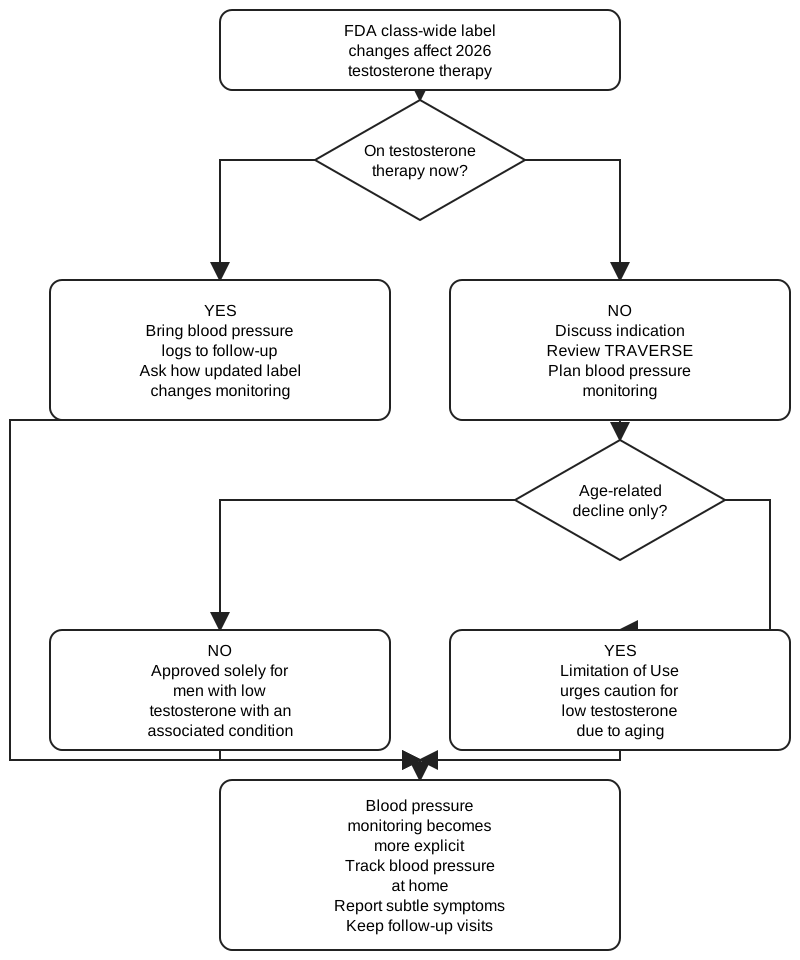
Conversations before starting therapy
Patients considering testosterone now have clearer labeling language to guide discussion. The FDA described that ABPM evidence supported a blood pressure warning while TRAVERSE findings supported removing Boxed Warning language about increased risk of adverse cardiovascular outcomes, as summarized in the FDA announcement and echoed in the JAMA summary.
That shift helps patients focus on what labeling emphasizes now: understanding the indication, reviewing cardiovascular outcomes language informed by TRAVERSE, and preparing for blood pressure monitoring during therapy.
Monitoring during treatment
Blood pressure measurement becomes a more explicit part of follow-up. The FDA stated that ABPM results confirmed increased blood pressure with all testosterone products class-wide, and it required labeling changes to reflect that evidence, per the FDA update. Patients with existing hypertension may need a more deliberate monitoring plan with their clinician.
Real-World Scenarios Patients Face
Starting testosterone with controlled hypertension
A man with well-controlled high blood pressure may worry that testosterone will shift his readings. The updated labeling supports a practical plan that centers on baseline assessment and ongoing monitoring, because the FDA described blood pressure increases confirmed through ABPM studies and required warning language class-wide, as stated in the FDA announcement.
Monitoring decisions belong in a shared discussion that also reflects TRAVERSE outcomes language now incorporated into labeling, as described by the JAMA report.
Continuing therapy after hearing about label changes
Some patients already using testosterone may hear about “new warnings” and fear sudden danger. The update shifts emphasis rather than implying a universal stop. The FDA described removing Boxed Warning language about increased risk of adverse cardiovascular outcomes and adding blood pressure warnings, as summarized in the FDA update.
Ongoing users can bring blood pressure logs and questions to a follow-up visit and ask how the updated label language changes monitoring priorities, using the FDA and JAMA summaries as a shared reference point.
3 Practical Tips
- Track blood pressure at home, and treat it like a short monitoring project. Take readings at consistent times, and record the cuff used, body position, and the numbers. Bring that log to visits so your clinician can separate one-off spikes from sustained change. Ask whether your plan should include a period of structured checks after dose changes, since labeling now emphasizes blood pressure effects. The FDA update that added class-wide blood pressure warnings makes these logs more useful than casual recollection.
- Report subtle symptoms promptly, and connect them to measurable data when possible. If headaches, dizziness, chest discomfort, or unusual swelling appears, write down when it happened and what your blood pressure showed that day. Bring those notes to your clinician instead of relying on memory, because the label change puts blood pressure effects in the foreground. If symptoms cluster after a dose change, that pattern can matter more than a single isolated episode. This approach supports the monitoring intent behind ABPM-driven labeling changes, while keeping the conversation practical.
- Keep follow-up appointments consistent, because the label changes shift what “routine monitoring” should include. Ask your clinician which metrics matter most for you over the next three to six months, and whether blood pressure checks should intensify after dose changes. Bring your home readings and a short symptom log so the visit focuses on trends, not guesses. Clarify how your clinician interprets the TRAVERSE language now included in labeling, and how that fits your personal risk profile. The FDA describes the class-wide shift in warning emphasis, and JAMA summarizes how TRAVERSE and blood pressure findings sit side by side.
Frequently Asked Questions
Does testosterone therapy still carry heart attack or stroke risk?
The FDA stated that TRAVERSE results concluded there was no increase in the risk of adverse cardiovascular outcomes in men using testosterone for hypogonadism, and the agency recommended removing Boxed Warning language about increased risk of adverse cardiovascular outcomes, as described in the FDA update. The JAMA summary also reported no increase in the risk of adverse cardiovascular outcomes while noting blood pressure increases.
Why did the FDA add a blood pressure warning now?
The FDA required labeling changes after reviewing results from required postmarket ABPM studies and stated that completed ABPM studies confirmed an increase in blood pressure with use of all testosterone products class-wide, as outlined in the FDA announcement. The JAMA report similarly noted that testosterone did appear to raise blood pressure.
Should men with high blood pressure avoid testosterone therapy?
Labeling now emphasizes blood pressure warnings based on ABPM evidence and describes TRAVERSE outcomes language for adverse cardiovascular outcomes, as summarized by the FDA and JAMA. A clinician can use that information to decide whether therapy fits a specific patient’s indication and monitoring plan.
How often should blood pressure be checked while on therapy?
The FDA required new blood pressure warning language and stated that ABPM studies confirmed increased blood pressure class-wide, as described in the FDA update. A clinician can translate that warning into a personalized monitoring schedule based on baseline readings and follow-up needs.
Staying Informed as Guidance Evolves
Regulatory updates reflect the evidence regulators reviewed and how that evidence changes labeling language. Clinics that follow developments closely help patients interpret changes without alarm. At Fountain of Youth in Fort Myers, staff stays current on FDA updates and published summaries related to testosterone labeling, so discussions reflect the latest class-wide warning language and trial-context reporting.
Questions? We are here to help! Call 239-355-3294.
Medical review: Reviewed by Dr. Keith Lafferty MD, Fort Myers on February 5, 2026. Fact-checked against government and academic sources; see in-text citations. This page follows our Medical Review & Sourcing Policy and undergoes updates at least every six months.