
Why This Comparison Matters
Many wellness seekers wonder which vitamin delivery method truly works best today. Therefore, this guide compares injections and oral supplements using current evidence and practical insights. Our clinicians at Fountain of Youth SWFL regularly counsel patients who crave straightforward, unbiased answers. Consequently, we assembled data on absorption, cost, convenience, and safety to support informed decisions. Ultimately, readers will discover actionable knowledge tailored to personal health goals and lifestyle realities.
How Vitamins Work: Absorption and Delivery Pathways
Digestive processes break down oral vitamins because stomach acid and enzymes dismantle protective coatings. Transporter proteins then move fragments through intestinal walls, yet several factors can hinder uptake efficiency. Clinicians inject vitamins directly into muscle or vein, thereby bypassing every digestive barrier. Research demonstrates nearly complete bloodstream availability within minutes, thus explaining rapid symptom improvements after injections. Biology remains complex, since each nutrient follows unique molecular pathways before reaching target tissues.
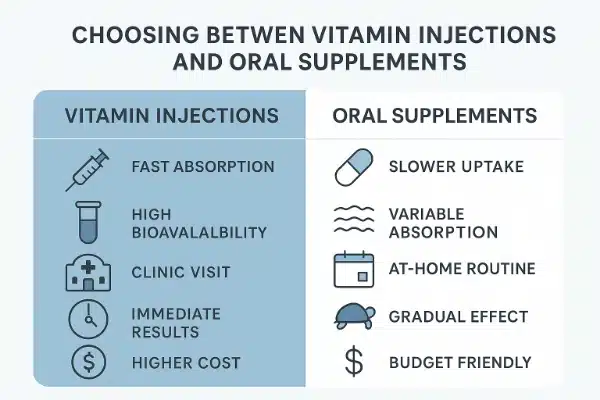
Bioavailability Breakdown: Which Method Delivers More?
Bioavailability Breakdown: Which Method Delivers More?
Scientific trials estimate typical tablet B12 bioavailability near two percent under healthy gastric conditions. Sucrosomial formulations raise oral absorption dramatically because protective matrices escort molecules through enterocytes intact. Injections deliver almost complete bioavailability, yet they require trained staff and sterile technique for safety. A systematic review of randomized trials found that 1,000-microgram oral B12 achieved biochemical correction comparable to intramuscular therapy. Clinicians also use high-dose vitamin C infusions to deliver potent antioxidants without digestive loss, and the Micronutrient Information Center notes that oral absorption plateaus around 200 mg.
Speed of Results: How Fast Do You Feel the Benefits?
Patients often report energy gains within hours after injections, because serum levels spike almost immediately. Oral therapy usually shows benefits within several days, since gut absorption unfolds gradually. Researchers monitored fatigue scales over four weeks and, consequently, found injections produced earlier symptom relief. Both methods achieved comparable endpoint scores by week eight, demonstrating long-term parity. Therefore, consider urgency and patience when choosing your vitamin delivery strategy.
Cost Comparison: What Are You Really Paying For?
Healthcare budgets experience pressure when patients schedule frequent injection visits because each appointment incurs additional fees. High-dose oral supplements cost pennies per day, yet insurance rarely covers them. A McMaster University budget-impact analysis projected Canadian savings of seventeen million dollars over five years by switching seniors to oral B12. Therefore, patients should calculate not only product price but also travel time and potential copayments. Our finance coordinator at Fountain of Youth SWFL transparently outlines these variables during every intake consultation.
Convenience and Commitment: What Fits Your Lifestyle?
Modern lifestyles demand flexibility, so daily pills appeal to travelers and shift workers. Injections occur weekly or monthly because healthcare providers must maintain sterility and correct dosing. Some rural residents drive long distances for injections, consequently skipping appointments and losing consistency. Oral supplementation travels easily in carry-on luggage, therefore supporting uninterrupted routines. Travelers returning dehydrated often schedule rapid rehydration drips to restore balance without interrupting busy schedules.
Use Case Scenarios: When One Method Is Clearly Better
Patients with pernicious anemia lack intrinsic factor, so injections restore B12 reliably and quickly. People recovering from gastric bypass surgery often absorb vitamins poorly, hence clinicians prefer injectable protocols initially. Athletes seeking occasional performance boosts might choose injections before competition because rapid effect matters. Adults pursuing long-term wellness usually select oral multivitamins, since convenience outweighs minimal absorption losses. Therefore, always match delivery mode to individual physiology, budget, and lifestyle priorities.
Visual Guide: Who Should Consider Which?
Charts translate complex data into quick decisions, so review the guide before selecting a method. Remember every cell reflects average evidence, whereas personal factors still deserve professional evaluation. Discuss the table with your clinician because context ensures optimal outcomes. Our medical team regularly updates the chart, therefore incorporating emerging research and regulatory changes. Now, explore the comparison below and identify which column resonates with your situation.
| Consideration | Vitamin Injections | Oral Supplements |
|---|---|---|
| Malabsorption conditions | Strongly recommended | Possible with advanced formulations |
| Severe deficiency | Fast correction | High doses may suffice |
| Convenience focus | Requires clinic visits | Fits daily routine |
| Budget savings | Higher cumulative costs | Cost-effective long term |
| Customization need | Provider tailors dose | Fixed commercial doses |
Safety, Side Effects, and Overdose Risk
Clinicians observe occasional redness at injection sites, yet symptoms usually resolve within hours. During peak flu season, many clients request our immunity support IV drips to reinforce natural defenses. Oral supplements can irritate sensitive stomachs, especially when patients ingest them without food. Water-soluble vitamins exit through urine, so overdose risk remains low for most nutrients. Fat-soluble vitamins accumulate in tissues, therefore monitoring prevents toxicity during high-dose protocols. Responsible clinics schedule periodic labs to verify safe serum ranges.

Common Questions About Vitamin Delivery Methods
FAQ: Common Questions About Vitamin Delivery Methods
Are vitamin injections better for boosting energy quickly?
Injections raise serum nutrient levels within minutes, so many clients feel energized sooner. Sustained energy still requires balanced sleep, hydration, and regular nutrient intake.
Can high-dose oral vitamins fully replace injections for B12 deficiency?
High-dose oral B12 achieves comparable biochemical correction because gut passive diffusion bypasses intrinsic factor. Clinicians still choose injections when extreme deficiency causes neurological symptoms requiring rapid reversal.
Is there a risk of taking too many oral supplements daily?
Excessive fat-soluble vitamins can accumulate, so toxicity becomes possible over time. Consult laboratory tests regularly and follow evidence-based dosing guidelines.
How often do vitamin injections need to be administered?
Frequency depends on nutrient type and deficiency severity, yet weekly sessions remain common initially. Later, clinicians extend intervals monthly once laboratory markers stabilize fully.
5 Practical Tips for Choosing the Right Method
- Schedule comprehensive bloodwork first because objective data guides dosage and delivery choices.
- Track subjective changes daily, so you notice subtle cognitive or mood shifts quickly.
- Choose reputable suppliers, therefore ensuring potency and excluding harmful contaminants.
- Consider logistical factors like travel distance to clinics since convenience sustains long-term adherence.
- Reevaluate strategy every quarter because nutrient needs evolve with age, diet, and activity.
Empowered Choices for Better Wellness
Knowledge empowers proactive health decisions, so use this comparison as a personalized roadmap. No single method fits everyone because genetics and lifestyle create unique nutrient demands. Partner with skilled professionals who interpret lab trends and adjust protocols responsibly. Consistently review symptoms and lab results, so you maintain balanced micronutrient status. Self-monitoring and expert guidance transform supplementation into a sustainable wellness habit.
Medical review: Reviewed by Dr. Keith Lafferty MD, Fort Myers on June 25, 2025. Fact-checked against government and academic sources; see in-text citations. This page follows our Medical Review & Sourcing Policy and undergoes updates at least every six months.