
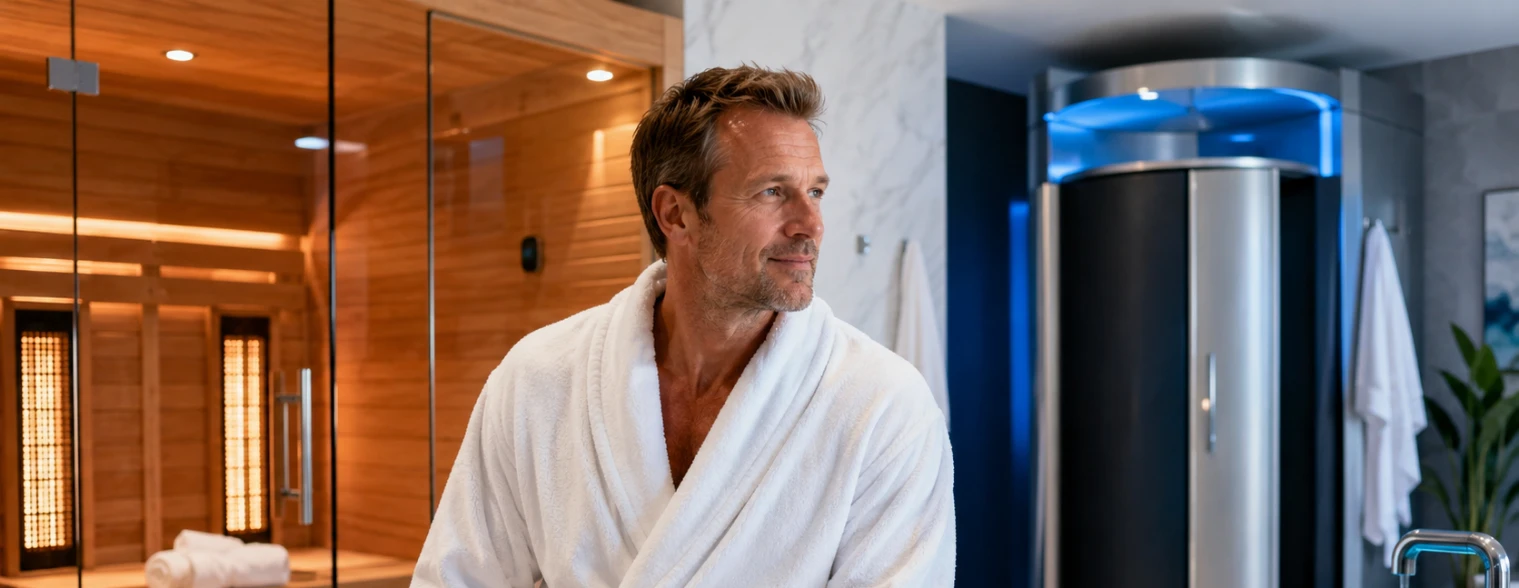
Recovery should match the stress your body tolerates
- Sauna, cryotherapy, and contrast therapy use different temperature signals, so the best option depends on the goal.
- Heat tolerance, cold sensitivity, hydration, medications, and recent outdoor activity can change the safest starting point.
- Recovery sessions work best when they support relaxation, soreness management, or routine consistency without exaggerated claims.
Not sure whether heat, cold, or contrast fits?
A guided rejuvenation and healing visit can help match your recovery goal with the right temperature-based option, especially after training, travel, stress, or outdoor activity.
Physician-reviewed content • Evidence-aware care • Personalized treatment planning
Temperature therapy is not one-size-fits-all
Some patients prefer warmth and relaxation, while others want a short cold exposure or a structured alternating routine. Related options include infrared sauna support and contrast therapy when heat and cold both fit the patient’s tolerance.
What Heat-and-Cold Recovery May Help With
Heat-and-cold recovery attracts people. They often want more than a quiet hour away from daily stress. Many Lee County patients hear about sauna, cryotherapy, and contrast therapy through gyms, sports recovery conversations, or friends who felt looser after a session. At Fountain of Youth in Fort Myers, Florida, staff stays current on developments in sauna, cryotherapy, and contrast therapy so patients can discuss these options with realistic expectations.
The most useful question is not whether these treatments sound appealing. A better question asks which body response fits the person’s goal. Someone with tight legs after pickleball may want a different option than someone seeking relaxation after a demanding workweek. Heat, cold, and alternating temperatures create different forms of controlled physical stress, so the right starting point depends on comfort, health history, and their reason for booking. That choice should feel personal, not automatic.
Which Recovery Option Fits Which Goal?
People often compare sauna, cryotherapy, and contrast therapy as though they compete for the same job. That comparison can mislead. They do not. Sauna emphasizes heat exposure and relaxation, cryotherapy emphasizes short cold exposure, and contrast therapy uses both temperature directions in one structured routine.
| Patient goal or concern | Sauna or passive heat | Cryotherapy | Contrast therapy |
|---|---|---|---|
| Relaxation after stress | Often fits heat-tolerant patients | May feel too intense | May suit structured-routine patients |
| Post-workout soreness | May feel soothing | Cold-focused recovery may appeal | Often considered for short-term recovery |
| Heat sensitivity | Requires extra caution | May fit some patients better | Heat phases still matter |
| Cold sensitivity | Often easier than cold exposure | Requires extra caution | Cold phases still matter |
| First recovery visit | Good for warmth-tolerant patients | Better for cold-comfortable patients | Better after discussing tolerance |
Choose recovery support by goal, not trend
A personalized contrast therapy discussion can help clarify whether alternating heat and cold fits your recovery needs, or whether sauna or cryotherapy makes more sense as a starting point.
Why Screening Matters Before Heat or Cold Exposure
Heat and cold both change how the body responds in the moment. Heat can raise heart rate and increase circulation demand as the body tries to cool itself. Cold exposure can create an intense sensory and cardiovascular response, especially for people who do not tolerate cold well. Alternating between the two still requires attention to hydration, dizziness, medications, and health history.
Lee County’s climate makes this especially practical. Outdoor work, beach days, boating, tennis, golf, and pickleball can already leave someone warm, tired, or mildly dehydrated. A patient who arrives after hours in the sun should think differently than a patient coming from an air-conditioned office. Staff guidance should consider the person’s day, not just the therapy listed on the menu. That local context can change the safest starting point.
People with cardiovascular concerns, fainting history, cold sensitivity, nerve issues, pregnancy, uncontrolled medical problems, or recent illness may need medical guidance before using heat or cold exposure. That does not mean every person in those categories automatically cannot participate. A responsible visit should slow down. It should ask better questions.
Sauna and Passive Heat: Circulation and Relaxation Support
What heat can change during a session
Sauna and passive heat exposure create a warming challenge. The body responds quickly. The skin warms, sweat production increases, and heart rate may rise as circulation adjusts. Some patients describe the experience as calming because the body eventually moves from heat exposure into a cooling and recovery phase. Researchers have studied those shifts through blood pressure, vascular measures, and autonomic markers such as heart-rate variability.
One sauna study in adults with cardiovascular risk factors found acute heart-rate variability changes after a 30-minute session. That finding helps explain why some people feel a noticeable downshift after heat and recovery. It does not mean a sauna session treats a heart condition or replaces exercise. A 2025 review of randomized passive-heating trials found mixed results across many vascular and metabolic measures, with only limited subgroup signals for systolic blood pressure.
What heat should not be expected to do
Sauna discussions often drift into language about detox, rapid fat loss, or effortless body transformation. The body already uses the liver, kidneys, lungs, skin, and digestive system to manage waste and fluid balance. Sweating can feel cleansing, but that feeling does not prove a medical detox effect. A better expectation focuses on warmth, relaxation, perceived recovery, and heat tolerance.
Heat also does not suit every day or every person. A patient who feels lightheaded, dehydrated, overheated, feverish, or unusually fatigued should not treat sauna as a toughness test. Lee County weather can make heat load more relevant than patients expect after outdoor activity.
Cryotherapy: Inflammation Signals and Safety Limits
What inflammation markers can show
Cryotherapy draws attention quickly. Cold exposure feels immediate and measurable. Whole-body cryotherapy studies now examine inflammatory signaling proteins called cytokines, which help the immune system communicate. Some research has reported movement in inflammatory markers after whole-body cryotherapy in studied groups. Those findings suggest measurable biological activity, but they do not guarantee pain relief or disease treatment for every patient.
Normal readers may hear “inflammation” and think of joint pain, soreness, swelling, or chronic health problems. Scientific markers do not translate that neatly. A lab-measured change can help researchers understand a mechanism, but the patient still needs to judge comfort, goals, and real-world response. A Cochrane review on whole-body cryotherapy for post-exercise muscle soreness also found too little high-quality research to support strong conclusions.
Why cold exposure needs caution
Cold exposure can feel bracing, energizing, or overwhelming depending on the person. People with cold sensitivity, circulation concerns, nerve symptoms, certain skin reactions, or cardiovascular concerns should take extra care first. An FDA adverse event report involving whole-body cryotherapy describes a serious skin reaction after repeated sessions and states that FDA had not cleared or approved whole-body cryotherapy devices. Reported injuries have included cold-related skin and eye problems, so screening and sensible use matter.
Cryotherapy also should not become a contest over maximum discomfort. A short, intense cold session may appeal to a gym-focused patient, but another person may find it stressful rather than restorative. The best first experience usually starts with a clear goal and a willingness to stop if symptoms feel wrong.
Contrast Therapy: Structured Recovery for Active Lee County Lifestyles
What research can tell everyday patients
Contrast therapy alternates heat and cold. It does not rely on one temperature direction. People often choose it after exercise, travel, long workdays, or repeated physical activity. The rhythm may appeal to patients who like a defined routine and a more dynamic recovery experience. Researchers usually study it through short-term outcomes such as soreness, perceived fatigue, lactate clearance, and performance measures.
A 2026 study in collegiate male swimmers found that contrast water therapy lowered post-recovery blood lactate and reduced subjective fatigue compared with passive rest. The same study did not show a clear improvement in 100-meter swimming performance. A person may feel more recovered after contrast therapy without becoming faster, stronger, or medically healthier from one session.
How local routines change the decision
Lee County lifestyles make contrast therapy relevant beyond formal athletics. A weekend with boating, beach walking, gym training, golf, or pickleball can leave people feeling stiff and drained without any actual injury. A structured heat-cold routine may appeal to those patients because it gives them a defined recovery stop instead of another vague wellness habit. The session still needs to match their heat and cold tolerance, especially after hours in humidity.
Common Recovery Promises That Need Careful Language
Some phrases sound persuasive because they compress a complicated body response into a simple promise. Patients can protect themselves by replacing those phrases with more precise expectations. This matters across sauna, cryotherapy, and contrast therapy because each modality can feel powerful in the moment.
| Common phrase | More careful patient-facing expectation |
|---|---|
| Detoxes the body | Supports sweating and relaxation during heat exposure |
| Cures inflammation | May influence certain measured inflammatory markers |
| Reverses aging | Supports a wellness routine, not age reversal |
| Burns fat fast | Does not replace nutrition, exercise, or medical weight care |
| Replaces exercise | May complement recovery habits, not replace training |
A better recovery conversation starts with the person’s actual goal. Some people want to feel calmer. Others want help after workouts, travel, long shifts, or outdoor activity. The right therapy should make sense for that goal and the person’s health background.
What a First Recovery Visit Should Help You Decide
A first recovery visit should clarify the reason for treatment. That step should come before choosing the modality. A patient may describe soreness, stress, low energy, poor recovery after activity, or general interest in wellness support. Those goals can point toward heat, cold, contrast, or a more conservative starting choice. The process should feel like a guided decision rather than a blind menu selection.
The visit should also address comfort, timing, and response. Some patients tolerate heat well but dislike intense cold, while others prefer a brief cold exposure over an extended warm session. A patient who gets dizzy easily, feels unwell, or recently spent significant time in the sun may need to pause or choose a gentler approach. Questions? We are here to help! Call 239-355-3294.
A recovery treatment should help the body settle. It should not force a person through discomfort for its own sake. Sauna may fit patients who want warmth and relaxation, cryotherapy may fit patients interested in short cold exposure, and contrast therapy may fit people who want a structured routine. Lee County patients have many reasons to care about recovery, from active hobbies to demanding schedules.
Who may need a more guided recovery plan?
Heat and cold exposure should fit the person’s tolerance, not just the desired benefit. A more guided first session can help patients avoid pushing too hard before they know how their body responds.
- Outdoor activity, sun exposure, or travel leaves the body warm, tired, or dehydrated before the visit.
- Heat sensitivity, cold sensitivity, dizziness, nerve symptoms, or cardiovascular history affects comfort and screening.
- Workout soreness, stress recovery, and general wellness goals need different starting points.
Those details can help determine whether infrared sauna, cryotherapy, contrast therapy, or a gentler recovery path fits best.
Questions Lee County Patients Ask Before Trying Heat-and-Cold Recovery
Is infrared sauna different from a traditional sauna?
Infrared sauna and traditional sauna differ in how they deliver heat. Traditional sauna typically warms the surrounding air, while infrared sauna uses infrared energy as part of the warming process. Patients should focus less on which sounds more advanced and more on comfort, heat tolerance, and whether a warm recovery session fits their goal.
Does cryotherapy actually reduce inflammation?
Whole-body cryotherapy research has measured changes in certain inflammatory signaling proteins. Some studies report movement in markers researchers use to study inflammatory response. Those findings do not mean cryotherapy treats inflammatory disease or guarantees symptom relief. Patients should view it as recovery support that requires appropriate screening.
Is contrast therapy better than sauna or cryotherapy alone?
Contrast therapy is not automatically better than sauna or cryotherapy alone. It may suit patients who tolerate both heat and cold and want a structured recovery session. Sauna may feel better for relaxation-focused patients, while cryotherapy may appeal to people who prefer brief cold exposure. The best choice depends on the person’s goal and tolerance.
How often should someone use sauna, cryotherapy, or contrast therapy?
Research protocols vary, and patients do not all respond the same way. A frequency that suits one active person may not suit someone with heat sensitivity, cold sensitivity, or medical concerns. Staff guidance should consider the patient’s health history, goal, first-session response, and comfort level. A cautious starting plan usually gives better information than pushing frequency too quickly.
Build a recovery routine around tolerance
A good temperature-based plan respects the person’s response during and after the session. Patients often learn the most from a measured first visit that tracks comfort, hydration, perceived recovery, and how they feel later that day.
Cryotherapy may fit patients who prefer brief cold exposure, while contrast therapy may fit those who tolerate a structured heat-and-cold routine.
Medical review: Reviewed by Dr. Keith Lafferty MD, Fort Myers on August 3, 2026. Fact-checked against government and academic sources; see in-text citations. This page follows our Medical Review & Sourcing Policy and undergoes updates at least every six months.
