The Role of Biotin in Human Metabolism and Tissue Health
Biotin, often referred to as vitamin B7 or vitamin H, plays a crucial role in human metabolism. This water-soluble member of the B-complex family activates key carboxylase enzymes involved in breaking down fats, carbohydrates, and proteins. It supports ATP production by enabling efficient nutrient conversion into usable energy.
Beyond metabolism, biotin facilitates cellular repair and keratin formation, which influences hair structure and skin regeneration. Because the body excretes excess biotin rapidly, maintaining stable levels requires consistent intake. Dietary gaps, stress, or certain medications can deplete biotin levels, leading to mild or even undiagnosed deficiencies. Research published in Trends in Food Science & Technology also notes biotin’s regulatory effect on gene expression linked to immune health and cellular function.
Why Injection? The Case Against Oral Biotin
Oral biotin remains popular due to ease of use, but the body doesn’t always absorb it effectively. Many individuals lose a large percentage of the active compound before it reaches circulation. Digestive health, concurrent food intake, or GI inflammation significantly alters uptake. Even with high doses, patients may never reach desired therapeutic levels.
Those recovering from bariatric surgery or dealing with inflammatory bowel disorders often face impaired absorption. These individuals can benefit from bypassing the digestive tract altogether. Injections offer a more predictable solution, especially when symptoms like brittle nails or diffuse hair thinning persist despite oral regimens.
While some patients show no obvious dietary shortfall, a range of physiological and lifestyle stressors can impair biotin metabolism. The table below summarizes known depletion factors, their mechanisms, and the potential clinical impact.
| Depletion Factor |
Mechanism |
Clinical Relevance |
| Anticonvulsant Medication |
Increases hepatic metabolism of biotin, accelerating excretion |
May require higher or more frequent dosing to maintain effect |
| Smoking |
Elevates metabolic turnover, reducing circulating biotin levels |
Often necessitates dose adjustments for therapeutic outcomes |
| Alcohol Consumption |
Interferes with absorption and increases urinary loss |
May worsen symptoms like fatigue or dull skin despite supplementation |
| Pregnancy |
Increases demand for biotin due to fetal development needs |
Marginal deficiency common in late pregnancy; may require targeted support |
IM Biotin Delivery: Pharmacological Advantages
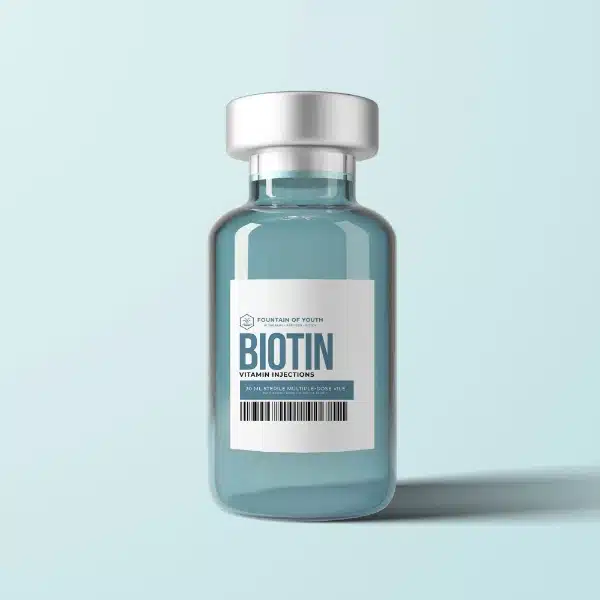
Biotin intramuscular (IM) injections provide an immediate systemic advantage. Unlike pills, which pass through digestion and liver metabolism, IM injections deposit nutrients directly into richly vascularized muscle tissue. This area offers rapid nutrient uptake with minimal degradation.
As the vitamin enters circulation intact, the body uses nearly 100% of the administered dose. This efficiency enhances symptom resolution timelines and may support those experiencing energy dips or structural tissue concerns. “Oral absorption often varies between 20% and 50%, depending on gut health and timing,” according to StatPearls.
Concentrated IM doses also benefit individuals with inconsistent supplement habits or low dietary diversity. Because biotin does not accumulate in fat stores, periodic replenishment supports steady plasma levels.
Comparing Delivery Methods: Oral vs. Intramuscular
From a clinical and practical standpoint, IM injections outperform oral biotin in several categories. Oral routes offer convenience but depend on daily compliance and proper digestive function. In contrast, IM delivery requires less frequent administration and avoids unpredictable absorption pathways.
While oral forms work well for baseline maintenance in healthy individuals, IM injections serve therapeutic or corrective functions. These include supporting hair and nail recovery, offsetting depletion from medication use, or enhancing metabolic support.
IM Biotin Delivery: Pharmacological Advantages
Injection regimens generally follow a set schedule based on need. For example, some may receive weekly doses for two weeks, followed by monthly injections. The periodic nature reduces compliance issues, while maintaining elevated serum levels.
Validated Uses for IM Biotin
Evidence supports biotin injection as an effective tool for reversing documented deficiencies. Such deficiencies can be congenital, such as biotinidase deficiency, or acquired due to diet or medical conditions. Symptoms of deficiency include red, flaky rashes around the eyes or mouth, hair thinning, and fatigue.
Clinicians also use IM biotin for patients recovering from long-term antibiotic use or experiencing malabsorption syndromes. In these cases, injection ensures nutrient delivery despite impaired gut function.
Even in cosmetically-driven treatment plans, physicians often identify subtle nutrient gaps that oral supplements fail to address. Targeting these deficiencies through injectable routes allows practitioners to tailor protocols based on severity, comorbidities, and desired outcomes.
Wellness, Aesthetics, and the Limits of Evidence
Biotin remains a staple in the wellness industry for claims tied to hair, skin, and nail appearance. That said, studies confirming efficacy for aesthetic enhancement in non-deficient populations remain limited. The clinical literature highlights stronger outcomes in patients with confirmed need.
Nonetheless, many patients report perceived benefits like reduced shedding, improved nail strength, or enhanced glow. These subjective responses likely stem from correcting undiagnosed subclinical deficiencies. “Biotin’s aesthetic benefits often appear when metabolic demands exceed dietary intake,” as noted by the Cleveland Clinic.
A systematic review published in the Journal of Dermatology Nurses’ Association concluded that evidence for hair growth benefits in healthy individuals remains inconclusive. Practitioners using biotin injections in wellness settings typically clarify the empirical nature of such treatments. When clients understand the distinction between evidence-based therapy and enhancement protocols, satisfaction tends to improve.
Tailoring the Dose: Therapeutic vs. Maintenance
Dosing for biotin IM injections depends entirely on intent and baseline levels. For established deficiencies, doses range between 5 and 10 mg per injection. This concentration far exceeds the recommended daily intake of 30 micrograms found in typical prenatal or multivitamin supplements.
During a loading phase, patients might receive injections every three days over a two-week span. Once plasma levels stabilize, practitioners may shift to a maintenance plan, often involving monthly or bi-monthly dosing. For purely cosmetic protocols, lower-frequency injections may suffice.
Our team at Fountain of Youth keeps up with developments in nutrient therapy research to ensure patient regimens reflect the most current safety and efficacy data.
Safe Administration of Biotin IM Injections
Safe intramuscular injection hinges on technique, preparation, and anatomical accuracy. Compounding pharmacies prepare most biotin injections, and providers must verify sterile handling. Using alcohol swabs, drawing solutions correctly, and avoiding air bubbles all minimize infection risk.
Injections enter the muscle at a 90-degree angle using a swift, controlled motion. Needle size varies, but a 22- to 25-gauge needle, 1 to 1.5 inches long, typically works well for most adults. The muscle fascia tolerates dense or thick vitamin solutions far better than fat tissue.
Site selection remains vital. The ventrogluteal site offers safety due to muscle thickness and distance from major nerves. The deltoid accommodates smaller volumes but limits injection size to about 2 mL. For split dosing, the vastus lateralis (outer thigh) provides an alternate location.
Patient Experience: What to Expect
Preparing for a biotin IM injection begins several days before the appointment. Patients should hydrate thoroughly, ideally consuming 62 ounces of water daily for five days. A light protein meal before the appointment helps support absorption and stabilize energy levels.
The injection itself takes less than 10 minutes and rarely causes significant discomfort. Most patients describe it as tolerable and resume normal activities immediately afterward. There’s no sedation, and recovery requires only basic aftercare.
Patients should monitor the site for mild soreness, swelling, or redness. These effects typically fade within 24 hours. By keeping the site clean and staying well-hydrated, patients promote smooth healing and optimal nutrient uptake.
Important Safety and Interaction Alerts
Despite its favorable profile, high-dose biotin does interact with other drugs and lifestyle factors. Anti-seizure medications like phenytoin or carbamazepine accelerate biotin breakdown, reducing its effectiveness. Smokers also metabolize biotin more quickly, often requiring higher or more frequent doses.
Patients must avoid alcohol, aspirin, and NSAIDs for 72 hours before and after treatment. These agents thin the blood and increase the risk of post-injection bruising or delayed clotting.
Although rare, allergies can occur. Symptoms may include a rash, hives, or difficulty breathing. In such cases, patients should seek medical attention and suspend further supplementation.
Diagnostic Risk: Lab Test Interference
The FDA has issued warnings about biotin’s potential to disrupt diagnostic tests that rely on biotin-streptavidin interactions. These include cardiac assays such as troponin tests used to identify acute heart events.
Biotin may cause false-negative results, delaying diagnosis and treatment. Endocrine panels, reproductive hormone levels, and even vitamin D measurements may yield inaccurate results when circulating biotin is elevated.
Patients undergoing injections must disclose their treatment to all healthcare providers and laboratory staff before bloodwork is performed.
Understanding Regulatory Context
Clinics commonly source biotin injections from compounding pharmacies operating under section 503A of the U.S. Food, Drug, and Cosmetic Act. These facilities follow rigorous safety protocols but do not submit products for FDA pre-market approval.
This regulatory nuance means that final responsibility rests with the prescribing clinician. Providers must screen patients thoroughly, explain the compounded nature of the injection, and confirm informed consent before initiating therapy.
Informed patients are less likely to experience confusion or concern during their treatment journey, especially when they understand how personalized these regimens are.
3 Practical Tips
Hydrate consistently for at least five days before your appointment. Water intake improves vitamin distribution and absorption post-injection.
Always tell your lab technician or doctor if you are receiving biotin injections. This small step can prevent dangerous misinterpretation of test results.
Keep a journal of how you feel between appointments. Notes on energy, hair texture, or skin clarity can help fine-tune your regimen.
FAQ: Common Questions About Biotin IM Injections
How soon will I see results from Biotin injections?
Some patients notice increased energy within a few days due to improved metabolic function. Aesthetic results such as stronger nails or reduced shedding may take several weeks of consistent treatment.
Are Biotin injections safe during pregnancy?
Biotin plays a vital role in fetal development, but high doses should only be used if medically necessary. Most prenatal vitamins contain sufficient biotin for pregnancy needs.
Can I take oral Biotin while getting injections?
Supplemental oral biotin is generally unnecessary during an injection protocol unless advised by your provider. Overlapping doses may lead to unnecessarily high circulating levels.
What lab tests are most affected by Biotin interference?
Cardiac markers like troponin, thyroid hormones (TSH, T4), and reproductive panels are most vulnerable. Always notify your provider before testing.
Why Informed Use Matters in Wellness Treatments
IM biotin injections offer targeted support for individuals whose bodies struggle to absorb or utilize nutrients effectively. They also serve as a bridge for patients seeking metabolic or aesthetic improvements when oral supplements fall short.
Real benefits depend on proper screening, realistic expectations, and responsible administration. When patients and providers align goals and understand the scope of treatment, the path forward becomes clearer.
Questions? We are here to help! Give us a call at 239-355-3294.
Whether correcting a deficiency or exploring preventive support, intramuscular biotin must be used with full awareness of its clinical power and diagnostic implications. The outcome depends not just on the vitamin—but on the care, clarity, and consistency behind its delivery.
Biotin injections are typically selected for hair, skin, and nail support, but they integrate easily into broader wellness and performance plans. For patients who want to protect their immune system while working on aesthetic goals, Vitamin C and Tri-Immune Boost injections can be scheduled on separate days for layered antioxidant and immune support. Glutathione often complements biotin when skin brightness, detoxification, and oxidative stress reduction are part of the same strategy. To reinforce cellular energy and recovery, many protocols fold in NAD+, Amino Blend, and Mineral Blend so mitochondria, muscles, and nerves receive consistent nutrient input. Vitamin D3 and B-Complex injections can further stabilize mood, bone health, and day-to-day vitality, turning a beauty-focused series into a more complete wellness framework.
Medically reviewed by Marina Caldwell, MD, author at Fountain of Youth SWFL on December 5, 2025. Content was fact-checked by Emily Hartman against peer-reviewed research and government or academic sources; see in-text citations. This page follows our Medical Review & Sourcing Policy and undergoes updates at least every six months. Last updated December 5, 2025.