
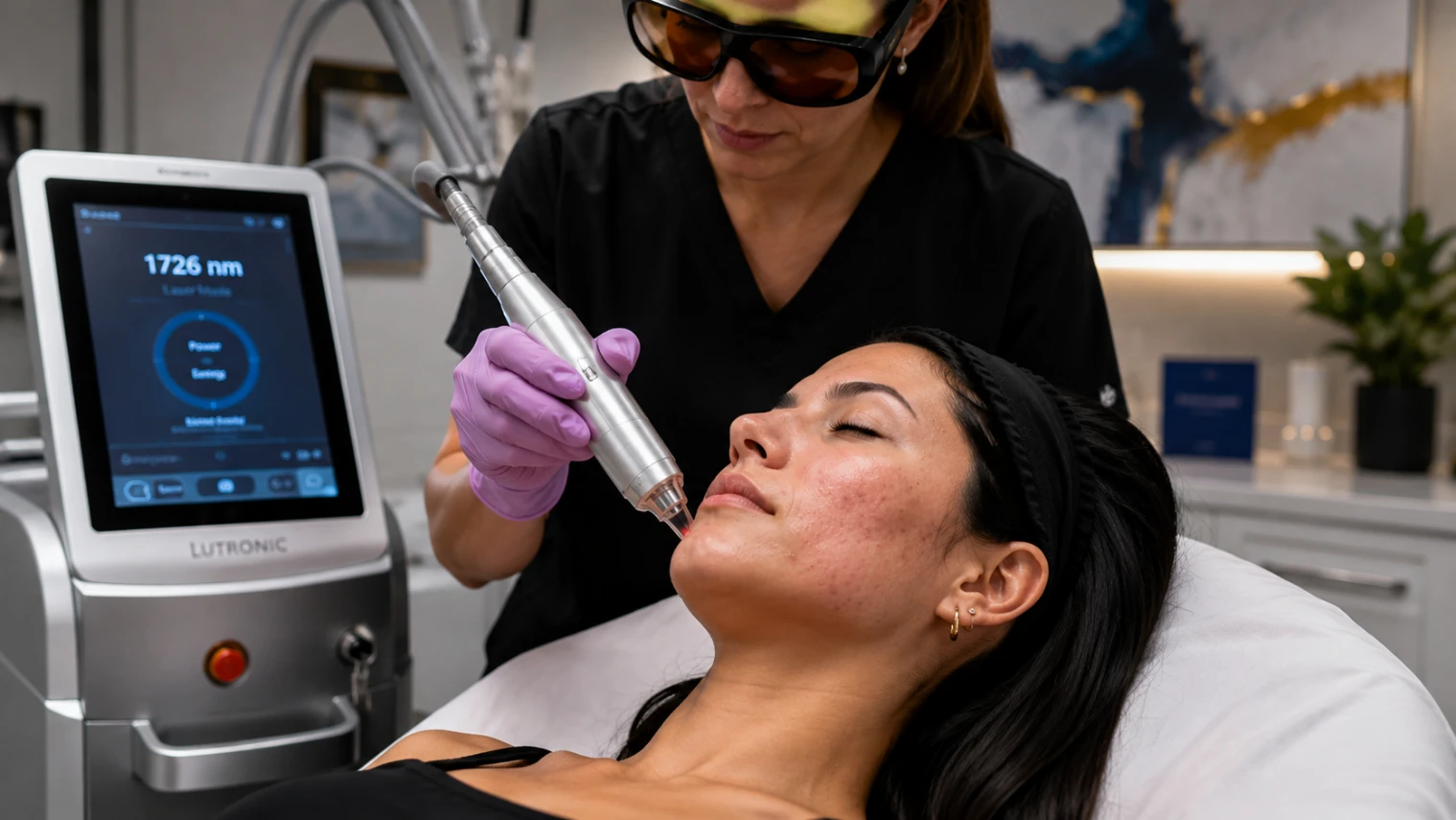
A 1726-nanometer laser can reduce active inflammatory acne without adding another daily treatment step, but it does not automatically replace medication. For people in Fort Myers who feel worn down by repeated creams, pills, or short-lived improvement, the technology offers a different route by directing energy toward oil-producing sebaceous glands. The goal is to lower one driver of inflammatory breakouts rather than simply exfoliating the skin surface. Results vary, and a proper acne assessment still matters before anyone decides whether the treatment fits.
Fountain of Youth in Fort Myers, Florida, follows developments involving sebaceous-gland laser technology and emerging acne research. The newer evidence is encouraging because improvement continued after the treatment series ended in a prospective multicenter study. That pattern does not mean every patient will become clear, remain medication-free, or avoid maintenance care. The more useful question is whether the laser’s biological target matches the person’s acne pattern, scarring risk, treatment history, and tolerance for ongoing therapy.
The Three-Layer Acne Target Map
Acne care becomes easier to evaluate when active disease, recurrence drivers, and post-acne damage are separated. A single procedure rarely addresses all three layers equally well. This framework helps readers judge what the 1726-nanometer laser can reasonably target and what still needs a different plan.
Layer 1: Active Inflammation
Red, tender, or swollen lesions represent the clearest treatment target for a sebaceous-gland laser. The FDA-cleared indication concerns inflammatory acne rather than every pore, mark, or scar. Lesion type and severity should therefore be documented before treatment begins.
Layer 2: Recurrence Drivers
Oil production is only one contributor to recurring acne. Clogged follicles, hormonal patterns, medication effects, skin-care irritation, and inconsistent treatment may still matter. A gland-focused device can address one pathway without eliminating every reason breakouts return.
Layer 3: Marks and Scars
Brown marks, persistent redness, raised scars, and depressed scars are not interchangeable concerns. The acne laser is not designed to mechanically release or remodel every established scar. Post-acne texture and discoloration usually require separate assessment after active inflammation is controlled.
Match the Treatment to the Acne Pattern
A clinical evaluation can confirm whether active inflammation, scarring, or another skin condition is driving the visible problem. Reviewing Fountain of Youth’s medical aesthetics services can frame which available options deserve discussion. The goal is to select a treatment target before selecting a device.
Build the Plan Around the Skin in Front of You
Readers comparing newer acne technologies can review precision acne care for a broader diagnostic perspective. Medical-grade skincare may still support cleansing, barrier care, or maintenance within a staged plan. Neither resource should be treated as proof that one procedure fits every acne pattern.
What Makes This Acne Laser Different
It Targets Oil-Producing Glands
Acne develops through several interacting processes, including excess oil, clogged follicles, microbial activity, and inflammation. The 1726-nanometer wavelength is absorbed by sebum within sebaceous glands, allowing controlled heat to reach those glands below the skin surface. Cooling protects more superficial tissue during energy delivery. This gland-focused mechanism separates the device from broad resurfacing treatments that primarily act on surface texture or pigment.
The FDA has cleared a 1726-nanometer system for the long-term treatment of mild-to-severe inflammatory acne vulgaris. Regulatory clearance applies to the stated indication and the specific device reviewed by the agency. It does not mean every 1726-nanometer platform uses identical cooling, pulsing, software, or treatment settings. Depressed scars, raised scars, lingering red areas, and brown spots still require separate evaluation.
What the Newer Clinical Evidence Found
One-Year Results After Three Treatments
A one-year multicenter study followed 104 patients with moderate-to-severe facial acne and Fitzpatrick skin types II through VI. Participants received three laser treatments spaced two to five weeks apart. Eighty-nine participants returned for the 12-week assessment, and 71 returned at 52 weeks. Among those assessed, the proportion reaching at least a 50% reduction in inflammatory lesions increased from 79.8% at 12 weeks to 91.5% at one year.
The percentage rated clear or almost clear rose from 36.0% at three months to 66.2% at one year. Those figures show that response can continue building after the last appointment rather than peaking immediately. The study did not compare the laser with medication, a sham procedure, or another device. Its open-label design, absence of a control group, reliance on image assessment, and one-year participant attrition limit how confidently the percentages can be generalized.
How to Read the 91.5% Response Figure
The 91.5% figure describes the participants who returned and were assessed at the 52-week visit. It should not be read as 91.5% of every person originally enrolled, every patient treated elsewhere, or every person using another laser platform. Seventy-one of the 104 enrolled participants completed the one-year assessment. The result remains clinically meaningful, but the denominator and follow-up loss belong beside the headline percentage.
A responder in this study achieved at least a 50% reduction in inflammatory lesion count. That threshold does not necessarily mean completely clear skin, permanent remission, or no further treatment. The clear-or-almost-clear rate was lower than the responder rate, which reinforces the difference between substantial improvement and total clearance. Patients should ask which outcome their clinic intends to measure and how incomplete response will be handled.
Why Improvement May Continue
The delayed pattern fits the treatment’s intended target. Controlled thermal injury to sebaceous glands may reduce oil output and change conditions that support recurring inflammatory lesions. Skin still needs time to move through existing clogged follicles and inflammatory cycles. A slower improvement curve is therefore plausible, although researchers have not established one identical timeline for every patient.
Turn the Research Into a Practical Decision
Clinical percentages become useful only when they are interpreted alongside lesion type, scarring risk, skin tone, and previous treatment response. A consultation should define which lesions count as treatment targets and which concerns need another approach. It should also establish how progress will be photographed, counted, and reviewed over time.
What Treatment Can and Cannot Replace
A laser series is not a daily medication, which can appeal to someone who struggles with irritation, adherence, or repeated prescription changes. The treatment does not erase the need for diagnosis because hormonal acne, medication-related breakouts, folliculitis, and other conditions can resemble ordinary acne. A clinician may still recommend a cleanser, topical product, oral medication, or maintenance plan before, during, or after the series. Stopping a prescribed treatment without guidance can allow acne to flare or complicate the evaluation of progress.
The American Academy of Dermatology’s updated acne guidelines strongly support established options such as benzoyl peroxide, topical retinoids, antibiotics used appropriately, and combination therapy. The same update found insufficient evidence at that time to recommend laser and light devices as a category. Newer 1726-nanometer studies add relevant data, but they do not automatically replace the broader evidence base behind standard care. A practical plan may use a laser as an alternative, an adjunct, or a later option when standard treatments have not been acceptable or sufficient.
FDA Clearance and Guideline Recommendations Are Different
FDA clearance and professional guideline recommendations answer different questions. A 510(k) clearance permits marketing for a stated indication after the agency reviews the submission and determines substantial equivalence to a legally marketed predicate device. A clinical guideline evaluates the wider evidence base and decides whether available data support recommendations across practice. A device can therefore be cleared while a guideline still considers evidence insufficient for laser and light devices as a broad category.
This distinction prevents two common errors. FDA clearance should not be described as proof that a device outperforms established medication, while guideline uncertainty should not be described as proof that the device never works. The responsible interpretation is narrower: the device has a cleared indication, newer studies report encouraging outcomes, and comparative evidence remains limited. Treatment selection still depends on acne severity, scarring risk, previous response, medical history, and tolerance for ongoing care.
Daily medication may remain the most efficient starting point for mild clogged pores or a small number of breakouts. A device-based discussion may become more relevant when inflammatory lesions remain frequent, painful, persistent, or difficult to manage with a daily regimen. Some patients may value fewer daily steps even when occasional topical care remains necessary. The realistic goal is better control with a manageable plan, not an automatic promise of permanent clearance.
Skin Tone, Comfort, and Short-Term Reactions
The one-year study included Fitzpatrick skin types II through VI, providing broader skin-tone representation than trials limited mainly to lighter skin. No blistering, crusting, scarring, or treatment-related lightening or darkening of skin color was reported in that study. Those findings are reassuring, yet they do not prove zero risk for every complexion. Device settings, cooling, operator technique, recent sun exposure, and individual pigment history still require careful review.
Temporary redness and swelling were common in the clinical data submitted to the FDA. Mild post-treatment acne flaring and dryness were reported less often. These reactions generally resolved, but the exact experience can differ by device, settings, and individual response. Patients should receive written aftercare instructions and a contact plan for unexpected pain, blistering, or prolonged color change.
Comfort methods are not identical across all 1726-nanometer platforms. A separate temperature-monitoring report described air cooling, thermal imaging, multipulse energy delivery, and software-adjusted power in one system. Its surface-temperature monitoring was intended to support selective heating at sebaceous-gland depth while controlling epidermal temperature. Those methods should not be assumed to describe every device, every office protocol, or every patient experience.
How It Differs From RF Microneedling
The two procedures can appear near each other on a treatment menu, but their primary targets differ. A 1726-nanometer acne laser sends light energy toward sebaceous glands to address active inflammatory breakouts. RF microneedling places small needles into the skin and delivers radiofrequency heat at selected depths to create controlled tissue remodeling. That remodeling approach is often considered when texture or established acne scars are the main concern.
A person with both active acne and established scars may need treatment in stages rather than during the same visit. Active breakouts generally deserve control before aggressive scar-focused work because new lesions can create new marks. The acne laser does not mechanically release deep scars, and RF microneedling does not share the same sebum-selective target. Labeling inflamed lesions, clogged pores, discoloration, and true scarring separately prevents one procedure from being expected to solve four different problems.
Who May Be a Reasonable Candidate
A reasonable candidate may have recurring inflammatory acne and want an option that does not depend on perfect daily adherence. Previous irritation, limited response, or reluctance to continue certain medications may shape the discussion, but none of those factors automatically proves candidacy. The assessment should confirm that the visible lesions are acne, identify how much is inflammatory, and document current products and prescriptions. Pregnancy status, medical conditions, recent procedures, and medication history should be reviewed according to device labeling and the treating clinician’s protocol.
Expectations should include gradual change, possible temporary flaring, and the chance that maintenance care will still be needed. Scar-only concerns require a different treatment plan because the laser’s cleared indication concerns inflammatory acne. Age also matters because published studies and device labeling may cover defined patient ranges. A parent or guardian should be involved whenever the patient is a minor.
The consultation should identify the exact device, who performs the procedure, which comfort measures are used, and how follow-up is handled. It should also explain what would count as inadequate response and when another treatment pathway would be considered. Photographs and lesion counts can make progress easier to judge than memory alone. Consistent lighting, similar angles, and notes about medication changes reduce confusion.
What to Track Between Treatment Visits
A simple record can help the clinician separate a temporary flare from a meaningful trend. The same tracking method should be used each week rather than changing standards after every breakout. Progress is easier to interpret when lesion counts, photographs, and product changes are recorded together.
| What to track | Simple method | Why it helps |
|---|---|---|
| Inflamed bumps | Count visible red or tender lesions weekly. | Shows whether active inflammation is changing. |
| Deep painful lesions | Note location, tenderness, and how long each lasts. | Identifies lesions with greater scarring concern. |
| Oiliness | Rate midday oiliness from zero to five. | Adds context for a gland-targeting treatment. |
| Temporary flare timing | Record the day a flare begins and resolves. | Separates a short reaction from worsening acne. |
| Product or medication changes | Write down every start, stop, or dose change. | Prevents unrelated changes from being credited to the laser. |
| New marks or texture changes | Use monthly photos in consistent lighting. | Separates active acne from discoloration and scars. |
Questions to Ask Before Booking
Ask for the exact device name and confirm that the planned use matches its FDA-cleared indication. The office should explain the number and spacing of visits it recommends without presenting one protocol as universal. Ask how cooling works, what comfort measures are available, which short-term reactions are expected, and what would trigger a change in plan. A useful consultation should explain the treatment target before discussing package size or scheduling.
Bring a complete list of acne products, prescriptions, supplements, allergies, and recent skin procedures. Ask whether any product should be paused, but do not stop a prescription before receiving specific guidance. Request a clear distinction between expected redness or flaring and a reaction that needs prompt evaluation. Written aftercare instructions should identify whom to contact if pain, blistering, or prolonged color change causes concern.
Ask how progress will be measured and when the result will be judged. A three-month review may not capture the same outcome as a one-year follow-up, yet waiting longer should not replace appropriate clinical reassessment. The office should explain what happens when improvement is partial, when maintenance may be considered, and when a different diagnosis or treatment should be revisited. The patient should leave knowing the target, timeline, limitations, and next decision point.
What the Current Evidence Does Not Establish
Current evidence does not establish that a 1726-nanometer laser outperforms every established acne medication. It does not guarantee permanent clearance, a medication-free future, or identical outcomes across devices. It also does not show that active acne treatment will correct every scar, red mark, or brown spot left behind.
- No head-to-head medication comparison was included in the one-year multicenter study.
- The one-year response percentage applies to returning participants who completed that assessment.
- Cooling, pulsing, monitoring, and treatment protocols differ among 1726-nanometer systems.
Frequently Asked Questions
Does the laser treat active acne or only scars?
The 1726-nanometer laser is designed for active inflammatory acne because it targets sebaceous glands. It is not primarily a scar-remodeling procedure. Existing scars, persistent discoloration, and active lesions should be assessed as separate concerns. A staged plan may address active disease before texture or pigment.
Is it appropriate for darker skin tones?
The one-year study included Fitzpatrick skin types II through VI and reported no treatment-related lightening or darkening of skin color. That result supports consideration across a broader range of skin tones. Individual risk still depends on pigment history, device settings, cooling, operator technique, and recent sun exposure. A consultation should address prior color changes before treatment.
Does it replace prescription acne care?
It may reduce reliance on daily treatment for some patients, but it does not automatically replace prescription care. Acne has several causes and patterns, so medication may still be useful before, during, or after a laser series. Prescribed treatment should not be stopped without guidance. The final plan should reflect severity, scarring risk, response history, and treatment tolerance.
Why can improvement continue after treatment ends?
The laser’s intended effect is a controlled change in sebaceous-gland activity rather than a temporary surface cleanse. Existing clogged follicles and inflammatory lesions still need time to resolve. The one-year study showed a higher response rate at 52 weeks than at 12 weeks. The timing and durability of improvement remain individual.
Continue With the Right Type of Support
Active breakouts and post-acne texture often need different treatment paths. Review BioRePeel for acne-prone skin when exfoliation-focused care deserves discussion. Explore microneedling options when texture and established scarring are the primary concerns. A consultation should confirm which concern deserves priority before treatments are combined.
