The Tri-Immune Boost injection offers a science-backed way to support immunity and antioxidant defense in one dose. Administered as a small-volume intramuscular (IM) shot, this blend of Ascorbic Acid, Glutathione, and Zinc Sulfate delivers high-potency ingredients directly into the muscle tissue. That direct route allows for fast systemic uptake while avoiding the absorption inconsistencies seen with oral supplements. For individuals seeking meaningful immune support without the logistics of IV drips or pills, this concentrated IM protocol presents a carefully designed alternative.
At Fountain of Youth SWFL, our clinical team stays informed on research surrounding compounded injectables and parenteral delivery trends. That commitment helps us maintain the safest and most up-to-date approaches when offering support-focused therapies like Tri-Immune Boost injections.
Not IV, Not Oral: Why Intramuscular Injection Matters
The IM route offers several technical advantages for delivering micronutrients in precise doses. Providers inject a small quantity—typically 1 to 3 milliliters—directly into deep muscle tissue. That placement allows the body to rapidly absorb nutrients into circulation without taxing the digestive system or requiring vein access. Unlike intravenous (IV) infusions, IM injections don’t deliver large volumes of fluid. Their purpose is not hydration but targeted bioavailability.
In terms of safety, the risks differ significantly between IM and IV methods. IV drips often introduce 250 to 1000 mL of fluid, which can strain cardiovascular or renal systems in sensitive individuals. In contrast, IM injections pose no fluid overload risk, though localized irritation at the injection site can occur, particularly with compounds like Zinc Sulfate.
When compared to oral supplements, IM delivery bypasses gastrointestinal variability, food interactions, and first-pass liver metabolism. For patients with malabsorption, compromised digestion, or those needing a fast response, IM injections can offer measurable advantages. As the NIH Office of Dietary Supplements explains, parenteral zinc avoids erratic GI absorption and supports prompt systemic effect.
Tri-Immune’s Core Formulation: Synergy in a Syringe
Ascorbic Acid (Vitamin C)
Vitamin C serves as a foundational antioxidant and immune system stimulant. It supports white blood cell function, regulates cytokine signaling, and helps repair oxidative tissue damage. High levels of ascorbic acid support the proliferation and function of neutrophils, macrophages, and lymphocytes. That enhancement helps the body react swiftly to pathogens and environmental stressors.
Vitamin C also plays a regulatory role in hormone synthesis and neurotransmitter modulation. In the context of injection therapy, it offers a unique benefit: it stabilizes cellular glutathione levels. Without that synergy, Vitamin C quickly oxidizes in solution or inside tissues, losing potency. According to a 2022 review in PMC, ascorbic acid works through multiple antioxidant systems, including its interplay with glutathione and thioredoxin.
Glutathione
Often called the body’s “master antioxidant,” Glutathione is produced naturally in the liver. It protects cells from oxidative stress by neutralizing free radicals and detoxifying heavy metals. Glutathione also recycles other antioxidants, including Vitamin C and E, allowing them to remain active longer.
“The co-presence of Glutathione shields Vitamin C from rapid autoxidation, preserving bioavailability during administration” (PubMed). This chemical interdependence is a key reason why both are formulated together in a single IM dose.
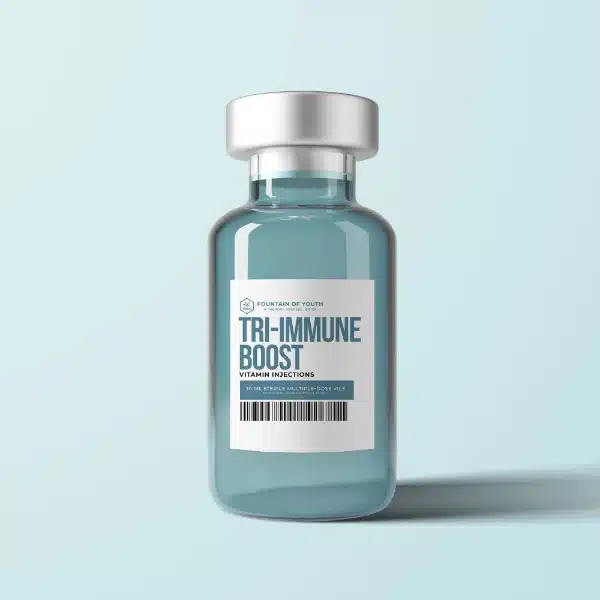
Tri-Immune’s Core Formulation: Synergy in a Syringe
Zinc Sulfate
Zinc serves as a trace mineral with profound effects on immune regulation, wound healing, and hormone balance. Research confirms its role in supporting both innate and adaptive immunity. Zinc influences the development and activity of neutrophils, T-cells, and natural killer cells.
As documented in PMC research on zinc and immune cells, deficiency reduces T-helper growth and disrupts macrophage activity. Newer studies also suggest that zinc may regenerate thymic function, which is essential for restoring immune resilience in stressed individuals.
The Science of Synergy: Why These 3 Together
Each ingredient in the Tri-Immune formulation plays a distinct role, but their value increases when used together. Glutathione and Vitamin C act as biochemical allies, recycling each other’s antioxidant capacity. When combined, they create a redox balance that helps regulate immune responses and supports mitochondrial health.
Zinc’s presence enhances the immune-related effects of both antioxidants. It acts as a gatekeeper for immune signaling, ensuring the body initiates an appropriate response to invaders without tipping into over-inflammation. This interaction helps fine-tune the balance between readiness and regulation.
A 2023 PMC review supports this, noting that glutathione and vitamin C have a reciprocal role in regulating oxidative stress and immune readiness.
How It’s Administered: What to Expect
The Tri-Immune Boost is administered intramuscularly by a licensed medical provider. During the injection, the provider inserts a needle at a 90-degree angle into a large muscle, typically the deltoid or gluteus. Those sites offer sufficient depth and mass to absorb the concentrated solution while minimizing the chance of leakage into surrounding tissue.
Dosing volumes usually range from 1 to 3 mL per visit. Unlike larger IV bags, this quantity can be delivered in under 30 seconds. Patients typically feel slight pressure and localized warmth during the injection. Providers apply gentle pressure to the site post-delivery and advise on immediate aftercare steps.
Since Zinc Sulfate can irritate tissues, proper technique and slow, steady injection are essential. The formulation does not contain preservatives or stabilizers, making precision and sterility critical throughout administration.
Dosing Customization and Clinical Monitoring
Because Tri-Immune Boost is a compounded sterile product, its formulation can be adjusted to match a patient’s therapeutic needs. Providers select concentrations based on the patient’s body weight, wellness goals, and overall clinical picture.
For example, a compounded version may contain 2.5 mg/mL of Zinc Sulfate. A 3 mL dose would then deliver 7.5 mg of elemental zinc, well below the NIH’s daily upper limit of 40 mg. This conservative range allows for repeat dosing in weekly or biweekly intervals without exceeding safe limits. The National Library of Medicine highlights the importance of trace-element dose tracking in all parenteral nutrient protocols.
Safety Comes First: Screening and Risk Management
Because Vitamin C operates as a pro-oxidant at high concentrations, providers must verify that patients are not G6PD deficient before injection. This genetic enzyme deficiency can lead to rapid red blood cell destruction if triggered by strong oxidizing agents like ascorbic acid.
The G6PD test is a simple blood draw that ensures the body can tolerate therapeutic doses of Vitamin C. Patients with renal impairment must also be screened carefully. Impaired kidney function can prevent proper excretion of injected nutrients, raising the risk of systemic accumulation. The ESPEN micronutrient guideline advises caution and lab validation for all non-oral vitamin protocols.
Not everyone is a good candidate for the Tri-Immune Boost injection. This table highlights common clinical scenarios that help determine suitability for IM antioxidant therapy using compounded nutrient blends.
| Patient Scenario |
Suitability |
Clinical Considerations |
| Patient with seasonal fatigue and no GI issues |
Good candidate |
IM route ensures fast uptake without the need to bypass poor absorption. |
| Patient with known G6PD deficiency |
Not suitable |
Risk of hemolytic crisis with high-dose Vitamin C mandates exclusion. |
| Patient undergoing chemotherapy or radiation |
Case-by-case |
High-dose antioxidants may counteract therapy; consult oncologist first. |
| Patient with chronic zinc supplementation history |
Caution advised |
Excess zinc risks copper depletion; provider should review lab work. |
Known Risks: Local Reactions and Systemic Concerns
Localized discomfort is the most common side effect of Tri-Immune Boost injections. The presence of Zinc Sulfate increases the chance of burning, stinging, or mild swelling at the site. These effects typically resolve within 24 to 48 hours.
In rare cases, patients may develop signs of a hypersensitivity response—rash, itching, or respiratory symptoms. Those symptoms require immediate attention. Providers train patients to recognize the difference between expected discomfort and serious allergic reactions.
Some individuals experience fatigue or headache post-injection. These symptoms may reflect short-term detoxification, especially in those with high oxidative stress. Providers manage these cases with hydration, rest, and nutrient tracking. Repeat reactions may require dose adjustment or ingredient exclusion.
3 Practical Tips for Patients
- Hydrate before and after your injection to support your kidneys and improve metabolic nutrient processing.
- Avoid alcohol or smoking for at least 48 hours surrounding your visit to maximize the benefits of Glutathione.
- Apply a cold pack to the injection site after treatment to reduce soreness and minimize tissue irritation.
Medication Conflicts and Contraindications
Patients taking antibiotics—especially tetracyclines or quinolones—must space zinc administration to preserve antibiotic absorption. Zinc competes for the same transport channels, which can reduce drug bioavailability.
Those undergoing chemotherapy or radiation therapy must clear high-dose antioxidants with their oncologist. Certain cancer treatments rely on oxidative mechanisms to kill abnormal cells. Antioxidants may blunt this effect if used simultaneously.
Lifestyle factors such as smoking, excessive alcohol use, or poor hydration all reduce the efficacy of the Tri-Immune formula. Providers recommend temporary lifestyle adjustments during therapy windows to ensure full benefit.
Understanding the Regulatory Reality
The Tri-Immune Boost is a compounded sterile product, not an FDA-approved drug. That means the formulation has not undergone the agency’s formal review for efficacy, safety, or quality. Clinics using such injectables rely instead on state-licensed compounding pharmacies operating under USP standards.
Patients must receive full disclosure before agreeing to treatment. Informed consent forms should explain the compounded nature of the product and clarify the need for quality sourcing. Clinics must verify that their compounding pharmacy follows either 503A or 503B guidelines. These designations ensure the facility maintains clean-room sterility, precise batch verification, and proper cold-chain handling.
Patient Preparation and Aftercare
Before injection, patients should eat a light meal, hydrate well, and avoid vigorous physical activity. Those receiving their first dose should avoid driving or operating machinery for several hours, just in case symptoms like fatigue arise.
After the shot, most patients resume their day with minimal interruption. If discomfort occurs at the injection site, a cold compress or gentle massage may help. Pain relievers should only be taken after confirming compatibility with the injected nutrients.
Patients should track how they feel over the next 48 hours and report any unexpected symptoms to their provider. Follow-up appointments offer a chance to review lab results, discuss lifestyle changes, and plan future doses.
The Tri-Immune Boost injection affects patients differently based on immune status, lifestyle, and symptom type. This table outlines general support timelines observed in clinical wellness settings, not guaranteed results.
| Wellness Goal |
Estimated Response Window |
Notes on Recovery Indicators |
| Mild immune fatigue or burnout |
24 to 72 hours |
Improved energy and mood often reported within first two days post-injection. |
| Post-viral or seasonal illness support |
3 to 7 days |
Reductions in inflammation and recovery time may become noticeable by day 5. |
| General antioxidant detox support |
48 hours to 1 week |
Some experience temporary fatigue or headache before rebound energy occurs. |
| Immune system resilience buildup |
2 to 4 weeks |
Multiple sessions may be needed for long-term cellular support and modulation. |
Questions? We’re happy to help you navigate the process. Give us a call at 239-355-3294.
FAQ: Tri-Immune Boost Injection
What does the G6PD test involve and why is it required?
The G6PD test is a simple blood panel that screens for an enzyme deficiency. Without this enzyme, Vitamin C injections could trigger a dangerous breakdown of red blood cells. This test ensures safety before administering high-dose antioxidant therapy.
How often should I receive Tri-Immune Boost injections?
Frequency depends on your personal health goals and lab profile. Many patients receive weekly or biweekly doses during high-stress periods or seasonal immune challenges. Your provider will adjust timing based on outcomes and tolerability.
Can I take oral zinc supplements while on this therapy?
In most cases, oral zinc should be paused to avoid exceeding safe daily limits. The injection delivers a calculated zinc dose, so additional intake may not be necessary. Always check with your provider to determine the right balance.
Are there any long-term risks with frequent use?
With proper screening and provider oversight, long-term use remains safe. Overexposure to zinc may interfere with copper levels, so labs may be repeated periodically. Ongoing follow-up ensures nutrients remain in balance over time.
Tri-Immune Boost injections are designed for layered immune support, combining antioxidants and key micronutrients in a single intramuscular dose. Many patients anchor their protocol with Tri-Immune and then schedule stand-alone immune support from Vitamin C or broad antioxidant protection from Glutathione on separate days. For anti-aging and cellular resilience, NAD+ can be added alongside amino acid support from Amino Blend to help sustain energy, focus, and exercise recovery. Wellness injections like Mineral Blend and Vitamin D3 round out immune-focused plans by supporting muscles, nerves, bones, and overall metabolic stability. Appearance and energy priorities can also be addressed by layering in Biotin for hair and nail aesthetics and B-Complex for day-to-day vitality as part of a coordinated schedule.
Medical review: Reviewed by Dr. Keith Lafferty MD, Fort Myers on December 4, 2025. Fact-checked against government and academic sources; see in-text citations. This page follows our Medical Review & Sourcing Policy and undergoes updates at least every six months.