What Makes Intramuscular Vitamin C Unique?
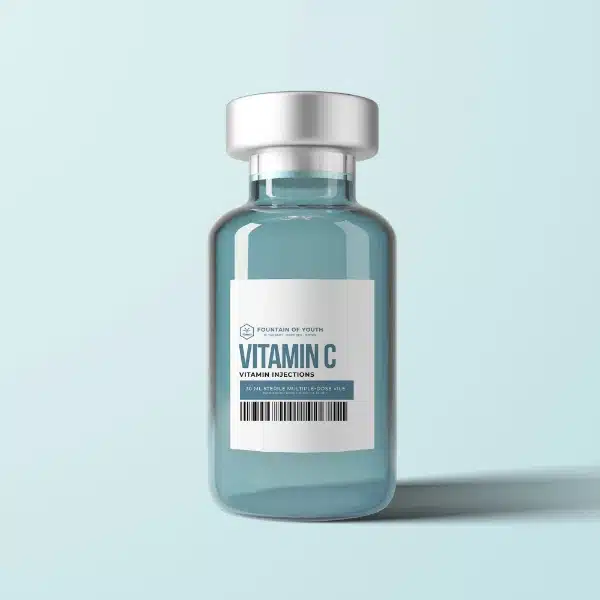
Injectable vitamin C in intramuscular (IM) form stands apart from both oral supplements and intravenous (IV) therapies in both intent and impact. It provides a controlled, efficient method for delivering a modest but impactful dose of ascorbic acid directly into the muscle tissue for gradual systemic absorption. This route bypasses digestive limitations and allows patients to achieve higher circulating levels than oral intake without entering the pharmacologic territory of high-dose IV protocols.
Clinically, intramuscular vitamin C remains within a safe, nutritional range. It helps correct mild deficiencies and supports cellular function without the risks associated with large fluid volumes or supraphysiological concentrations. Regulatory approvals for IM vitamin C focus on short-term use in deficiency cases, though wellness applications continue to grow due to its reliable absorption and safety record.
This approach does not attempt to mimic or replace the effects of high-dose infusions. Instead, IM injections fill a critical gap between ineffective oral delivery and the risks or regulatory barriers of high-dose IV therapy. Patients seeking routine wellness support or mild correction often find this option strikes a sensible balance between efficacy and safety.
Core Functions of Vitamin C in the Human Body
Core Functions of Vitamin C in the Human Body
Vitamin C, or ascorbic acid, serves as an indispensable nutrient across several biological systems. It acts as a cofactor in numerous enzymatic reactions essential for maintaining structural, metabolic, and immune health.
Collagen formation remains one of the most widely studied functions of vitamin C. The nutrient helps hydroxylate proline and lysine residues during collagen synthesis, ensuring the structural integrity of connective tissues like skin, joints, and vascular walls. Collagen without adequate hydroxylation becomes unstable, leading to the classic signs of scurvy—gum bleeding, fragile vessels, and poor wound healing.
On a metabolic level, vitamin C supports the synthesis of carnitine, a compound essential for fatty acid oxidation and energy production. It also contributes to neurotransmitter biosynthesis, including dopamine and norepinephrine, playing a quiet but crucial role in cognitive and emotional regulation.
Its antioxidant properties allow vitamin C to neutralize free radicals, which accumulate from stress, pollution, UV radiation, and inflammatory processes. Researchers have associated higher plasma levels of vitamin C with a reduced risk of hypertension, stroke, and coronary artery disease, according to the Linus Pauling Institute.
When Oral Intake Isn’t Enough: The Case for Injection
Oral supplementation works well in low doses, but absorption quickly becomes inefficient when intake exceeds about 500 to 1000 milligrams. The body uses a specific transporter called SVCT1 in the intestines, which becomes saturated at higher doses. Past that threshold, absorption plummets, and unabsorbed vitamin C passes through the digestive tract unused.
This limitation becomes especially problematic for patients with poor gastrointestinal absorption or those recovering from illness or surgery, where higher tissue levels of vitamin C may benefit recovery. In those cases, intramuscular injection offers a precise and effective route.
IM injections allow complete absorption of the dose, sidestepping the digestive system entirely. Plasma levels achieved through this method exceed what oral intake can offer, though they remain well below those produced by IV therapy. For many individuals, this moderate plasma increase proves sufficient to restore optimal antioxidant balance and support immune readiness.
Patients experiencing chronic fatigue, wound healing challenges, or dietary restrictions often find injectable vitamin C helpful as a reliable means of supplementation. It also appeals to individuals who experience stomach upset from oral tablets or struggle with compliance due to frequent dosing requirements. Reference values such as the 90 mg/day RDA for men, provided by the National Academies of Sciences, underscore the difference between dietary minimums and therapeutic goals.
IM vs. IV vs. Oral: What Sets Each Route Apart?
Each route of administration—oral, IM, and IV—results in distinct plasma concentrations and clinical profiles. Understanding these differences helps clarify the supportive role of intramuscular vitamin C.
Oral intake maxes out around 220 µmol/L in the blood, regardless of how much one consumes. The SVCT1 transporter simply won’t allow more absorption at once. By contrast, a properly administered IM injection bypasses this ceiling, offering 100% bioavailability of the administered dose. While it cannot reach the plasma concentration of IV administration, it consistently exceeds oral absorption.
IV infusion can reach plasma levels of 15,000 µmol/L or more, but only when massive doses—often 10 to 100 grams—are administered under medical supervision. These sessions require dilution in fluid bags and careful monitoring. High-dose IV protocols remain investigational in the U.S. and are not FDA-approved for general use outside of specific clinical trials.
Intramuscular injections offer a lower-volume, lower-risk alternative. Doses typically remain under 1 gram, and volumes are limited to 3 mL per injection site. This route eliminates the need for intravenous access while still delivering clinically meaningful blood levels. A thorough review by researchers in Frontiers in Pharmacology details these kinetic distinctions.
The table below highlights the key clinical distinctions between oral, IM, and IV routes of vitamin C administration. This comparison helps clarify why intramuscular injections are used primarily for safe, efficient supplementation—not high-dose therapy.
| Administration Route |
Typical Dose Range |
Plasma Concentration Achieved |
Primary Clinical Use |
| Oral Supplement |
250–2,000 mg/day |
Up to ~220 µmol/L |
General dietary support and deficiency prevention |
| Intramuscular (IM) Injection |
100–1,000 mg (limited by 3 mL volume/site) |
300–800 µmol/L (above oral saturation) |
Rapid correction or supplemental support when oral is inadequate |
| Intravenous (IV) Infusion |
10–100+ grams per session |
Up to ~15,000 µmol/L |
Investigational or pharmacological therapy (e.g., adjunctive oncology) |
| Route-Specific Limitations |
Saturation of gut transporters |
Injection volume limit per site |
Requires venous access, dilution, and clinical oversight |
Ingredient Integrity and Sourcing Standards
Not all injectable vitamin C is created equal. The gold standard in the U.S. is ASCOR®, the only FDA-approved preparation for parenteral ascorbic acid. Supplied as a Pharmacy Bulk Package (PBP), it contains a highly concentrated solution—500 mg/mL—which must be diluted for IV use but can be used directly in small IM volumes.
Clinics must store ASCOR® under refrigeration at 36–46°F and shield it from light to prevent breakdown. “Ascorbic acid degrades rapidly under fluorescent light or elevated temperatures,” warns the product’s official label.
The risks of using compounded or imported formulations rise sharply outside this standard. Several documented incidents have involved contamination with particulate matter, incorrect concentrations, or improper pH levels. Only pharmacies operating under strict 503B outsourcing facility guidelines—or the use of ASCOR® itself—should be trusted for sourcing injectable vitamin C. Full FDA documentation on approved formulations and warnings can be found here.
At Fountain of Youth, our providers monitor developments in sourcing regulations closely to ensure patient safety and regulatory compliance across all vitamin injection services.
Screening and Contraindications: Mandatory for Every Dose
Injectable vitamin C requires medical screening prior to administration, no matter the dose. Certain conditions can turn a routine injection into a serious health hazard if not properly ruled out.
G6PD deficiency presents the most dangerous risk. This genetic enzyme deficiency prevents red blood cells from managing oxidative stress. Vitamin C injections generate small amounts of reactive oxygen species, which in G6PD-deficient patients can trigger acute hemolysis—a rapid destruction of red blood cells. Testing is essential before any IM vitamin C administration.
Other absolute contraindications include thalassemia, hemochromatosis, and sickle cell disease. These blood disorders can worsen with vitamin C intake due to changes in iron handling or red cell metabolism. Patients who have recently undergone angioplasty also fall into a contraindicated group, where vitamin C may interfere with procedural outcomes.
Relative contraindications include a history of kidney stones, as vitamin C metabolizes into oxalate—a contributor to stone formation. People with diabetes should also use caution. Some studies suggest vitamin C may temporarily raise blood glucose readings, requiring closer monitoring.
By screening for these conditions in advance, providers can offer safe, individualized treatment while avoiding preventable complications.
Patient Education and Consent: Setting Expectations
Patient understanding directly impacts the safety and effectiveness of intramuscular vitamin C. It’s crucial to set clear expectations and explain both the benefits and limitations.
Patients must recognize that IM vitamin C does not deliver the systemic intensity or investigational applications of high-dose IV therapy. It cannot function as an anticancer agent or substitute for aggressive interventions. Its primary role lies in deficiency correction and moderate antioxidant support.
Expected outcomes include improved energy, better skin integrity, enhanced healing, and immune modulation over time. These benefits emerge gradually and vary by individual health status and lifestyle.
Patients should also learn the signs of rare but serious complications, such as hemolysis. Sudden back pain, dark urine, fatigue, or yellowing of the skin demand immediate medical attention.
Mild injection site reactions—like tenderness or redness—are more common and usually self-resolve within 24 hours.
Questions about safety, expectations, or contraindications? We are here to help. Give us a call at 239-355-3294 to speak with a knowledgeable provider.
Proper IM Injection Protocol: Safety Starts with Technique
Clinicians must follow a standardized process to prepare and administer intramuscular vitamin C injections safely. Because the product contains no preservatives, sterile technique becomes critical.
Preparation begins with handwashing and assembling supplies: sterile syringe, alcohol wipes, clean gloves, and a sharps container. Before drawing up the dose, the vial must be wiped with alcohol and allowed to dry fully.
The clinician injects air into the vial to equalize pressure before drawing out the correct dose. Air bubbles must be removed to ensure proper volume and avoid complications.
Injections exceeding 3 mL must be split into multiple sites—such as both gluteal muscles—to reduce the risk of tissue injury. Most therapeutic doses stay under this limit.
After injection, the provider monitors the site for reactions and reinforces safety guidance. The patient receives post-care instructions and is advised when to seek help.
3 Practical Tips for Safer, Smarter IM Vitamin C Use
- Always complete G6PD testing before starting any injection series, even for low-dose supplementation.
- Store your vitamin C vials away from light and in a refrigerated space to preserve their integrity.
- Never inject more than 3 mL in one site—if your dose is higher, split it between two areas.
Frequently Asked Questions
Can I take Vitamin C injections at home without a prescription?
No. Due to the risks associated with improper technique and certain medical conditions like G6PD deficiency, a prescription and medical supervision are required for IM vitamin C injections.
What’s the difference in effectiveness between oral and injectable Vitamin C?
Injectable vitamin C bypasses digestive absorption limits, providing 100% bioavailability. While oral vitamin C suffices for general maintenance, IM injections achieve higher plasma levels and offer more predictable results in individuals with absorption issues.
How often should I receive intramuscular Vitamin C?
Frequency depends on your health status and goals. Some individuals receive injections weekly for wellness support, while others follow short-term regimens for deficiency correction. Your provider will tailor a plan based on labs and symptoms.
Is it safe to combine Vitamin C injections with other vitamins?
Yes, but only under professional guidance. Some combinations—especially involving iron or B12—can alter blood pressure or metabolic responses. Always disclose your full supplement routine during consultation.
Vitamin C injections fit well into a structured intramuscular plan for immunity, tissue repair, and overall wellness. For patients who need broader immune defense, the high-potency blend in Tri-Immune Boost and the antioxidant support of Glutathione can complement the ascorbic acid you receive here. Those focused on healthy aging and cellular energy often combine this therapy with NAD+ or amino acid support from Amino Blend to help keep metabolism and brain function on track. If your goals include bone, muscle, and cardiovascular balance, Mineral Blend and Vitamin D3 injections can be layered in under medical guidance. Beauty and energy priorities can also be addressed by adding hair, skin, and nail support with Biotin and steady metabolic and neurologic support through B-Complex as part of your coordinated schedule.
Medical review: Reviewed by Dr. Keith Lafferty MD, Fort Myers on December 5, 2025. Fact-checked against government and academic sources; see in-text citations. This page follows our Medical Review & Sourcing Policy and undergoes updates at least every six months.