
Persistent pigment needs more than spot treatment
- Melasma often returns when UV exposure, visible light, heat, hormones, or irritation keep activating pigment.
- Lee County routines can make prevention harder because reflected light, driving exposure, and outdoor errands add up.
- Professional pigment care should match skin tone, sensitivity, treatment history, and realistic sun-avoidance habits.
When dark patches keep returning
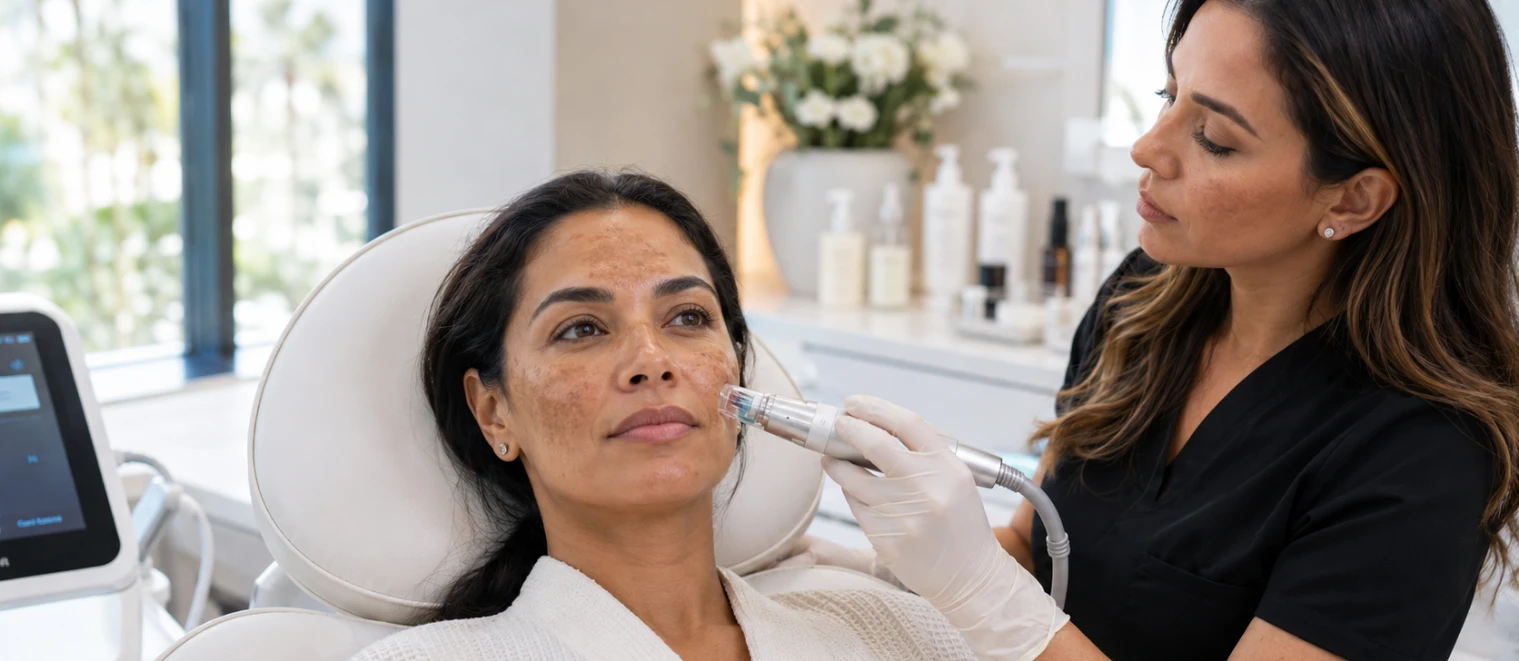
A focused pigment visit can help determine whether calming care, exfoliation support, or controlled microneedling treatment fits your skin’s pattern, especially when discoloration returns after sun exposure or irritation.
Physician-reviewed content • Evidence-aware care • Personalized treatment planning
The right route depends on skin behavior
Some patients need barrier repair before stronger pigment treatments, while others may benefit from carefully selected brightening or resurfacing support. Related options include medical aesthetics planning and BioRePeel when exfoliation is appropriate.
A brown or gray-brown patch can fade for a few weeks, then return after one sunny weekend. Many people notice the same frustrating pattern around the cheeks, forehead, upper lip, or jawline. The change can feel confusing when daily sunscreen already sits in the routine. Melasma often behaves this way because light exposure, skin sensitivity, hormones, and inflammation can all influence pigment.
That pattern matters for people who live around Fort Myers, Cape Coral, Estero, Bonita Springs, North Fort Myers, and nearby Lee County communities. Daily life often includes bright driving conditions, reflected light near water, pool time, and outdoor errands. High UV exposure also remains part of the local rhythm during much of the year. Melasma care in this climate rarely works like a one-time dark-spot fix. A smarter plan looks at what triggers pigment, what calms the skin, and what treatments fit the person’s current skin behavior.
Why Melasma Can Feel So Frustrating in Southwest Florida
Melasma usually appears as uneven brown, tan, or gray-brown facial pigmentation. It often affects areas that get regular light exposure, including the cheeks, forehead, nose bridge, and upper lip. People may first notice it after pregnancy, hormone changes, oral contraceptive use, intense sun exposure, or irritation. Genetics can also influence who develops it. The frustrating part comes from relapse, since melasma can behave like a chronic, relapsing pigment condition.
Lee County weather adds a practical challenge because people do not only get light exposure at the beach. A commute across bright pavement, a child’s sports event, lunch outside, or a short boat ride can all add up. Water, sand, and concrete can reflect ultraviolet rays, which makes casual exposure more important than many people expect. That does not mean local life causes melasma by itself.
It means people here often need stronger prevention habits than someone who spends less time in bright outdoor conditions. Lee County routines can add up because UV exposure matters year-round, not only during obvious beach days. A person may do well for several weeks, then lose ground after vacation, a sunburn, or inconsistent sunscreen use. Melasma management works best when treatment and daily protection support each other.
Is It Melasma, Sun Damage, or Post-Inflammatory Pigment?
Not every dark patch on the face comes from melasma. Sun spots often look more isolated and defined, especially after years of cumulative sun exposure. Post-inflammatory hyperpigmentation usually follows a trigger, such as acne, waxing irritation, a harsh peel, a burn, or overuse of exfoliating products. Melasma often forms broader, more symmetrical patches, although real skin rarely follows textbook patterns perfectly.
That distinction matters because the wrong approach can make pigment harder to manage. A person treating melasma like a simple spot may chase stronger acids, scrubs, or aggressive exfoliation without addressing light protection. Someone treating post-inflammatory pigment like melasma may miss the irritation that keeps creating new discoloration. A consultation can sort out pattern, timing, triggers, skin tone, product history, and recent procedures. The goal is not just to name the pigment, but to avoid setbacks.
People with deeper skin tones, reactive skin, or pigment after irritation need particular care. Skin that darkens after acne, burns, or minor procedures may respond poorly to overly aggressive treatment. That does not remove professional options, but it changes the pace. Gentler preparation, barrier support, and strict light protection may matter before any procedure.
Before choosing a pigment procedure
A skin-focused evaluation can help separate melasma from sun spots, irritation-related pigment, or mixed discoloration, then determine whether a medical aesthetics plan should start with calming support, brightening care, or a more active treatment route.
Why Sunlight Is Only Part of the Problem
Many people think only UVB rays matter because those rays connect strongly with sunburn. Melasma care needs a wider view. Ultraviolet exposure can worsen pigmentation, but visible light from the sun can also contribute to dark patches in pigment-prone skin. That helps explain why some people use clear sunscreen faithfully. Patches may still deepen after outdoor routines.
Visible light does not feel dramatic on the skin, so people often underestimate it. The exposure can happen during ordinary moments, including driving, walking through a parking lot, sitting near bright windows, or spending time near water. Heat may also bother some pigment-prone skin, especially when flushing and irritation enter the picture. A realistic Lee County routine should address daily exposure, not only obvious tanning.
Why tinted sunscreen may matter
Tinted sunscreen matters because many formulas contain iron oxides, which can help protect against visible light. This matters most for people who notice brown patches despite regular broad-spectrum sunscreen use. A tinted product does not replace hats, shade, or reapplication, but it can strengthen a pigment-focused routine. Morning application also needs backup when sweat, swimming, or towel drying disrupts coverage.
Where At-Home Brightening Efforts Often Fall Short
Most people try something before they schedule professional pigment care. Vitamin C serums, exfoliating acids, retinoids, brightening creams, and online pigment routines can all sound reasonable. The problem starts when the skin barrier becomes irritated while sun exposure continues. That cycle can confuse people because the skin may look brighter for a few days, then darken again. Skipping tinted sunscreen, applying too little SPF, or treating only on weekdays can also weaken the plan. Melasma responds better to consistency than intensity, so a slower plan often beats a harsher routine that the skin cannot sustain.
What Microneedling May Add to Pigment Care
Microneedling uses controlled, shallow channels in the skin under professional technique. In aesthetic care, providers use it to support skin remodeling and absorption in selected situations. For melasma, the newer attention centers on microneedling-assisted delivery, not on microneedling as a stand-alone miracle. The idea is simple: controlled channels may help certain topical agents reach the targeted skin layers more effectively. Recent tanning, irritation, active breakouts, poor sun protection, or a history of pigment after procedures can change the risk-benefit balance. Microneedling belongs in a plan, not in a rushed decision.
Why tranexamic acid belongs in a careful conversation
Tranexamic acid has drawn interest in melasma care because researchers study how it may affect pigment-related pathways, skin inflammation, and vascular factors involved in discoloration. Dermatology discussions often describe its use for melasma as off-label, which means a provider needs to consider health history and suitability. That matters even when the topical route enters the conversation through assisted delivery. A patient should not assume that an ingredient discussed in studies belongs in every facial treatment. The safer question is whether the ingredient, route, timing, and aftercare fit that person’s skin.
What recent studies suggest
Recent 2025 research gave microneedling-assisted tranexamic acid fresh attention. A systematic review and meta-analysis found that microneedling plus tranexamic acid did not clearly outperform every compared melasma treatment across all analyses. In subgroup findings, the combination showed more benefit than microneedling alone, and reported adverse-event rates looked similar across compared groups. That points toward a possible adjunctive role rather than a universal answer.
A 45-patient randomized study also compared microneedling-assisted topical tranexamic acid with other topical approaches in women with facial melasma. Researchers reported meaningful short-term pigment score improvement in the tranexamic acid microneedling group, with no serious side effects in that study. The study still involved a small group and short follow-up, so recurrence questions remain important. For normal patients, the topic deserves discussion during evaluation, especially when melasma keeps returning after basic brightening care. It does not justify self-treatment, casual needling, or promises of complete clearing.
| What the research looked at | What patients can reasonably take from it | What it does not prove |
|---|---|---|
| Microneedling-assisted topical delivery | It may support selected pigment protocols under professional care. | It does not prove a cure for melasma. |
| Tranexamic acid in melasma care | It remains an active research topic in pigment-focused dermatology. | It is not automatically right for every patient. |
| Short-term pigment improvement | Some studies show measurable improvement over limited follow-up. | It does not settle long-term relapse control. |
| Reported side effects in reviewed studies | Available studies support continued professional investigation. | Poor timing, technique, or aftercare can still create problems. |
Which Treatment Lane May Fit Your Skin?
A pigment plan can move through several lanes depending on skin behavior. Barrier-first care fits people who arrive with dryness, stinging, recent sun exposure, peeling, or irritation from strong home products. Brightening facial support may fit dullness, uneven tone, and maintenance when the skin needs a calmer route. Peel-based tone support, including BioRePeel when appropriate, may fit selected patients who tolerate exfoliation without triggering more pigment. Microneedling-assisted pigment care may fit selected cases after screening, especially when controlled treatment and topical delivery make sense. Maintenance planning matters for anyone who improves, then darkens again after sun exposure.
These lanes should not compete with each other. A person with reactive skin may need calming support before any stronger pigment procedure. Someone with stable skin, consistent tinted sunscreen use, and stubborn patches may discuss a more active route. The strongest plan often starts with the least glamorous question: what keeps triggering the pigment? Treatment selection matters, but timing and habits often decide durability.
What a Pigment Consultation Should Check Before Treatment
A useful pigment consultation should review the patch pattern, skin tone, sensitivity, prior procedures, home products, and recent sun exposure. Hormonal history, pregnancy status, medication changes, and past reactions to peels or microneedling may also matter. Upcoming boating weekends, beach trips, outdoor weddings, or vacations should enter the discussion. Fountain of Youth in Fort Myers, Florida keeps staff current on developments in melasma care, visible-light protection, and microneedling-assisted pigment discussions so patients can ask informed questions before choosing a route. The visit should also separate realistic brightening from exaggerated expectations.
Questions? We are here to help! Call 239-355-3294.
Who may need a more careful pigment plan?
Melasma care works best when treatment selection reflects the patient’s real trigger pattern. The goal is not to chase stronger procedures, but to choose a sequence the skin can tolerate and maintain.
- Dark patches fade temporarily, then return after driving, pool time, boating, or outdoor weekends.
- Brightening products sting, peel, or inflame the skin before pigment gets better.
- Prior peels, waxing, acne, or procedures have left lingering discoloration.
Those patterns can guide whether the next step should focus on barrier repair, daily protection, customized facial care, or a more active pigment treatment.
Questions Lee County Patients Usually Ask
Can microneedling make melasma worse?
Microneedling can irritate pigment-prone skin when timing, technique, depth, topical selection, or aftercare do not fit the patient. That risk matters more when the skin has recent sun exposure, active irritation, or a history of darkening after procedures. A consultation should review those details before treatment rather than treating every dark patch the same way.
Why does melasma come back after it fades?
Melasma can return because several triggers may remain active after the patch looks lighter. UV exposure, visible light, hormonal influences, heat, irritation, and inconsistent protection can all contribute to relapse. Many people lose progress after vacations, outdoor weekends, or a break from tinted sunscreen. Maintenance usually matters as much as the in-office procedure.
Is tinted sunscreen really different from regular sunscreen?
Tinted sunscreen can differ because many formulas include iron oxides. Those pigments can help reduce visible-light exposure, which matters for many people with melasma or recurring dark patches. Clear broad-spectrum SPF still matters, but tinted protection may better fit pigment-prone skin.
Should I schedule pigment treatment before or after a beach trip?
A beach trip, boating weekend, or outdoor-heavy vacation can interfere with pigment treatment timing. Many patients do better when they schedule evaluation before the trip, then plan procedures around realistic sun avoidance and aftercare. Treatment too close to intense sun exposure can frustrate progress. The safest timing depends on the procedure, skin sensitivity, and the patient’s ability to protect the treated area.
Support for stubborn tone and recurring patches
A pigment plan may involve more than one visit type, especially when melasma overlaps with sun damage, sensitivity, or post-inflammatory discoloration. Matching treatment intensity to skin readiness can reduce avoidable irritation and improve the chance of maintaining results.
Brightening facial support may help when the skin needs a gentler tone-focused route, while microneedling aftercare can help patients understand timing, protection, and recovery before considering an active procedure.
A Smarter Way to Think About Pigment Care in Lee County
Melasma care works better when patients stop treating every dark patch like a simple stain. The skin needs assessment, calm preparation when needed, daily visible-light protection, careful procedure selection, and maintenance after improvement. Microneedling-assisted pigment care has earned attention because researchers continue studying topical delivery approaches, including tranexamic acid. That attention should lead to better questions, not rushed expectations. A good plan respects both the science and the reality of living in a high-sun coastal county.
For many Lee County patients, the first win comes from understanding the pattern. The patch that returns after every sunny stretch may need a different strategy than a single sun spot or a mark left after acne. Once the trigger pattern becomes clearer, treatment choices become more practical and less frustrating.
Medical review: Reviewed by Dr. Keith Lafferty MD, Fort Myers on July 13, 2026. Fact-checked against government and academic sources; see in-text citations. This page follows our Medical Review & Sourcing Policy and undergoes updates at least every six months.
