
TRT Results Depend on More Than the Prescription
- Protein intake, resistance training, sleep, and recovery can change how testosterone therapy feels in daily life.
- Lab results, body composition, strength trends, and symptoms should guide adjustments rather than dose escalation alone.
- Men with persistent fatigue, visceral fat, or slow training progress may benefit from a coordinated hormone and lifestyle review.
Turn Hormone Data Into a Practical Plan
Men who want stronger energy, improved body composition, and safer long-term progress can begin with a structured men’s TRT evaluation that reviews symptoms, labs, training habits, nutrition patterns, and treatment goals together.
Physician-reviewed content • Evidence-aware care • Personalized treatment planning
Look Beyond the Workout Sheet
Training response often depends on sleep quality, cardiovascular risk, and consistent monitoring; related guidance is available in the clinic’s pages on sleep and testosterone and cardiovascular health.
The Synergy of Hormones, Food & Movement
How Testosterone Shapes Body Composition
In men with confirmed hypogonadism, testosterone therapy can increase lean mass and may reduce fat mass, but changes in strength, fitness, and body composition vary substantially between individuals. Resistance training independently improves muscular strength and physical function, and more testosterone does not automatically produce better training results. In a randomized trial of men ages 50 to 70 with low-normal testosterone, exercise produced greater improvements than testosterone alone in aerobic fitness, strength, and total and visceral fat, while adding testosterone to exercise provided limited additional benefit for those outcomes. The practical role of our Men’s Clinic TRT program is to connect appropriate hormone treatment with realistic training, nutrition, symptom, and safety goals. Review the randomized exercise-and-testosterone trial.
Why Lifestyle Integration Matters More Than Dose Escalation Alone
TRT dosing should be guided by the diagnosis, symptoms, serum testosterone, treatment formulation, response, and safety monitoring rather than by physique goals alone. Exercise and nutrition can improve cardiometabolic health, strength, and body composition, but they do not reliably make bioavailable testosterone circulate longer or make sex-hormone-binding globulin more “efficient.” A randomized trial in older men with obesity and hypogonadism found that lifestyle therapy produced about 9% weight loss whether participants received testosterone or placebo. Testosterone modestly reduced the loss of lean mass and preserved hip bone density, while strength improved similarly in both groups. Read the randomized lifestyle-plus-TRT trial.
Key Clinical Findings on “TRT + Lifestyle” Protocols
The evidence supports exercise and adequate nutrition as important parts of health and physical function during TRT, but the effects are not uniform across every outcome. Trials show that resistance or combined exercise can improve strength, fitness, and body composition independently of testosterone, while TRT may add lean-mass or bone-density benefits in selected hypogonadal men. Claims that omega-3 intake lowers estradiol conversion or reduces TRT side effects are not established. A cross-sectional study of healthy young men found an association between omega-3 intake and testicular volume, not proof of higher testosterone, lower estradiol, or improved response to exogenous TRT. See the fatty-acid study.
| Lifestyle Component | Key Metric Improved | Typical Timeframe | Supporting Evidence Mentioned |
|---|---|---|---|
| Adequate protein with resistance training | Supports lean-mass and strength adaptation | Weeks to months | Resistance-training protein meta-analysis |
| Structured resistance training | Strength, fitness, and body composition | About 12 weeks or longer | Randomized testosterone-and-exercise trials |
| Aerobic or interval exercise | Cardiorespiratory fitness and fat reduction | Weeks to months | Exercise trials in middle-aged and older men |
| Adequate sleep and recovery | Supports health, recovery, and daytime function | Ongoing | Small controlled sleep-restriction study |
Laying the Groundwork: Medical Assessments & Goal-Setting
Pre-Therapy Lab Panels & Biometrics
A TRT evaluation should confirm testosterone deficiency in the appropriate clinical context and identify factors that can change treatment risk or interpretation. Depending on the patient, baseline assessment may include repeat testosterone testing, CBC or hematocrit, blood pressure, metabolic risk markers, and prostate assessment when appropriate. DEXA or BIA can provide body-composition context, but neither is required for every patient and the same method should be used consistently when trends are followed. Patients with obesity or cardiometabolic risk may benefit from a coordinated medical weight loss plan. Current Endocrine Society guidance emphasizes diagnosis, contraindication screening, treatment response, and formulation-specific monitoring rather than a one-size-fits-all laboratory panel.
Setting SMART Outcomes (muscle gain, fat loss, symptom relief)
Useful goals are measurable without promising a specific amount of muscle, fat loss, or symptom improvement. A patient might track waist circumference, resistance-training performance, energy, libido, sleep, or another agreed outcome over a realistic interval. Checkpoint timing should reflect the treatment formulation, recent dose changes, symptoms, safety findings, and the goal being measured rather than an automatic twelve-week schedule for every patient. Clear targets make it easier to distinguish a true treatment response from normal day-to-day variation.
Plateaus Usually Need Better Data, Not Guesswork
If strength, weight, energy, or recovery stalls during therapy, a supervised TRT care plan can connect lab values, nutrition patterns, sleep quality, and training load before the next adjustment.
Building a Hormone-Supporting Nutrition Plan
Macronutrient Targets: Protein, Carbohydrates, and Healthy Fats
Protein needs depend on body size, training status, calorie intake, age, and health history. In healthy adults performing resistance training, a large meta-analysis found that gains in fat-free mass generally stopped increasing beyond a total intake of about 1.6 grams of protein per kilogram per day, although individual needs can vary. Carbohydrates help replenish glycogen for training, while dietary fats contribute essential fatty acids and support overall nutritional adequacy. None of these macronutrients has been shown to “stabilize” TRT levels or make testosterone receptors more sensitive in a predictable clinical way. Review the resistance-training protein meta-analysis.
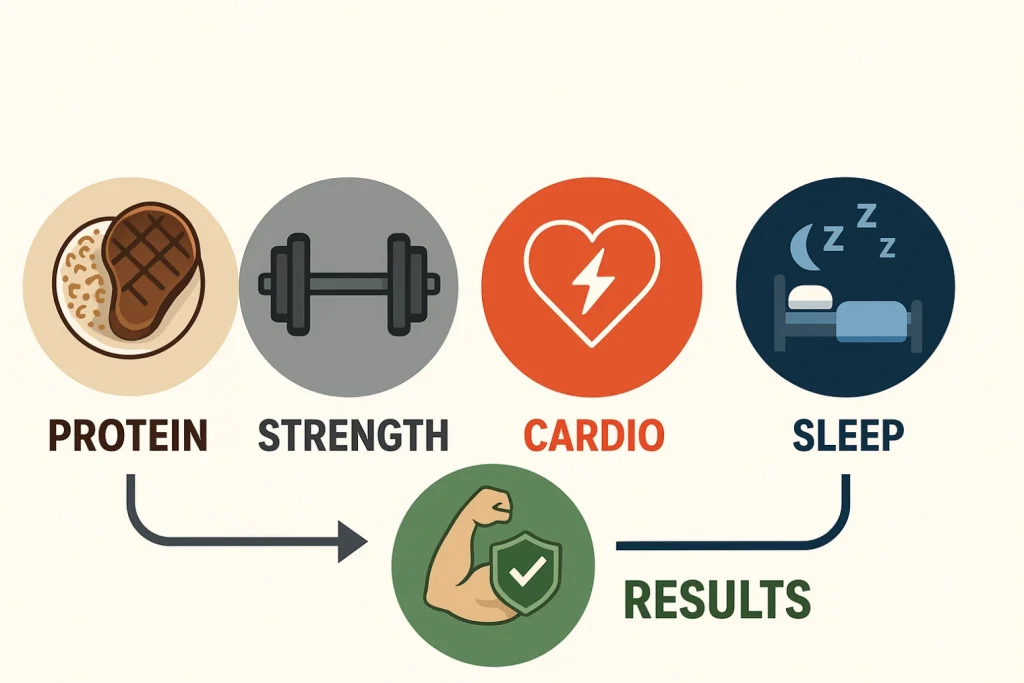
Four lifestyle pillars—protein, strength, cardio, sleep—work together to transform testosterone therapy into lasting results.
Micronutrients: Correct Deficiencies Without Overpromising Hormone Effects
Vitamin D, zinc, and magnesium have important roles in normal physiology, but supplementation should not be presented as a reliable way to amplify TRT. Exogenous testosterone can suppress the hypothalamic-pituitary-gonadal axis, so claims about increasing luteinizing-hormone signaling “alongside therapy” are especially misleading. The strongest reason to supplement a micronutrient is a documented deficiency, inadequate intake, or another clinically appropriate indication.
The fatty-acid study previously cited on this page was cross-sectional and found that omega-3 intake was associated with testicular volume, not with a proven improvement in testosterone response or estradiol control. Targeted vitamin injections may be considered when a clinician identifies a reasonable indication, but an injection should not be portrayed as inherently superior to food or oral supplementation for routine nutrient support.
Meal Timing for Training and Muscle Protein Synthesis
Total daily protein and calorie intake matter more than any single meal schedule. Spreading protein across several meals can be practical for resistance-training goals, while people who prefer a later first meal do not automatically undermine TRT or training progress.
Carbohydrates before or after demanding exercise can help replenish glycogen and support training volume, particularly when sessions are long or frequent. Meal timing should fit the individual’s appetite, medication plan, glucose control when relevant, and overall nutrition rather than follow a universal clock.
Building Menus for Maintenance, Deficit & Surplus Calories
Calorie needs can differ substantially even between men of the same body weight, so a fixed 2,500-calorie menu should not be treated as a universal maintenance target. A maintenance plan can combine protein-rich foods, vegetables, whole grains, fruit, and unsaturated fats. A calorie deficit should preserve adequate protein and micronutrient intake, while a surplus for muscle gain should remain modest enough to limit unnecessary fat gain. Food choices should be adjusted for medical conditions, appetite, training load, and long-term adherence.
Exercise Programming Tailored to TRT Users
Resistance Training Foundations (volume, intensity, splits)
Resistance training should match experience, orthopedic history, recovery capacity, and goals rather than follow a TRT-specific template. Full-body training several days per week can work well for beginners, while more experienced lifters may prefer split routines. Progressive overload is useful, but the appropriate number of sets, repetitions, and load depends on the individual and does not become automatically safer or more effective because testosterone therapy is being used. Pain, persistent fatigue, or declining performance should prompt reassessment rather than forced progression.
Cardio & HIIT for Fitness and Visceral-Fat Reduction
Aerobic exercise can improve cardiorespiratory fitness and contribute to reductions in visceral fat, while interval training can be useful for people who tolerate higher intensities. The appropriate duration and heart-rate range depend on fitness, medications, cardiovascular history, and training goals; a single seventy-to-ninety-percent target does not guarantee a better result. Alternating modalities may help manage repetitive loading, but recovery still matters. After demanding sessions, oral fluids and food are usually the first-line approach to rehydration; performance IV therapy should be reserved for situations in which the route and formulation are clinically appropriate rather than treated as routine workout recovery.
Periodization, Deloads & Recovery
Hard training without enough recovery can contribute to persistent soreness, declining performance, sleep disruption, and injury risk. Deloads can be useful, but there is no universal rule requiring one every six cycles or a thirty-percent reduction in volume. Mobility work, easier training days, sleep, and adequate calorie and protein intake can all support recovery. The plan should respond to performance trends and symptoms rather than use “cortisol control” as a catch-all explanation for every plateau.
Tracking Progress: Strength Trends, Wearables, DEXA or BIA
Training logs can show whether strength or work capacity is improving over time. Wearable metrics such as HRV can provide context about recovery, but they are not diagnostic tests and should not override symptoms or medical findings. Body-composition tools can be useful when measurements are collected under consistent conditions, yet quarterly DEXA is not necessary for most healthy people. A systematic review comparing DXA and BIA in athletes noted that DXA uses ionizing radiation and should be medically justified rather than used as a routine repeated measurement in healthy subjects. Review the body-composition evidence.
Lifestyle Factors That Accelerate—or Stall—Results
Sleep Quality and Recovery
The American Academy of Sleep Medicine recommends that adults generally sleep at least seven hours on a regular basis for health and daytime function, although individual needs vary. Sleep matters for training recovery, appetite regulation, mood, and cardiovascular health regardless of whether someone uses TRT. A small University of Chicago study in ten healthy young men found lower daytime testosterone after one week of sleeping about five hours per night, but that result should not be converted into a universal percentage prediction for men already receiving testosterone therapy. Consistent sleep timing and reducing behaviors that interfere with sleep are more defensible than promising that specific devices or rigid caffeine cutoffs will optimize hormone levels. Read the controlled sleep-restriction study.
Stress-Management Tactics That Support Consistency
Breathing exercises, mindfulness, outdoor activity, and journaling can be useful tools for some people managing stress. Their main value in a TRT lifestyle plan is practical: better stress management may support sleep, dietary adherence, exercise consistency, and overall well-being. These strategies should not be presented as direct ways to manipulate testosterone or cortisol to a predictable degree. Persistent anxiety, depression, severe sleep disruption, or loss of function deserves appropriate clinical evaluation rather than a lifestyle-only explanation.
Alcohol, Nicotine & Other Modifiable Risks
Heavy alcohol use and nicotine exposure can undermine cardiovascular, metabolic, sleep, and training goals, which makes them relevant to long-term TRT care. The effect of alcohol on reproductive hormones depends on dose, duration, liver health, and other factors, so it should not be reduced to a simple promise that avoiding alcohol will “preserve hormonal equilibrium.” Claims that switching food containers will produce measurable TRT improvements are likewise too strong for the evidence. The priority is reducing well-established health risks and addressing exposures that are actually relevant to the individual.
Monitoring, Adjusting & Troubleshooting
Follow-Up Lab Schedule and Biomarker Benchmarks
Follow-up timing should reflect the testosterone formulation, treatment phase, dose changes, symptoms, and individual risk factors rather than a universal twelve-week schedule. Endocrine Society guidance recommends checking testosterone and hematocrit about three to six months after treatment begins, with later monitoring based on response and ongoing care; prostate monitoring is individualized according to age, risk, and shared decision-making. Blood pressure deserves attention as well because FDA labeling changes have added blood-pressure warnings to testosterone products, and FDA requested further prostate-related label updates in 2026. Patients who prefer a longer-acting option can discuss TRT pellet therapy when clinically appropriate. Review current FDA testosterone information.
Tweaking Diet or Training When Progress Plateaus
A plateau should trigger a review of the basics before adding more testosterone, supplements, or training volume. Useful questions include whether total calories match the goal, protein intake is adequate, progression has stalled, sleep has deteriorated, or pain is limiting effort. Carbohydrate timing or training variables can be adjusted when appropriate, but there is no fixed twenty-gram protein increase or carbohydrate-cycling protocol that reliably restores progress for every patient. The best adjustment is the one supported by the patient’s actual data and constraints.
Early Warning Signs of Side Effects & Collaborative Care
Acne, edema, blood-pressure changes, sleep-apnea symptoms, mood changes, fertility concerns, or a rising hematocrit can warrant reassessment during TRT. None of these findings automatically identifies the dose or injection frequency as the cause. A clinician may need to review testosterone levels, hematocrit, treatment formulation, medications, sleep, cardiovascular risk, and other contributing factors before changing therapy. Referral to urology, cardiology, sleep medicine, mental health, or another specialty should be based on the specific clinical finding rather than presented as an automatic protocol.
Evidence-Based Outcome Snapshots
Lifestyle Therapy Plus Testosterone in Older Men With Obesity
In a six-month randomized trial of 83 men age 65 or older with obesity, hypogonadism, and frailty, participants received intensive lifestyle therapy plus either testosterone or placebo. Both groups lost about 9% of body weight. Testosterone modestly reduced the loss of lean body mass and preserved hip bone density, while strength increased by similar amounts in the testosterone and placebo groups. That is a useful example of why TRT should not be credited for every improvement that occurs alongside exercise and weight loss.
Exercise Can Produce Major Benefits Without an Additive TRT Effect
A separate randomized study of men ages 50 to 70 with abdominal obesity and low-normal testosterone found that exercise improved aerobic fitness, muscular strength, and total and visceral fat more than testosterone treatment alone. Testosterone increased lean mass, but adding testosterone to exercise did not provide an additional benefit for fitness, strength, or fat-mass outcomes. This supports a practical message: training deserves its own credit rather than being treated as something that merely “activates” TRT.
Injury Recovery Requires Diagnosis-Specific Rehabilitation
There is not enough evidence to promise that TRT, bone broth, vitamin C, blood-flow restriction, or another wellness intervention will accelerate recovery from rotator-cuff surgery or guarantee a faster return to previous strength. Post-surgical rehabilitation should follow the surgeon’s and rehabilitation professional’s plan, with progression based on tissue healing, pain, range of motion, strength, and function. TRT decisions should remain tied to the patient’s endocrine indication rather than used as a substitute for evidence-based rehabilitation.
3 Practical Tips
-
Anchor meals around training windows to maximize recovery nutrients and stabilize daily energy levels.
-
Leverage wearable data for scheduling deloads and spotting early overtraining trends that elevate cortisol.
-
Prep anti-inflammatory snacks like walnuts and berries to replace processed convenience foods during busy days.
When Nutrition and Training Need Medical Context
Lifestyle changes can help men on TRT, but certain patterns deserve a closer clinical review rather than another generic workout plan.
- Your training consistency improved, but fatigue, low libido, or slow recovery still limits progress.
- You gained strength but also notice acne, mood changes, elevated blood pressure, or sleep disruption.
- You want to lose visceral fat without undermining muscle, testosterone stability, or long-term adherence.
The next step is usually a coordinated review of labs, symptoms, nutrition, training load, and recovery capacity.
For follow-up lab review, medication planning, and lifestyle adjustments between appointments, FOY’s TeleHealth visits can help keep TRT optimization on track.
Frequently Asked Questions
How much protein should I consume daily while on TRT?
There is no TRT-specific protein requirement. For healthy adults doing resistance training, total intake around 1.6 grams per kilogram per day is often sufficient to support maximal lean-mass gains, while some people may need less or more depending on age, calorie intake, goals, kidney health, and training volume. Distribution across several meals can be practical but is not mandatory.
Can intermittent fasting work with testosterone therapy?
Time-restricted eating is not automatically incompatible with TRT. The more important questions are whether the eating pattern supports adequate calories, protein, hydration, medication needs, glucose control when relevant, and training recovery. If fasting worsens dizziness, fatigue, overeating, or workout performance, the schedule should be reconsidered.
What’s the ideal timing of injections relative to workouts?
There is no established evidence-based rule that testosterone injections should be timed around leg, push, or other workout days. Follow the prescribed dosing interval for the specific formulation. If injection-site soreness affects training, discuss injection technique, site rotation, formulation, or timing with the prescribing clinician rather than changing the dose schedule independently.
How often should I retest hormone and safety labs?
Timing depends on the formulation, treatment stage, dose changes, symptoms, and individual risks. Common guideline-based monitoring includes testosterone and hematocrit at roughly three to six months after starting therapy, with later follow-up based on stability and ongoing care. PSA, lipids, blood pressure, and other tests are individualized rather than automatically repeated on one schedule for every patient.
Related TRT Planning Topics
Men using training and nutrition to improve TRT response may also benefit from reviewing TRT optimization and testosterone monitoring before their next clinical visit.
Putting It All Together: Your Roadmap to Sustainable TRT Optimization
Nutrition, resistance training, aerobic activity, sleep, and recovery can support health and physical function during TRT, but they do not guarantee a specific strength gain, mood change, or laboratory result. The treatment itself should remain tied to a valid clinical indication, appropriate dosing, and ongoing safety monitoring. Fountain of Youth SWFL can help patients review symptoms, labs, treatment options, and lifestyle factors together so changes are based on evidence rather than assumptions. Sustainable progress is best judged by trends over time and by whether the plan remains both effective and medically appropriate.
Medical review: Reviewed by Dr. Keith Lafferty MD, Fort Myers on August 31, 2026. Fact-checked against government, clinical-guideline, and peer-reviewed sources; see in-text citations. This page follows our Medical Review & Sourcing Policy.