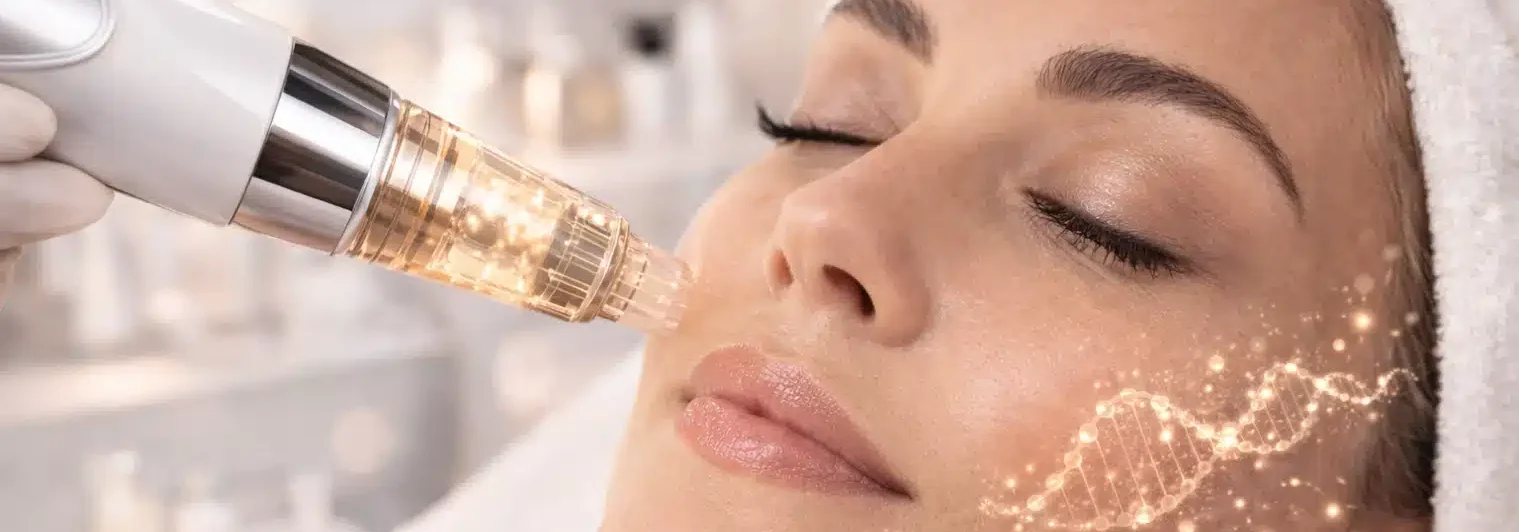
Before adding PDRN to a microneedling plan The clearest evidence supports fine-line and texture goals more than pigment correction. Product type, delivery method, treatment depth, and device choice all affect expectations. A careful…
Before using HRT as a bone-health talking point Early menopause timing may matter, but it does not make hormone therapy automatic. Bone protection should be weighed alongside symptoms, risk factors, and contraindications. A…
Here’s what you’ll learn when you read this post: Monlunabant has shown meaningful short-term weight-loss results in human trials, but it remains investigational. Peripheral targeting sounds promising, yet current data still show mood,…
A clearer way to judge “topical neurotoxin” claims Not every needle-free claim refers to the same type of delivery, so the method matters as much as the marketing. Assisted approaches that use channels…
A clearer way to read MOTS-c claims MOTS-c is a legitimate research topic, but it is not a proven replacement for exercise in humans. Human evidence mainly shows that exercise can influence endogenous…
When a testosterone schedule sounds simpler than the evidence Weekly subcutaneous testosterone undecanoate should not be treated like an already settled standard of care. Product, route, schedule, and evidence each need their own…
Where cold plasma deserves caution, and where it may fit Cold atmospheric plasma is a legitimate research area, but branded wording can blur what device or protocol is actually being discussed. The strongest…
The short version: the GLP-1 pill is here FDA approved orforglipron under the brand name Foundayo on April 1, 2026, for long-term weight management in eligible adults. It is taken once a day…
When a Mitochondrial Claim Deserves a More Careful Read Low energy, slower recovery, and exercise intolerance can come from many causes, so broad “cellular restoration” language should stay grounded. SS-31 draws interest because…