
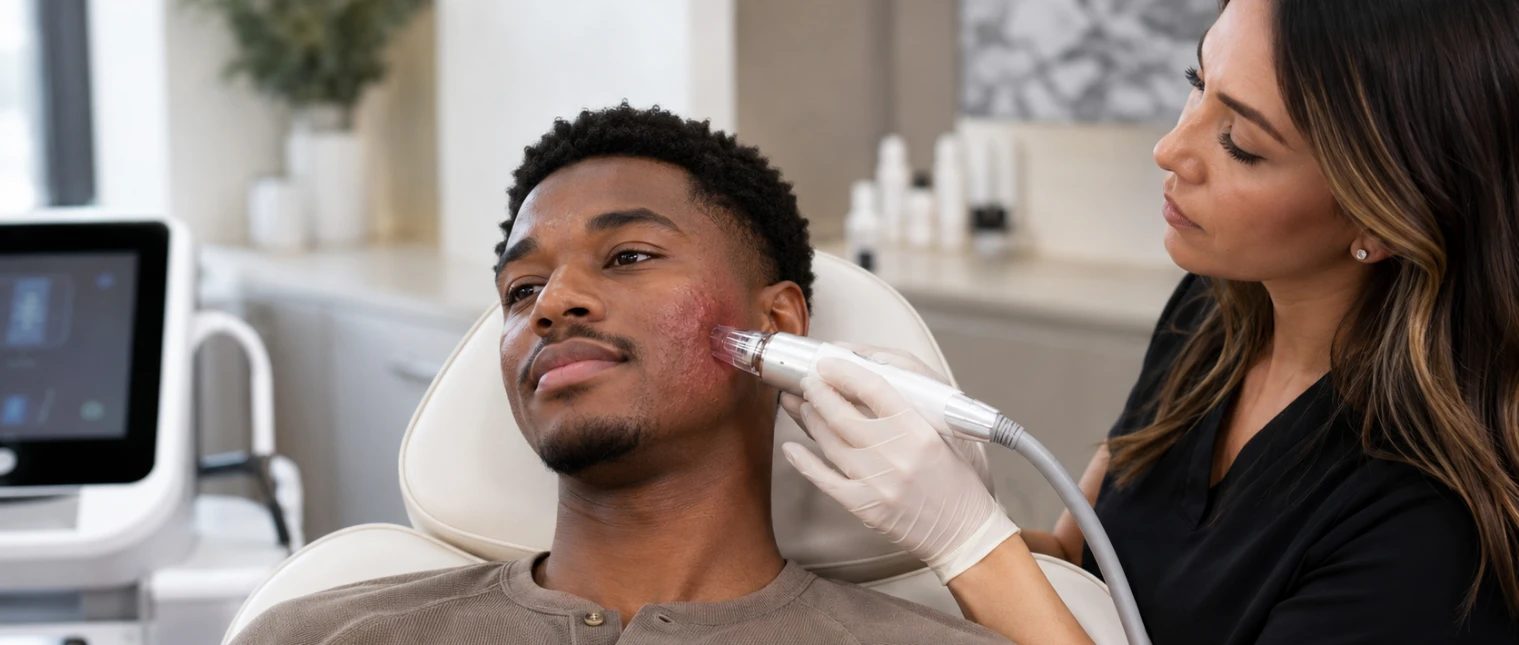
A More Careful Way to Think About RF Microneedling
- Acne-scar improvement depends on scar pattern, skin tone, healing history, and treatment spacing.
- RF energy can support deeper texture remodeling, but settings should never outrun the skin’s ability to recover.
- The FDA’s safety conversation makes screening, provider training, and aftercare planning more important.
Considering treatment for acne-scar texture?
A focused microneedling consultation can help determine whether RF, standard microneedling, staged skin care, or another approach fits the scar pattern and downtime window.
Physician-reviewed content • Evidence-aware care • Personalized treatment planning
Texture work should start with the right category
Patients comparing devices often benefit from understanding the broader treatment family first, including how collagen induction and recovery expectations differ by skin concern.
Review collagen induction therapy • Check the aftercare timeline
RF microneedling now sits in a more serious acne-scar conversation than it did a few years ago. Many patients in Fort Myers and nearby Lee County want smoother texture, softer acne scars, and a more even look without chasing an overly aggressive treatment. The newer clinical discussion supports RF microneedling for atrophic acne scars, yet the 2025 FDA safety communication also changed the questions patients need to ask. The treatment can make sense for the right skin, but the planning matters as much as the device.
At Fountain of Youth in Fort Myers, Florida, staff stays current on developments around RF microneedling, acne-scar data, device safety, and patient screening. That matters because normal patients rarely arrive with one clean concern. One person may have old cheek scarring, enlarged pores, sun exposure, and a busy outdoor schedule in the same treatment plan.
Can RF Microneedling Actually Help Acne Scars?
RF microneedling may help certain acne scars, especially depressed or textural scars that sit below the surrounding skin. These scars often include rolling scars, boxcar scars, or mixed patterns that create uneven shadows across the cheeks. The goal is improvement, not scar removal, because treatment cannot recreate untouched skin. Patients often judge success by smoother makeup application, softer scar edges, and texture that catches less light.
Raised scars and active breakouts need a different conversation. RF microneedling focuses more on remodeling texture than calming active acne. A consultation should look at scar type, skin tone, current irritation, pigmentation history, and recent procedures before anyone selects settings. Patients with mixed concerns may need staged care instead of one strong session.
What New Acne-Scar Data Means for Patients
A 2025 systematic review looked at fractional RF microneedling as a monotherapy for facial acne scarring. The review included 16 studies and 481 patients, and the authors described the treatment as likely effective for acne scars. They also called for more randomized trials and better standardization of treatment parameters. That combination gives patients a useful but careful message: RF microneedling has meaningful support, but protocols still vary.
A broader 2026 systematic review also found consistent use of RF microneedling across acne scars, photoaging, stretch marks, and underarm sweating. The strongest patient-facing takeaway still sits with atrophic acne scars and texture concerns, not every cosmetic concern people mention online. Different studies used different devices, settings, intervals, and scoring systems. A patient should expect a customized plan rather than a universal recipe.
A recent split-face randomized trial also compared RF microneedling alone with RF microneedling plus another energy-based treatment for atrophic acne scars. Both sides improved, but the combined approach did not clearly outperform RF microneedling alone in that small study. That finding matters for patients who assume more procedures automatically mean better results.
One clinical acne-scar study enrolled 44 patients, used four RF microneedling sessions, and reported improvement in Goodman and Baron acne-scar scores. The same study also reported expected short-term reactions such as redness and swelling, along with two cases of post-inflammatory hyperpigmentation. That mix reflects the real decision patients face: improvement may happen, but skin response and aftercare still matter.
RF Microneedling vs Regular Microneedling
Regular microneedling uses controlled needle channels to trigger a healing response in the skin. RF microneedling adds radiofrequency energy through the needle tips, which creates controlled heat below the surface. That heat can support deeper remodeling goals when the provider selects the right depth and energy. The added heat also makes training, anatomy, and conservative settings more important.
A normal patient does not need to memorize device physics. The useful difference is simple: regular microneedling works through mechanical stimulation, and RF microneedling combines that stimulation with thermal energy. Thermal energy can help with deeper texture concerns, but it can also create avoidable problems when settings do not match the patient. More intensity does not mean better care. The best first treatment plan often starts with measured settings and adjusts based on healing.
Match the treatment intensity to the scar pattern
A measured RF microneedling plan should account for scar depth, pigment risk, sun exposure, healing time, and whether the skin needs calmer preparation first.
What the FDA Warning Really Means
The FDA issued a safety communication in October 2025 about RF microneedling devices used for dermatologic and aesthetic procedures. The agency listed reports of serious complications, including burns, scarring, fat loss, disfigurement, nerve damage, and complications that required medical or surgical intervention. That warning does not mean every RF microneedling treatment is dangerous. It does mean patients should treat RF microneedling as a medical aesthetic procedure, not a casual skin refresh.
The FDA safety communication also advised patients to seek a licensed health care provider with training and experience in RF microneedling. The agency warned against at-home use of RF microneedling devices. Those two points matter for everyday patients because the treatment uses needles, heat, and adjustable depth. A spa-like setting should still have medical-level screening, written aftercare, and a plan for unusual healing.
Clinical studies often describe short-term effects such as redness, swelling, discomfort, crusting, or pigment changes. Real-world reports can look more serious because they may involve different devices, settings, patient factors, provider training, or aftercare quality. That gap explains why a patient can see positive acne-scar results online and still need caution. The same technology can produce very different outcomes when screening or settings change. Good planning reduces risk, but no responsible provider can call the procedure risk-free.
Who May Be a Good Candidate, and Who May Need to Wait
RF microneedling may fit adults with atrophic acne scars, rough texture, enlarged-looking pores, and mild early laxity. It may also interest patients who tried topical products or basic facials and now want a more active resurfacing-style option. The best candidates usually understand that collagen remodeling takes time and that results build gradually. They also accept aftercare limits, including sun caution and temporary downtime.
Some patients may need to wait or consider another option first. Active irritation, recent sunburn, inflamed breakouts, certain pigmentation concerns, recent aggressive procedures, or unrealistic expectations can change the plan. Patients who cannot avoid heavy sun exposure after treatment may need a different schedule. A person preparing for a wedding, family photos, or a major work event should discuss timing before committing to a session. Conservative planning often protects the final result better than rushing.
What to Bring Up Before RF Microneedling
Some RF microneedling risks become easier to manage when patients share the right details before treatment. This quick table can help Lee County patients prepare for a more useful consultation without trying to diagnose themselves.
| What to mention | Why it matters | What to prepare |
|---|---|---|
| Active acne or inflamed breakouts | Inflamed skin may change timing because microneedling can irritate active lesions. | Point out any active breakouts in the planned treatment area. |
| Cold sores or recent skin infections | Needling over irritated or infected skin can raise avoidable healing concerns. | Share any recent cold sores, open areas, rashes, or infection history. |
| History of raised scars or keloids | A tendency toward raised scarring can affect whether microneedling fits your skin. | Mention past scars that became thick, firm, raised, or larger than expected. |
| Blood thinners or bleeding disorders | Microneedling can cause pinpoint bleeding, so clotting history can affect suitability. | Bring a current medication list and mention any known bleeding or clotting issues. |
| Sensitivity to numbing medication | Topical numbing often helps comfort, but allergies or sensitivities need review first. | Share any prior reactions to lidocaine, numbing creams, adhesives, or topical products. |
| Eczema, psoriasis, dermatitis, or frequent rashes | Chronic or reactive skin conditions may change timing, treatment area, or aftercare. | Tell the provider where flare-ups happen and whether they are currently active. |
| Recent sunburn, tanning, or heavy outdoor exposure | Sun-stressed skin may need more cautious timing, especially in Southwest Florida. | Mention recent beach days, boating, outdoor work, golf, or tanning before treatment. |
| Pigmentation problems after past treatments | Past dark spots or uneven pigment after procedures can affect setting choices. | Describe any previous post-treatment darkening, lingering redness, or uneven tone. |
| Recent aesthetic procedures | Skin may need time between treatments, especially when healing or irritation remains. | Bring dates for recent peels, lasers, microneedling, facials, or injectable treatments. |
| Upcoming events or unavoidable sun exposure | Downtime planning helps avoid treatment too close to photos, travel, or outdoor events. | Share upcoming weddings, trips, work events, sports weekends, or beach plans. |
Why Lee County Sun Exposure Changes Aftercare
Lee County life can make aftercare harder than it sounds on paper. Patients may work outdoors, golf, boat, fish, walk beaches, attend children’s sports, or spend weekends in strong sun. Freshly treated skin needs more careful protection, especially when pigment changes already concern the patient. Treatment timing should account for vacations, outdoor events, and any period when sunscreen habits may slip.
Southwest Florida also makes “just avoid the sun” feel unrealistic for many people. A better plan identifies the exact days when redness, swelling, or sensitivity may interfere with normal routines. Patients with darker or more pigment-prone skin should discuss pigment risk before treatment settings get selected. Written aftercare helps because people forget details once they leave the appointment.
What Results Can Look Like Month by Month
The first visible changes after RF microneedling usually involve healing, not the final cosmetic result. Redness, swelling, tightness, or mild roughness may appear early, depending on the treatment plan and patient response. Texture improvement usually takes longer because collagen remodeling does not happen overnight. Acne scars may look softer as edges blend and surface irregularities become less noticeable. Photos taken before treatment help patients judge gradual changes more accurately.
Many acne-scar plans involve a series rather than one aggressive session. A series allows the provider to evaluate healing, adjust depth or energy, and avoid chasing too much change in one appointment. Some patients notice smoother texture before they notice scar changes in photos. Others need more time because old scars and mixed scar patterns rarely respond evenly. The right endpoint should reflect safer progress, not maximum intensity.
The Provider Question Matters More Than the Device Name
Patients often ask which RF microneedling device is best. A better first question asks who evaluates the skin, who performs the treatment, and how settings get selected. Device names matter less when the provider cannot explain depth, energy, anatomy, skin tone, aftercare, and complication response. Patients should know what the treatment targets before the first pulse ever reaches the skin. They should also know whom to call if swelling, blistering, unusual pain, or pigment changes appear.
A medical society statement from ASLMS and ASDS also emphasized that RF microneedling requires knowledge of skin biology, anatomy, consent language, and appropriate training or supervision. A consultation should feel like planning, not a quick checkout line. The visit should review acne-scar type, pigmentation history, recent treatments, medications, outdoor routines, downtime tolerance, and prior healing problems. It should also clarify whether standard microneedling, chemical peels, facials, or another medical aesthetic option fits better. RF microneedling can serve the right patient well, but it does not need to become the default answer for every texture concern.
Questions? We are here to help! Call 239-355-3294.
When a Texture Consultation Makes Sense
RF microneedling fits best after the skin, scars, schedule, and aftercare demands have been reviewed together. A consultation can also reveal when a gentler or staged plan would serve the patient better.
- Old rolling or boxcar acne scars create shadows that remain visible despite topical skin care.
- Texture, pore appearance, and mild laxity overlap, but active inflammation or recent sun exposure may affect timing.
- Upcoming travel, photos, outdoor work, or pigment concerns make downtime planning especially important.
The next step is a skin-focused visit that weighs expected improvement against recovery, risk, and timing.
FAQ: Questions Lee County Patients Ask Before Booking
Is RF microneedling good for acne scars?
RF microneedling has meaningful clinical support for atrophic acne scars, especially textural scars that create depressions or uneven shadows. It does not remove scars completely, and results vary by scar type, skin response, and treatment plan. Patients usually need a consultation to learn whether their scars fit the treatment well.
Is RF microneedling safer than laser treatment?
RF microneedling is not automatically safer than laser treatment for every patient. Safety depends on skin type, treatment goal, device settings, provider training, and aftercare. Some patients may prefer RF microneedling for texture concerns, but the 2025 FDA warning shows that serious complications can occur.
How many RF microneedling sessions do acne scars usually need?
Many acne-scar plans use a series because scar remodeling often needs more than one session. The exact number depends on scar depth, skin response, downtime tolerance, and how healing looks after each treatment. A provider should adjust the plan instead of promising the same schedule to every patient.
Can RF microneedling make pigmentation or scars worse?
RF microneedling can cause unwanted effects, including pigment changes, burns, or scarring, especially when treatment settings or aftercare do not match the patient. The FDA safety communication included reports of serious complications from RF microneedling devices used in aesthetic and dermatologic procedures. Patients with pigment-prone skin or heavy sun exposure should discuss those risks before treatment.
Compare the surrounding skin-rejuvenation options
Patients looking at acne-scar remodeling may also want to understand when boosters, regenerative support, or non-RF microneedling concepts belong in the same planning conversation.
Read about exosome RF support • Review acne-focused skin care
Medical review: Reviewed by Dr. Keith Lafferty MD, Fort Myers on June 27, 2026. Fact-checked against government and academic sources; see in-text citations. This page follows our Medical Review & Sourcing Policy and undergoes updates at least every six months.
