
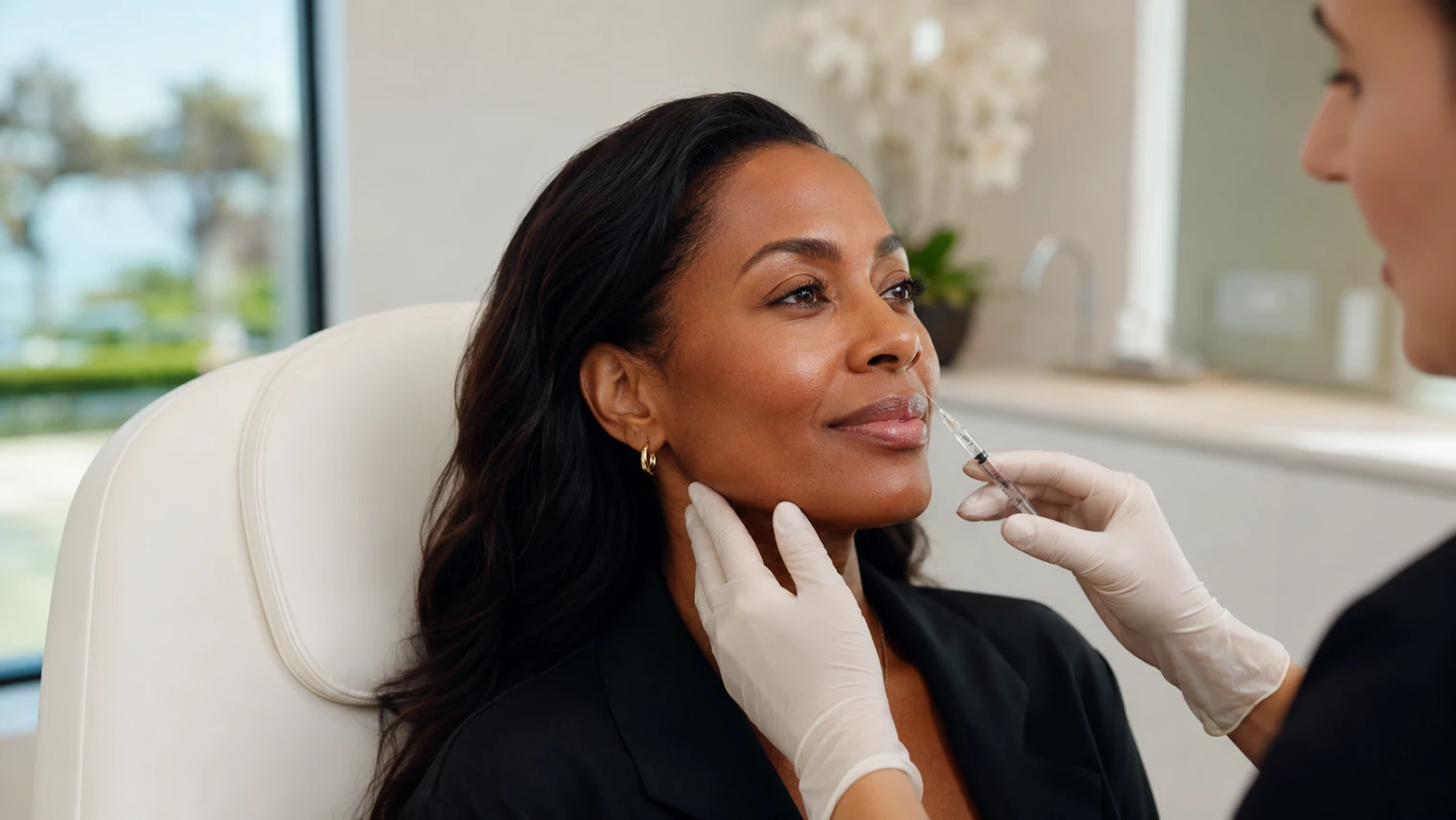
Considering Evolysse for Smile Lines?
- Frames Evolysse as one HA filler option, not a one-product answer.
- Connects nasolabial folds with facial movement, tissue support, and subtle correction goals.
- Points toward a consultation that compares product choice, placement, and restraint.
Bring the product question into a facial assessment
For patients comparing new HA fillers with established options, an injectables consultation helps connect product choice with fold depth, movement, prior filler history, and a conservative plan.
Physician-reviewed content • Evidence-aware care • Personalized treatment planning
Related filler decisions worth reviewing
Patients often compare Evolysse with familiar HA options such as Restylane treatment or Juvéderm filler before deciding what fits their facial movement and goals.
Why Lee County Patients Are Asking About Evolysse Fillers
Evolysse is a newer hyaluronic acid filler collection that has drawn attention from patients who want softer-looking correction around facial folds. Evolysse Form and Evolysse Smooth received FDA approval on February 13, 2025, for adults 22 and older with moderate to severe dynamic facial wrinkles and folds, including nasolabial folds. Patients do not need to follow industry news to have a practical question. They want to know whether this HA filler option fits the face they see every morning.
In Fort Myers, that question often starts with smile lines, movement around the mouth, and the worry that filler could look too obvious. The timing matters because many people first heard about Evolysse after the products entered the U.S. aesthetics conversation more broadly. At Fountain of Youth in Fort Myers, Florida, staff stays current on developments related to HA fillers, including new FDA-approved options and the safety questions patients bring to consultation. That matters most when a patient comes in with one specific product name but several possible causes behind the concern. Smile lines may involve fold depth, cheek support, skin quality, prior filler, or normal movement. The best discussion starts with the face, not the product label.
What Evolysse Form and Evolysse Smooth Are Designed to Treat
Evolysse Form and Evolysse Smooth are injectable hyaluronic acid gels with lidocaine. The FDA indication covers dermal and subdermal injection to correct moderate to severe dynamic facial wrinkles and folds, such as nasolabial folds, in adults 22 years of age or older. In everyday terms, these products sit in the category patients often associate with smile-line filler. They do not automatically address every facial aging concern.
Evolysse Form
Evolysse Form may interest patients whose main concern involves folds that look deeper during expression. The name can sound structural, yet the current FDA-approved Form and Smooth indication centers on dynamic wrinkles and folds, not a broad promise of facial lifting. A consultation should check whether the fold needs direct correction, nearby support, or a more conservative plan. Product choice depends on anatomy, movement, skin thickness, and prior injectable history.
Evolysse Smooth
Evolysse Smooth may sound like a surface treatment, but patients should not confuse it with treatments for texture, discoloration, or laxity. The approval still relates to moderate to severe dynamic facial wrinkles and folds, including nasolabial folds. A person bothered by rough skin, sun damage, or enlarged pores may need a different plan. The product name alone cannot determine the right treatment.
Can Evolysse Help Patients Avoid an Overfilled Look?
The fear of looking overfilled is one of the most common reasons people hesitate before filler. A patient may want the fold beside the mouth softened but still wants to smile, speak, and laugh without looking altered. Evolysse has patient-reported data related to natural look and feel, but the result still depends on placement, amount, facial movement, and restraint. The pivotal study reported that many patients described results as natural-looking or natural-feeling at Month 6, yet no filler can guarantee that outcome for every face.
Natural-looking filler usually means better balance, not a completely erased line. A fold can soften without disappearing, especially in a face that moves constantly during meals, photos, work conversations, and family events. The most careful plans often use smaller amounts and reassess after swelling settles. A patient who wants a refreshed look may get a better result from staged treatment than from chasing full correction in one visit.
The injector’s eye matters as much as the syringe. Two people can have similar smile lines but need different approaches because one has cheek volume loss, another has thin skin, and another has strong mouth movement. The right plan considers how the face looks at rest and during expression. That movement check helps prevent a still-photo decision from creating a real-life mismatch.
Softening a fold should not freeze a face
A careful plan can compare product behavior, tissue support, and expression before choosing a filler within a broader medical aesthetics visit, especially when the goal is subtle correction rather than a fully erased line.
Smile Lines, Facial Movement, and Why Filler Choice Matters
Nasolabial folds run from the sides of the nose toward the corners of the mouth. They often become more noticeable with age, facial anatomy, weight changes, sun exposure, and repeated expression. Many Lee County patients notice them first in car mirrors, outdoor photos, or harsh bathroom lighting. The folds can look deeper at certain times of day, especially when the face looks tired or dehydrated.
Dynamic folds behave differently from fine surface lines because they move during smiling, talking, chewing, and laughing. A filler that looks acceptable when the face stays still may look bulky if the product, placement, or amount does not match the tissue. That is why a good assessment should include expression, not only a neutral mirror view. Evolysse entered the discussion because patients increasingly want fold correction that respects movement.
A person may ask for smile-line filler after noticing deep parentheses around the mouth in photos. The consultation may show that one side folds more strongly because of asymmetrical movement, or that cheek support contributes to the shadow. A product decision made too quickly can miss that larger pattern.
How Evolysse Compares With Fillers Patients Already Know
Patients often ask whether Evolysse is better than familiar HA filler families. Evolysse adds another FDA-approved HA filler option for a specific use, rather than replacing every established product. The published clinical data compared Evolysse Form and Evolysse Smooth with Restylane-L in a split-face nasolabial fold trial. Both Evolysse products met the primary endpoint at Month 6, and the study followed participants through 12 months.
That comparison does not mean every patient should request Evolysse by default. Product behavior, injection depth, treatment area, prior filler, facial movement, and personal goals all influence the final choice. A patient who did well with another HA filler may not need to switch. Another patient who disliked a previous filler result may need a different plan, not only a different brand.
Newer options can help when they expand the conversation. A patient may arrive asking for the newest filler, then realize the real goal involves looking rested without adding obvious volume. Another patient may care more about downtime, bruising risk, or whether the result will look good when smiling. Product comparison should lead back to candidacy, not a winner-takes-all answer.
What the Evolysse Clinical Study Actually Showed
The main published study included 140 patients with moderate to severe nasolabial folds. Each patient received a cold-crosslinked filler in one nasolabial fold and Restylane-L in the opposite fold, then researchers followed participants through 12 months with an optional retreatment at that point. This split-face design helps compare products within the same person, which reduces some differences between patient groups. The study focused on nasolabial folds, not every facial area.
The Month 6 results showed that Evolysse Form and Evolysse Smooth met the study’s primary endpoint. The same publication reported responder outcomes, patient-reported natural look and feel, and safety tracking over the follow-up period. Evolysse was studied for a defined use, but the study does not predict the exact amount, look, or duration for one individual.
The technology behind Evolysse involves cold-crosslinking, a manufacturing approach that the study describes as intended to preserve longer hyaluronic acid chains and achieve certain gel properties with less BDDE. That does not mean the product will always look more natural than other options. It means the product has a specific design approach that an injector may consider when matching filler to tissue movement and treatment goals.
Safety, Side Effects, and What Patients Should Ask Before Treatment
HA filler appointments may look quick, but they still involve medical decision-making. The clinical study reported common treatment reactions such as tenderness, swelling, bruising, lumps, pain, redness, discoloration, and itching. The American Academy of Dermatology notes that common filler side effects can include redness, swelling, tenderness, and occasional bruising, often clearing within 7 to 14 days. A patient should still discuss personal risks, medication history, prior reactions, and what symptoms require prompt contact after treatment.
An American Society for Dermatologic Surgery task force describes common injection-site reactions as usually temporary but also notes rare filler risks, including vascular occlusion, inflammatory events, and nodule formation. This matters because a smooth appointment experience should still include clear instructions for the first hours and days after treatment. Patients should know what normal swelling feels like and what symptoms deserve faster attention. A careful consultation should not treat filler as a casual beauty purchase.
Questions worth asking during a filler consultation
Patients can ask targeted questions before deciding whether Evolysse fits their goals. Useful questions include: “Is my concern truly a fold, or is it volume loss?” “How will this look when I smile?” “What side effects should I expect during the first week?” “What would make me call the office quickly?” Clear answers help patients understand the plan before any treatment starts.
What to Expect During a Filler Consultation in Fort Myers
A thoughtful filler consultation starts with the concern that brought the patient in, then moves beyond that first description. The provider should review medical history, previous injectables, allergies, medications, treatment goals, and upcoming events where swelling or bruising would matter. The face should be assessed at rest and in motion. Patients should expect a discussion of product choice, placement, likely recovery, and reasonable limits.
Cost questions also belong in the consultation. Exact pricing can depend on the number of syringes, the area treated, the amount of correction needed, and whether a staged plan makes more sense. A patient with one focused fold may need a different budget than someone seeking broader facial balancing. Published prices should not replace an exam when anatomy drives the plan.
Evolysse may not be the right first choice for every concern. Skin texture, sun damage, discoloration, and laxity may need a different type of aesthetic plan. A patient with active irritation or infection near the treatment area should discuss timing before any injection. A person who expects filler to remove every line may need a more realistic treatment discussion before moving forward.
Questions? We are here to help! Call 239-355-3294.
When Evolysse deserves a consultation, not a quick yes
A product name can start the conversation, but candidacy depends on anatomy, expression, prior filler history, and whether the concern truly comes from the fold itself.
- Smile lines deepen during expression, yet the face still needs natural movement.
- Past filler looked heavy, uneven, or poorly matched to mouth motion.
- The concern may involve cheek support, skin quality, fold depth, or several factors together.
The right next step is a measured facial assessment before choosing the syringe.
FAQ: Evolysse Fillers for Lee County Patients
Is Evolysse FDA-approved?
Yes. Evolysse Form and Evolysse Smooth received FDA approval on February 13, 2025. The approved indication covers dermal and subdermal injection for moderate to severe dynamic facial wrinkles and folds, such as nasolabial folds, in adults 22 and older. Patients should still ask whether this specific option fits their anatomy and goals.
Is Evolysse better than Juvéderm or Restylane?
Evolysse gives injectors another HA filler option, but “better” depends on the face, the treatment area, and the goal. Published data compared Evolysse Form and Smooth with Restylane-L in nasolabial folds, but that does not make one product the default answer for every patient. A consultation should match filler choice to anatomy and movement.
How long can Evolysse filler results last?
The pivotal study followed participants through 12 months, and the published data discusses outcomes across that follow-up period. Individual duration can vary with metabolism, movement, injection amount, treatment area, and follow-up planning. Patients should ask what timeline makes sense for their specific fold pattern.
Will Evolysse make my smile lines look natural?
Evolysse can be part of a natural-looking plan when the product fits the tissue and the injector uses careful placement. The study included patient-reported natural look and feel, but results vary by anatomy, dose, facial movement, and expectations. Many patients do best when the goal involves softening the fold rather than erasing all expression.
Not every expression line needs HA filler
Some patients benefit from comparing filler planning with wrinkle-relaxing options such as Botox or Dysport, especially when movement, not only fold depth, shapes the concern.
Medical review: Reviewed by Dr. Keith Lafferty MD, Fort Myers on June 6, 2026. Fact-checked against government and academic sources; see in-text citations. This page follows our Medical Review & Sourcing Policy and undergoes updates at least every six months.
